The Evidentiary Value of the Pillay Report before the International Court of Justice
29.10.2026
Anna Michel Albo
Geert-Jan Alexander Knoops
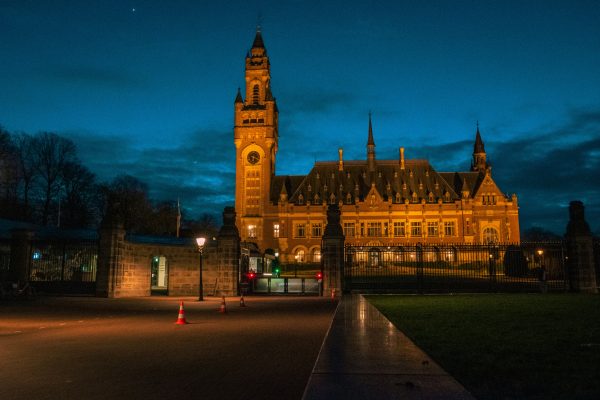
Navanethem Pillay received the prestigious, but politicized Nobel Peace Prize. She is described in the New York Times as a ‘human rights lawyer who led a United Nations commission last...
Read more
“The Law as It Presently Stands…”
28.10.2026
“Outside the Law there stands a doorkeeper. A man from the country comes to this doorkeeper and asks to be allowed into the Law, but the doorkeeper says he cannot...
Read more
Governing AI Agents
28.10.2026
Advancing cyber capabilities and growing AI autonomy increase the risk of unsanctioned agent behaviour. Despite emerging evidence of these risks, global AI regulation remains difficult. Climate change and nuclear risks...
Read more
The World Behind the Map
27.10.2026
Cartography has long been central to how the United Nations positions itself on the global stage. This is evident in everything from the maps attached to Security Council documents, to the official emblem...
Read more
Kindred Spirits?
27.10.2026
Between 18 and 24 June 2026, Niger, then Mali and Burkina Faso, deposited their formal instruments of withdrawal from the Rome Statute with the UN Secretary-General. With this act, the intention...
Read more
Before It’s Too Late
26.10.2026
Nicolas Angelet
Margot Angé
In his 1954 study Vollendete Tatsache und Völkerrecht (“Fait accompli and International Law”), the late director of the Max Planck Institute for Comparative Public Law and International Law, Professor Carl Bilfinger, stated...
Read more
Recognition Without Release
23.10.2026
Four states have set out to hold Afghanistan to account under CEDAW for the Taliban’s systematic discrimination against women and girls. The initiative now appears stalled, perhaps partly over fears...
Read more
Can Nuremberg Survive AI?
22.10.2026
Eighty years after the Nuremberg Judgment, artificial intelligence may challenge an assumption of international criminal law that has rarely needed to be questioned, namely that behind an international crime stands...
Read more
Buying Out a Toll, or Paying One
21.10.2026
The maritime powers have met a toll on a natural strait once before. They neither litigated it nor regularised it. They bought it out, and they framed the purchase so...
Read more
Solving the Wrong Problem?
20.10.2026
On January 1, 2025, the Basel Convention’s amendments on e-waste took effect, extending the Prior Informed Consent (PIC) procedure to non-hazardous e-waste for the first time. Yet, they regulate e-waste...
Read more
Interpreting Treaties in Domestic Courts
19.10.2026
Conflicting Rulings The application of public international law in domestic courts is a theme that causes much trepidation in litigants yet has been a treasure trove for academics. This is no less true for treaty...
Read more
Islands Held in Trust
19.10.2026
On 1 September 2026, Vanuatu asked the International Court of Justice to settle a dispute with France “concerning Vanuatu’s sovereignty over Umaenupne (Matthew) and Umaeneg/Leka (Hunter) Islands” and to draw...
Read more
Against the Suspicion of Machines
16.10.2026
Fifteen years ago, on EJIL:Talk!, I mulled over what was then an emerging but hugely growing practice: academic expert blogging. I called it, only half-ironically, a “hazardous tool”. The hazard,...
Read more
Reparations by Another Name
15.10.2026
On June 17, 2026, the United States (U.S.) and Iran signed a fourteen-point Memorandum of Understanding (MoU) that formally ends military operations and establishes a sixty-day framework for negotiating a...
Read more
Self-Determination and Judicial Silence
14.10.2026
The International Court of Justice (ICJ) has long recognised self-determination, including in its Western Sahara opinion of 1975 (para. 162) and Chagos opinion of 2019 (paras. 144–160). Recent decisions build...
Read more
The Last Knight of International Law
13.10.2026
Gustavo Leite Neves da Luz
Don Quixote's first mistake is not to attack a windmill. It is to believe that the world still speaks the language of the books from which he learned how a...
Read more
Protecting States, Not People
12.10.2026
Like all “landmark” pieces of international jurisprudence, the closer one reads the International Court of Justice (ICJ)’s advisory opinion on the Obligations of States in respect of Climate Change of July 2025,...
Read more
Ending War, Deferring Justice?
09.10.2026
Heybatollah Najandimanesh
Can peace be durable when justice is deferred? The Islamabad Memorandum of Understanding between the Islamic Republic of Iran and the United States offers a timely opportunity to revisit this...
Read more
Four Petals, One Owner?
08.10.2026
In July 2026, a Chinese court held that Molly Tea’s use of a four-petal floral sign infringed seven registered Louis Vuitton trademarks, ordering the company to cease using the sign...
Read more
Finding the Truth After Fifty Years
06.10.2026
Brian Dooley
Suchita Uppal
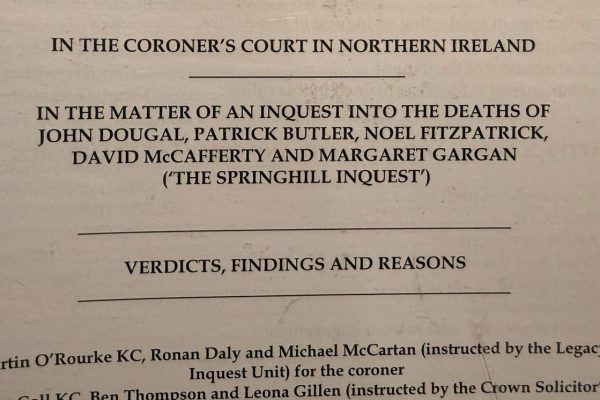
Time has made killings from the Northern Ireland conflict difficult to adjudicate, but recent inquests show that coroners can still establish what happened more than 50 years ago. On April 30...
Read more
Can International Law Form Its Own General Principles?
05.10.2026
General principles of law are the third primary source of international law, alongside treaties and customary international law. However, there is disagreement among states and scholars regarding the method by...
Read more
Legal Vacuum or Legal Uncertainty in Strasbourg
01.10.2026
On 2 July 2026, the European Court of Human Rights (ECtHR) delivered one decision and one judgment in two cases which, whilst resting on different facts, raised the same legal...
Read more
“Shoot-‘Em-All” Must Respect the Law
01.10.2026
The Italian Senate recently approved an overhaul of the country’s 1992 hunting legislation n. 157, a draft bill referred to by the political opposition as “sparatutto”, meaning “shoot-them-all”, which would...
Read more
When Death Becomes a Spectacle
30.09.2026
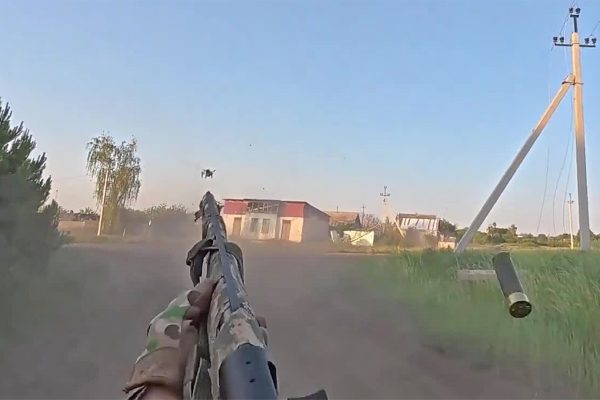
Technological battlefield innovations have been a central feature of Ukraine’s full-scale invasion by Russia in February 2022. This has been reflected in the unprecedented reliance on drones, as well as...
Read more
The Power of ‘Constructive Misreading’
19.09.2026
Earlier this year, the United Nations General Assembly adopted resolution A/80/L.65, which seeks to ‘translate’ last year’s Advisory Opinion from the International Court of Justice (ICJ) on Obligations of States in...
Read more
Water Under the Bridge
19.09.2026
In December 2024, China approved the construction of the Medog Hydropower Station on the Yarlung Tsangpo River in Tibet, which flows on to become the Brahmaputra in India and the...
Read more
Can the ILO Interpret Differently?
19.09.2026
During the drafting of the Vienna Convention on the Law of Treaties, 1969 (‘VCLT’ or ‘the Convention’), Sir Humphrey Waldock famously remarked that treaty interpretation is “to some extent an...
Read more
Participation Without Authority?
18.09.2026
The United Nations Convention on the Rights of Persons with Disabilities (the CRPD) transformed the disability rights movement’s demand of ‘Nothing about us, without us’ into a legal obligation. Article...
Read more
Western Sahara, a Never-Ending Odyssey…
18.09.2026
In July, Christopher Nolan’s latest movie, The Odyssey, was released in cinemas. Alongside the enthusiasm for what appears to be a new masterpiece – one which has conquered the box office – it has...
Read more
Subsidiary Protection: Is It the Silver Bullet to Addressing the Plight of Climate Refugees?
04.09.2026
Over the last few decades, unsustainable human activities have led to alterations in the biosphere, oceans, atmosphere, and cryosphere, and, in such a reality, the effects of climate change are...
Read more
(Un)Common Understandings
30.07.2026
Julius Christoph Nippert
Simon Geiersbach
On 21 May 2026, the International Court of Justice (the Court) issued its opinion on the Right to Strike, for which the Court was concerned with the question of whether...
Read more
Adaptation and Victim Status in ECtHR Climate Litigation
28.07.2026
Since 2020, 23 applications concerning climate change have been made to the European Court of Human Rights (ECtHR). The ECtHR delivered its first climate decisions on April 9, 2024, when the...
Read more
Should AI Be Organized?
24.07.2026
Artificial intelligence (AI) is no longer a future possibility. It is the present reality reshaping every corner of human society. From automated decision-making in criminal justice to generative models composing legal briefs, AI systems are...
Read more
Wind of (Nuclear) Change
23.07.2026
Under international law, Germany is not as irrevocably barred from acquiring nuclear weapons as is commonly assumed. In certain circumstances, Germany could be released from Article 3 of the Treaty on...
Read more
Macbeth at the International Seabed Authority
22.07.2026
Gustavo Leite Neves da Luz
Macbeth begins from a problem that law also knows well: prophecy does not merely announce the future; it reorganises the present. The Weird Sisters do not place the crown on...
Read more
Of Continuous Controversies and Unfinished Tasks
21.07.2026
On 15 May 2026, the International Law Commission (ILC or Commission) considered the report of its Drafting Committee on “Immunity of State Officials from Foreign Criminal Jurisdiction” and adopted draft articles on second...
Read more
The Trillion-Dollar Frontier
20.07.2026
Michal Saliternik
Sivan Shlomo-Agon
On 12 June 2026, SpaceX completed the largest initial public offering in history, raising a reported $75 billion and attaining a valuation measured in the trillions. The offering generated extraordinary...
Read more
Mined out of Rights
16.07.2026
International law has long recognised the right of Indigenous peoples to be consulted before extraction proceeds on their territories. But what happens when that right comes into conflict with a...
Read more
Amnesty or Accountability?
15.07.2026
Marina Fonsêca
Thiago Moreira
More than four decades after the end of Brazil's military dictatorship (1964–1985), one fundamental question remains unanswered: can those responsible for torture, enforced disappearances, and extrajudicial killings still be shielded...
Read more
When Power Asymmetries Become Evident
14.07.2026
International law, as a set of rules, is presumed to constitute an order in which power asymmetries are constrained. Yet, the perceived “crisis” of international law reveals its foundation in...
Read more
Trump’s Sanctions on Cuba Are a Crime Against Humanity
13.07.2026
Can economic sanctions constitute crimes against humanity (CAH)? The proposition may appear audacious to those who deny that economy can be wielded as a weapon of aggression. Yet emerging legal...
Read more
Who Are Legitimate Targets in Modern Armed Conflicts?
13.07.2026
On 31 March, the Islamic Revolutionary Guard Corps (IRGC) of Iran declared a list of eighteen American technology companies, including Palantir, Intel, Tesla, Microsoft, and Google, as “legitimate targets”. The...
Read more
Digital Fiefdoms and Human Rights
10.07.2026
The unprecedented rise of artificial intelligence (AI) and data-driven digital technologies has transformed traditional capitalism (p. 66–67), constructing a structural system of exploitation termed “technofeudalism” (p. 170–175). In this novel architecture,...
Read more
From Spectators to Stakeholders
08.07.2026
As the United Nations moves towards negotiating the world's first Convention on Crimes Against Humanity (Cah), countries of the Global South face an important choice: either shape the convention or...
Read more
Winning at All Costs
07.07.2026
In his Opinion in the pending NV Reibel vs JSC VO Stankoimport, Case No. C-802/24 (‘Reibel’) decision, Advocate General Biondi recalled a metaphor: the relationship between European Union (‘EU’) law and...
Read more
Rethinking Custom
06.07.2026
The fair and equitable treatment (‘FET’) is a prominent protection granted to a foreign investor under investment treaties. This post focuses on the formulation of FET under Article 1105 of the...
Read more
A Lesson Not Learned
02.07.2026
On 17 May 2026, the World Health Organization (WHO) Director-General announced the outbreak of the Ebola disease, caused by the Bundibugyo virus in the Democratic Republic of the Congo (DRC)...
Read more
In Between the Lines
01.07.2026
Less than a year since the International Court of Justice (ICJ) delivered its Advisory Opinion on Obligations of States in Respect to Climate Change (Advisory Opinion), its wider implications for a...
Read more
Winning the Right, Losing the Protection?
30.06.2026
On May 21 2026, the International Court of Justice delivered its advisory opinion on the interpretation of ILO Convention No. 87, addressing whether the Convention protects a right to strike....
Read more
Stuck in Between
30.06.2026
What happens when the International Criminal Court (ICC) concludes that the legal threshold for opening an investigation has been met, yet declines to take the procedural step required to initiate...
Read more
Threatening the Use of Force?
29.06.2026
A Russian Human Rights Lawyer
On 5 June 2026, Law No. 149-FZ entered into force. Signed by Vladimir Putin, the law amended two foundational statutes, the Citizenship Law and the Defence Law. The amendment of the former...
Read more
Platforms as Sites of Experimentation
29.06.2026
Two verdicts in the United States in March 2026 demonstrate that courts are increasingly willing to treat online platforms as designed systems rather than neutral conduits or editorial voices. In...
Read more
Wehrhaftigkeit der EU – nach innen oder nach außen?
23.06.2026
Die Europäische Union (EU) verhängt seit Russlands Annexion der Krim im Jahr 2014 erstmals in großem Umfang personenbezogene Sanktionen. Inzwischen sind rund 2.700 Personen und Organisationen gelistet (vgl. insbesondere Verordnung (EU)...
Read more
Workers of the World, Unite… and Strike?
18.06.2026
On 21 May 2026, the International Court of Justice (ICJ) issued its long-awaited Advisory Opinion (AO) on the right to strike, by ten votes to four, affirming that the right...
Read more
Door-in-the-Face Trade Restrictions?
17.06.2026
After Russia´s invasion in Ukraine, the European Union (EU) aims to “put to an end […] its dependence on Russian fossil fuels” and will place solar energy at the centre...
Read more
Fair Share in Greenpeace Bonaire
16.06.2026
Both the ICJ and the ECtHR have recognized 1.5°C with no or limited overshoot as the relevant benchmark for assessing states’ climate obligations. At the same time, climate litigation aimed at mitigation...
Read more
Rethinking the Territorial Tort Exception in the Age of Proxy States
15.06.2026
Recently, there has been an increase in cybercrimes (see here) and their potential to cause tortious harm. Due to the inherent nature of such actions, they have transboundary effects and...
Read more
From Demarcation to Administration
12.06.2026
How a sensor‑based art project in the Alps challenges the legal obsession with fixed demarcation, and what international law can learn from it. Borders between Alpine states were fixed along...
Read more
Rationed Intelligence
08.06.2026
Inside every modern computer, smartphone, and data centre sits a component called a semiconductor chip. It is a wafer of silicon, roughly the size of a fingernail, engraved with billions...
Read more
From Iran to Zaporizhzhia
05.06.2026
War around nuclear facilities is no longer a remote contingency. It is an emerging test of whether international humanitarian law (IHL) can restrain military operations before nuclear safety systems are...
Read more
The Regulatory-Command Asymmetry
04.06.2026
The urgency of reconciling the territorial limits of sovereign jurisdiction with the deterritorialised movement of data is a question of data sovereignty. Within Africa, this question is ambitiously addressed by Nigeria’s...
Read more
When Same-Sex Marriage Crosses Borders
03.06.2026
The CJEU’s judgment in Jakub Cupriak-Trojan and Mateusz Trojan v Wojewoda Mazowiecki (better known as Cupriak-Trojan) is one of those rare decisions that is not only welcomed as a rights...
Read more
Violating Neutrality, Enabling Harm
29.05.2026
Political neutrality occupies a central place in the constitutional architecture of international sports governance. Within the Olympic Movement, neutrality is described as a “universal fundamental ethical principle” embedded in the...
Read more
Beyond Symbolic Recognition
28.05.2026
Sophie Girardini
Veronika Stockinger
Franziska Michel
Today, for the second year, Namibia commemorates 28 May as “Genocide Remembrance Day”. On this day in 1908, the last concentration camps that were part of Germany’s extermination policy in...
Read more
One In, One Out
19.05.2026
Ganesh Prasad
Manuj Gupta
Twenty-page communiqués from United Nations Special Rapporteurs loom over the United Kingdom (“UK”) and France, respectively, as the two countries advance negotiations over their reciprocal “one-in, one-out” migrant transfer agreement....
Read more
Renouncing Your Way Out of Treaty Protection
18.05.2026
Can a claimant voluntarily renounce the treaty nationality that grounds his standing as a protected investor, mid-proceedings, and continue to pursue his claims? That question has been brought into sharp...
Read more
Beyond Bilateral Notification and Consultation
15.05.2026
The 2025 ICJ Advisory Opinion on Climate Change at ¶299 holds that “notification and consultation are particularly warranted when an activity significantly affects collective efforts to address harm to the climate...
Read more
Sovereign Equality or Equal Sovereignty
14.05.2026
Fourteen years ago, the International Court of Justice, in Jurisdictional Immunities, affirmed State immunity even for cases of jus cogens violations or human rights abuses. Yet, victims of State-caused harm continue...
Read more
An Unwarranted Free Pass for Extra-EU ISDS?
12.05.2026
Nikos Braoudakis
Juliette Robert
On 31 July 2025, the German Constitutional Court (Bundesverfassungsgericht or ‘BVerfG’) delivered a decision that revived interest in the German Federal Court of Justice’s (Bundesgerichtshof or ‘BGH’) ruling of 12...
Read more
The Limits of Liability
11.05.2026
Consider the following hypothetical: State A exercises jurisdiction and control over space object Ares II, which is damaged by space debris. State A seeks to attribute the damage by space...
Read more
The Promise and the Limits of the Yves Rocher Judgement
08.05.2026
In March 2026, the Paris Judicial Court issued a landmark decision in the Yves Rocher case, marking one of the first instances in which a parent company was held liable...
Read more
Nothing New on the Moon?
07.05.2026
On 2 February 2026, Elon Musk confirmed that SpaceX has acquired the billionaire’s artificial intelligence (AI) start-up xAI with the aim to ‘form an “innovation engine” putting AI, rockets, space-based...
Read more
CDR (Carbon Dioxide Removal) Approaches: Friends or Foes?
04.05.2026
Manrique Naranjo Chavarría
The road towards the Paris Agreement was potholed, full of controversies and antagonizing positions of States. Ultimately, the normative value of some provisions of the Convention was left unclear (Rajamani,...
Read more
From Tariffs to Sovereign Debt Distress
30.04.2026
On 20 February 2026, the United States (‘US’) Supreme Court held in Learning Resources, Inc. v. Trump that the International Emergency Economic Powers Act (‘IEEPA’) does not authorise the President...
Read more
From Evidence to Assumption
30.04.2026
In its judgments in Seyhan and Others, Karslı and Others and Bozyokuş and Others v. Türkiye, published on 16 December 2025, the European Court of Human Rights (the Court or...
Read more
Selecting Silence? – The 2026 Secretary-General Election and Moral Authority
27.04.2026
“The UN is not just a product of do-gooders. It is harshly real. The day will come when men will see the UN and what it means clearly. Everything will...
Read more
When AI Rules Diverge
23.04.2026
AI regulation is splitting across major jurisdictions. This post examines divergent AI regulations across jurisdictions, particularly in the EU, US, and China, and how such divergence generates compliance costs, liability uncertainty, and...
Read more
Revisiting the UK’s 2011 Rescue of Nationals from Libya. Part II
22.04.2026
The first part of this post articulated non-violent evacuation operations (NVEOs) as a specific legal category of rescue operations that are defined negatively – as those rescues which do not...
Read more
Revisiting the UK’s 2011 Rescue of Nationals from Libya. Part I
22.04.2026
In 2011, the UK, Germany and (seemingly) the Netherlands launched targeted rescue operations to rescue their nationals (before the passing of UNSC Resolution 1973, which authorised “all necessary measures [short...
Read more
Oil Infrastructure as Military Objectives
21.04.2026
On 8 March 2026, the sky over Tehran showed almost apocalyptic scenes. Towering flames rising from fuel depots and refineries after the US-Israel-led strikes on Iranian oil infrastructure were seen...
Read more
The Board of Peace Ltd.
20.04.2026
“We tried to structure this meeting like a proper board meeting, like we do in the private sector, where we have all the preparation, we get the right people together,...
Read more
When Restraint Becomes Complicity
20.04.2026
The US-Israeli attacks against Iran, launched on 28 February 2026, have plunged the Middle East into a dangerous and expanding conflict – triggering a broader factual and normative wildfire. What...
Read more
Iran’s Legal Strategy in Hormuz
16.04.2026
Geography remains Iran’s greatest wartime advantage and a key strategic asset in the ongoing 2026 conflict. The country’s rugged terrain, extensive coastline, and strategic depth in the Persian Gulf shape...
Read more
The Erosion of Diplomacy, One Tweet at a Time
15.04.2026
It is a foundational premise of international legal theory that law between states operates through consent, reciprocity, and the sustained practice of interaction that generates customary norms. Unlike domestic legal...
Read more
Humanitarian Exchange or Legal Normalisation?
13.04.2026
Since February 2022, the Russian Federation’s military action against Ukraine has been characterised, with unusual clarity, as a violation of one of the most fundamental norms of the international legal...
Read more
The Law’s Apocalypse or the Law of Apocalypse?
10.04.2026
In the early post-Cold-War years, writing about the “funeral march” of the twentieth-century history, Hungarian philosopher Ágnes Heller penned, “Man-inflicted apocalypse is the parody of apocalypse. […] Men are envious...
Read more
Vergessene Menschenrechte
10.04.2026
In der Schweiz wird es als nahezu selbstverständlich vorausgesetzt, dass wirtschaftliche, soziale und kulturelle Rechte (WSK-Rechte) grundsätzlich nicht justiziabel sind. Während bürgerliche und politische Rechte – etwa die Meinungsfreiheit –...
Read more
Who Pays? The Question the ICJ Didn’t (Adequately) Answer
09.04.2026
The recent Advisory Opinion delivered by the International Court of Justice (the Court) on the obligations of statBlog es in relation to climate change (AO) has been hailed by the...
Read more
A Right to Artistic Anonymity?
08.04.2026
“If you want to say something and have people listen, then you have to wear a mask”. This quote, attributed to Banksy, encapsulates the street artist’s philosophy. For Banksy, anonymity...
Read more
Lessons Learned from the Minab School Strike
07.04.2026
“We will unleash experimentation, eliminate bureaucratic barriers, focus our investments and demonstrate the execution approach needed to ensure we lead in military AI, [...] we will become an ‘AI-first’ warfighting...
Read more
Sudanese Lion Cub Propaganda
06.04.2026
In early 2026, Bellingcat, an open source research collective, published an investigation regarding ‘lion cub’ propaganda in the ongoing Sudanese civil war. It shows that both parties to the conflict...
Read more
Gendering the Law of the Sea
03.04.2026
Over the past two years, international courts have entered the climate arena with unusual force. Advisory opinions from the International Tribunal for the Law of the Sea, the International Court...
Read more
A Hungarian Bank Heist
02.04.2026
On March 6, 2026, an incident seemingly ripped from a poorly written crime thriller created the premises for new diplomatic friction between Hungary and Ukraine. Hungarian authorities intercepted two Ukrainian armored...
Read more
America-First Alternatives to International Law (AFAIL)
01.04.2026
In international law, the development of legal theories has always been a political weapon. The developments in recent months have further intensified the drama of the debates within the field...
Read more
America-First Alternatives to International Law (AFAIL)
01.04.2026
Theoriebildung war im Völkerrecht schon immer ein politisches Kampfinstrument. Die Entwicklungen der vergangenen Monate haben die Dramatik der Auseinandersetzungen innerhalb der Völkerrechtswissenschaft nochmals verschärft. Eine jüngst in den USA stattgefundene,...
Read more
In the Public Eye
30.03.2026
In recent years, the selective compliance and the repeated non-compliance of parties with provisional measures at the International Court of Justice have dented the legitimacy of the Court (see further...
Read more
The UN in the Line of Fire
27.03.2026
On 22 October 2025, the International Court of Justice (ICJ) issued its advisory opinion on the Obligations of Israel in Relation to the Presence and Activities of the United Nations,...
Read more
From Ambition to Dilution?
26.03.2026
Ysaline Reid
Gauthier Michiels
On 25 October 2025, the European Commission (‘EC’) put forth a proposal to amend the EU Deforestation-Free Products Regulation 2023/115 (‘EUDR’). After two months of negotiations at the European Union...
Read more
Tackling the Taliban’s Birth Control Ban
25.03.2026
More than three years later, obscured by the Pakistan-Afghanistan tensions, Afghan women face a reproductive crisis that the world cannot ignore. The Taliban’s ban on access to contraceptives has had...
Read more