
Ending War, Deferring Justice?
International Criminal Law and the Islamabad Memorandum
Can peace be durable when justice is deferred? The Islamabad Memorandum of Understanding between the Islamic Republic of Iran and the United States offers a timely opportunity to revisit this enduring question. The Memorandum was an ambitious and far-reaching attempt to terminate one of the most dangerous conflicts of recent years. It provided for the immediate and permanent cessation of military operations, the lifting of the US naval blockade, the restoration of commercial navigation through the Strait of Hormuz, the gradual removal of sanctions, a substantial reconstruction programme, and the negotiation of a comprehensive final agreement to be endorsed by a binding UN Security Council resolution.
Although the Memorandum has since been, at the very least, suspended amid mutual accusations of breaches, the accountability gap disclosed by its design remains relevant.
As a political document, the Memorandum was remarkable in both its breadth and its ambition. It sought not merely to end an armed conflict but to establish the foundations of a new regional order. Yet, despite its detailed provisions on security, reconstruction, sanctions relief, and future diplomatic relations, it remained strikingly silent on international criminal law.
The Memorandum contained no provisions concerning accountability for war crimes, investigations into alleged violations of international humanitarian law, victims’ rights, reparations, truth-seeking mechanisms, or the preservation of evidence.
Nor did it address responsibility for the resort to force itself. The legality of the military operations that preceded the agreement was left entirely unexplored. The document regulated the future use of force while remaining silent about the legality of past uses of force.
At the same time, international criminal law now occupies a central place in the post-war legal framework. Nuremberg, the ad hoc and hybrid tribunals, and the International Criminal Court (ICC) have affirmed that the pursuit of peace can coexist with criminal justice. Accountability for genocide, crimes against humanity, war crimes and aggression remains a defining aspiration of that framework.
Peace agreements vary in their treatment of past wrongs. Some include detailed justice provisions, while others concentrate on cessation, security arrangements, diplomatic normalisation and economic reconstruction. The Islamabad Memorandum raised the latter problem in particularly stark form: it was a detailed blueprint for peace, but left the means of addressing alleged crimes almost entirely unspecified.
This post argues that the Islamabad Memorandum made visible a recurring difficulty in peace-making: urgent arrangements for stopping violence can leave the legal consequences of past conduct for later. The post does not claim that justice is absent from all peace agreements or that such omissions are becoming more frequent. The point here is narrower. The text of the Islamabad Memorandum left open questions of accountability, victims’ rights, truth, reparations and aggression, which risked the postponement rather than resolution of demands for justice.
Peace Without Accountability
The most immediate omission concerned criminal accountability itself. The Memorandum contained no commitment to investigate alleged war crimes, no reference to criminal prosecutions, and no mechanism for cooperation with national or international investigative bodies. The persons potentially affected include Iranian and US nationals, nationals and residents of Persian Gulf states, Palestinians, people in Lebanon and others; the reach of any claim depends on the operation and harm in question. Reports of attacks affecting civilian infrastructure call for impartial assessment of distinction, proportionality and precautions in each incident. Whether these allegations are ultimately substantiated is a matter for independent investigation. Yet the Memorandum did not even acknowledge the possibility of such investigations.
The omission cannot be dismissed as a mere drafting choice. Modern international criminal law rests upon the premise that certain crimes are of concern to the international community as a whole and that their prosecution should not depend entirely on political convenience. The end of hostilities does not extinguish criminal responsibility. Peace agreements may suspend military operations, but they cannot erase allegations of war crimes or crimes against humanity. The Memorandum’s silence did not itself confer immunity or amount to an amnesty.
The silence of the Memorandum therefore created a troubling tension. Such an agreement may seek to terminate violence while leaving unanswered whether those responsible for unlawful violence will ever face legal scrutiny. Peace may be pursued, but accountability remains uncertain.
Regulating Future Force, Forgetting Past Force
The omission is perhaps even more significant with respect to the crime of aggression. The first paragraph of the Memorandum was unequivocal in its commitment that the parties and their allies would refrain from initiating war or military operations against each other in the future. The agreement therefore sought to regulate the future use of force. Yet it remained entirely silent on the legality of the force that had already been used.
This silence is remarkable because the prohibition of the use of force, and its criminalisation in cases of aggression, occupies a foundational position in modern international law. Since Nuremberg, aggression has been understood not merely as an unlawful act of state but as a crime capable of generating individual criminal responsibility. The prohibition is intended not only to regulate future behaviour but also to impose legal consequences for unlawful decisions to resort to force.
The Islamabad Memorandum did neither. It did not ask who initiated the conflict. It did not address whether claims of self-defence were legally sustainable. It did not consider whether individual responsibility for aggression may arise. The past was effectively bracketed in favour of a negotiated future.
The result was a form of legal amnesia. The agreement was future-oriented but legally indifferent to the origins of the conflict. It regulated peace without confronting the legality of war itself. This silence does not dispose of responsibility, which must be assessed elsewhere. Article 15 bis(5) of the Rome Statute limits the ICC’s aggression jurisdiction over crimes involving non-party states, subject to the distinct Security Council referral route. That jurisdictional constraint makes preservation of other lawful inquiries especially important.
Reconstruction Without Responsibility?
The same tension appears in the economic provisions of the Memorandum. The United States undertook, together with regional partners, to develop a reconstruction and economic development plan worth at least USD 300 billion. The agreement also envisaged the lifting of sanctions, the release of frozen assets, and the restoration of commercial activity. These commitments were politically significant and economically transformative. Yet they have raised an important legal question: can reconstruction substitute for responsibility?
The Memorandum did not explain the relationship between reconstruction and reparations. It did not identify whether any party bears legal responsibility for damage caused during the conflict. Nor did it establish procedures through which victims might seek compensation or other remedies. Economic reconstruction and legal reparation are not equivalent concepts. The former rebuilds; the latter acknowledges and repairs legal injury. Conflating the two risks transforming a legal question into a political or economic one. A peace agreement that promises reconstruction while remaining silent on responsibility may rebuild infrastructure without addressing the underlying demands of justice.
The Missing Voice of Victims
The Memorandum itself gave victims no role in the arrangements it sets out. Negotiated by states and focused primarily on interstate relations—security, navigation, nuclear issues, and diplomatic normalisation—the agreement left little room for those most directly affected by the conflict. Sanctions relief may benefit individuals, but it does not by itself create a victim-specific remedy. This omission sits uneasily with contemporary developments in international law, which increasingly recognise victims as rights holders entitled to access justice, reparations, truth, and effective remedies. The 2005 United Nations Basic Principles and Guidelines on the Right to a Remedy and Reparation, together with the jurisprudence of international criminal tribunals and the reparations regime of the ICC under Article 75 of the Rome Statute, reflect the growing institutionalisation of victims’ rights in post-conflict settings. Yet the Memorandum contained no provisions on victims’ participation, no truth-seeking mechanisms, and no commitments to reparations. Excluding victims from post-conflict arrangements may weaken both the legitimacy and the sustainability of peace, producing closure for states but not necessarily for societies.
The Missing Commitment to Truth
Armed conflicts generate competing narratives, disputed facts, and deeply contested memories. In this sense, truth is increasingly recognised not merely as a moral aspiration but as a structural component of post-conflict governance. Yet the Memorandum contained no commitment to truth commissions, independent investigative bodies, archival preservation, or any other mechanism capable of establishing a shared understanding of the conflict. The right to truth has gradually emerged within international human rights law and is now widely regarded as a central pillar of transitional justice alongside accountability, reparations, and guarantees of non-recurrence. Without institutional mechanisms capable of documenting and evaluating past violence, the historical record may become fragmented and politicised. An unresolved record can continue to divide societies long after fighting stops.
The Missing Protection of Evidence
Finally, the Memorandum overlooked a practical issue that may ultimately determine whether accountability is possible at all: the preservation of evidence. The period immediately following armed conflict is often decisive for documenting atrocities and preserving the factual basis for future accountability. Crime scenes deteriorate, documents disappear, witnesses disperse, and memories fade. Without timely efforts to preserve evidence, future investigations may become impossible regardless of political will.
Yet the Memorandum established no mechanism for securing archives, protecting witnesses, preserving digital or physical evidence, or facilitating cooperation with investigative bodies. This omission is remarkable because international criminal law depends not only on legal principles but also on facts capable of being proven. If evidence is lost in the aftermath of war, accountability may become an aspiration rather than a realistic possibility.
Peace Endorsed by the Security Council, But Justice by Whom?
The final provision of the Memorandum added another layer of complexity. Paragraph 14 provided that the final Deal would be endorsed by a binding UN Security Council resolution. At first glance, this commitment appeared to strengthen the legal authority and durability of the agreement. Yet it also raised a difficult question: what does it mean for the Security Council to endorse a peace settlement that remains silent on accountability and justice? The Security Council has long occupied an uneasy position between peace and justice. On some occasions, it has created international criminal tribunals and referred situations to the ICC. On others, it has prioritised political stability and negotiated settlements over criminal accountability.
Two points follow. Paragraph 14 contemplated Security Council endorsement for the final Deal, not the Memorandum itself; as a memorandum of understanding, any binding effect depended on the parties’ intention rather than on a UNSC resolution. No final Deal and no resolution of that description followed from the contemplated timetable; endorsement remains a hypothetical question.
The Islamabad Memorandum appears to follow the path of prioritising political stability and negotiated settlements over criminal accountability. If ultimately endorsed by the Security Council it may become another example of a broader phenomenon within international law: peace agreements that are internationally validated despite remaining largely indifferent to the criminal consequences of war. For a concrete comparison, Security Council resolution 2803 (2025) endorsed a Gaza settlement plan without establishing a mechanism for adjudicating alleged crimes. Whether such an approach promotes sustainable peace or merely postpones unresolved demands for justice remains an open question.
Conclusion
The Islamabad Memorandum was an ambitious attempt to end war and reshape regional relations. Its provisions concerning security, reconstruction, sanctions, and diplomacy could ultimately have proved transformative. Yet its silence was equally significant. The agreement said almost nothing about accountability, aggression, victims, reparations, truth, or justice. It structured the post-conflict future while leaving the legality of the conflict itself unaddressed. Any future Memorandum or settlement should avoid these omissions by expressly safeguarding accountability, victims’ rights, truth, reparations and evidence. This silence should not be regarded as inevitable or inconsequential. In the age of international criminal law, what peace agreements omit may be as important as what they contain. The challenge for contemporary international law is therefore not merely how to terminate armed conflict, but how to ensure that the legal consequences of violence are not absorbed into political settlement.
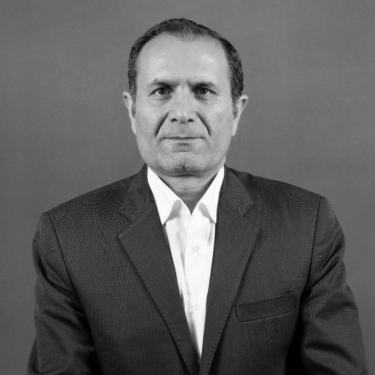
Heybatollah Najandimanesh is Professor of International Law at Allameh Tabataba’i University in Tehran. His research focuses on public international law, international criminal law, and international humanitarian law.