Call for Contributions: GenAI and the Future of (International) Legal Scholarship
Generative AI is rapidly reshaping how legal scholarship is researched, written, reviewed, and taught. In this context, universities, journals, and research institutions are developing new rules and policies on the...
Mehr lesen
Against the Suspicion of Machines
16.10.2026
Jean d’Aspremont
Fifteen years ago, on EJIL:Talk!, I mulled over what was then an emerging but hugely growing practice: academic expert blogging. I called it, only half-ironically, a “hazardous tool”. The hazard,...
Mehr lesen
Reparations by Another Name
15.10.2026
Francois Naaman
On June 17, 2026, the United States (U.S.) and Iran signed a fourteen-point Memorandum of Understanding (MoU) that formally ends military operations and establishes a sixty-day framework for negotiating a...
Mehr lesen
Self-Determination and Judicial Silence
The International Court of Justice (ICJ) has long recognised self-determination, including in its Western Sahara opinion of 1975 (para. 162) and Chagos opinion of 2019 (paras. 144–160). Recent decisions build...
Mehr lesen
Editorial #55: The International Criminal Court Between Strength and Strangulation
14.10.2026
Patrick Siegle
I had finished the manuscript for this editorial and was quite looking forward to the weekend. It was to be a rather philosophical piece on whether international criminal law is...
Mehr lesen
The Last Knight of International Law
13.10.2026
Gustavo Leite Neves da Luz
Don Quixote's first mistake is not to attack a windmill. It is to believe that the world still speaks the language of the books from which he learned how a...
Mehr lesen
Protecting States, Not People
12.10.2026
Andrea Maria Pelliconi
Like all “landmark” pieces of international jurisprudence, the closer one reads the International Court of Justice (ICJ)’s advisory opinion on the Obligations of States in respect of Climate Change of July 2025,...
Mehr lesen
- Symposium
- Interview
- International Law and the Political
From East West Street to the Anthropocene: Philippe Sands in conversation with Hendrik Simon
10.10.2026
Philippe Sands
Hendrik Simon
On the occasion of Philippe Sands receiving the Peace Prize of the German Book Trade on 11 October 2026, Hendrik Simon spoke with him about international law as a modicum...
Mehr lesen
- Völkerrechtspodcast
- Media
#60 Internationales Recht und Anarchismus – Brauchen wir noch Institutionen?
09.10.2026
Julia Emtseva
Marie-Christin Manke
Juan Manuel Klein
Deborah Peters
Anarchismus und Recht – passt das überhaupt zusammen? Und was hat der Abolitionismus damit zu tun? Auf den ersten Blick scheinen diese Ansätze kaum vereinbar. Gleichzeitig steht die internationale...
Mehr lesen
Ending War, Deferring Justice?
09.10.2026
Heybatollah Najandimanesh
Can peace be durable when justice is deferred? The Islamabad Memorandum of Understanding between the Islamic Republic of Iran and the United States offers a timely opportunity to revisit this...
Mehr lesen
Four Petals, One Owner?
In July 2026, a Chinese court held that Molly Tea’s use of a four-petal floral sign infringed seven registered Louis Vuitton trademarks, ordering the company to cease using the sign...
Mehr lesen
Withdrawal as Acquittal
07.10.2026
Stanislau Lashkevich
On 23 July 2026, Trial Chamber IV of the International Criminal Court terminated the proceedings against Abdallah Banda Abakaer Nourain and vacated the arrest warrant against him. What makes the...
Mehr lesen
Finding the Truth After Fifty Years
06.10.2026
Brian Dooley
Suchita Uppal
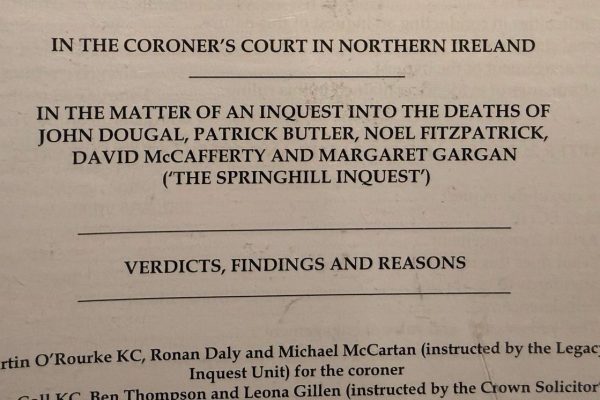
Time has made killings from the Northern Ireland conflict difficult to adjudicate, but recent inquests show that coroners can still establish what happened more than 50 years ago. On April 30...
Mehr lesen
Can International Law Form Its Own General Principles?
05.10.2026
Merlin Alexander Weinem
General principles of law are the third primary source of international law, alongside treaties and customary international law. However, there is disagreement among states and scholars regarding the method by...
Mehr lesen
Legal Vacuum or Legal Uncertainty in Strasbourg
On 2 July 2026, the European Court of Human Rights (ECtHR) delivered one decision and one judgment in two cases which, whilst resting on different facts, raised the same legal...
Mehr lesen
“Shoot-‘Em-All” Must Respect the Law
The Italian Senate recently approved an overhaul of the country’s 1992 hunting legislation n. 157, a draft bill referred to by the political opposition as “sparatutto”, meaning “shoot-them-all”, which would...
Mehr lesen
When Death Becomes a Spectacle
30.09.2026
Andrea Farrés Jiménez
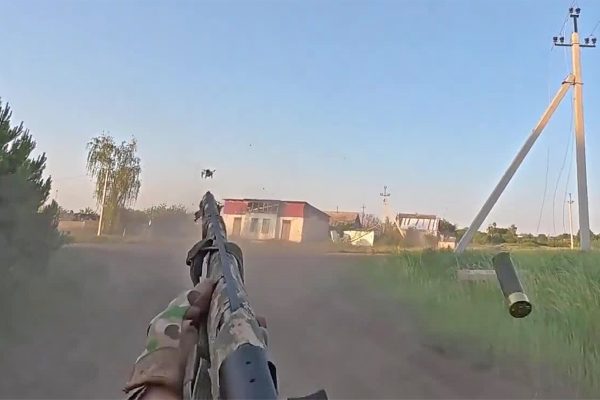
Technological battlefield innovations have been a central feature of Ukraine’s full-scale invasion by Russia in February 2022. This has been reflected in the unprecedented reliance on drones, as well as...
Mehr lesen
A Vote Against Making Things Worse
On 28 January 2026, the Parliamentary Assembly of the Council of Europe (PACE) unanimously rejected a draft Additional Protocol to the Convention on Human Rights and Biomedicine (Oviedo Convention). The...
Mehr lesen
The Right Result, the Wrong Reasoning?
28.09.2026
Sumedha Pradhan
Sourabh Bohra
Does the Freedom of Association and Protection of the Right to Organise Convention, 1948 (Convention No. 87), which never mentions strikes, still protect the right to strike? On May 21,...
Mehr lesen
- Völkerrechtspodcast
- Media
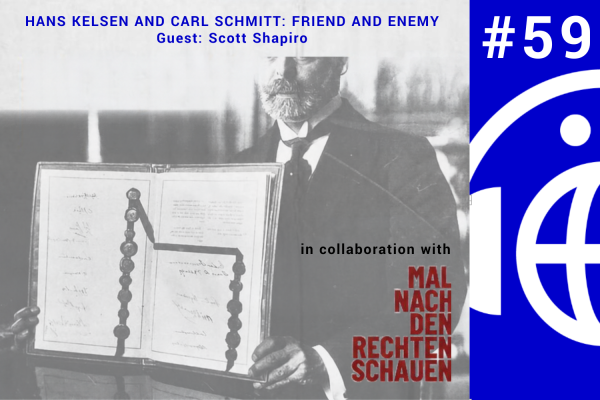
#59 Hans Kelsen and Carl Schmitt: Friend and Enemy
25.09.2026
Scott J. Shapiro
Elisa Costadura
Viktoria Moissiadis
Juan Manuel Klein
Rouven Diekjobst
This is the second episode of the cooperation between the Völkerrechtspodcast and the Mal nach den Rechten schauen podcast, in which we examine the continuities of National Socialism in public...
Mehr lesen
- Symposium
- Resources
- The Rooms We Wanted
An Elective, or a Foundation?
25.09.2026
Matilde Masetti Placci
Bhavinee Singh
Siddharth Peter de Souza
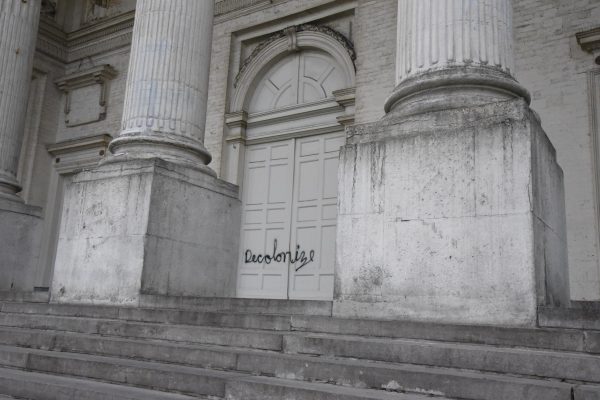
This blog post concludes the symposium “The Rooms We Wanted: What a Year of Decolonisation Seminars Revealed about a Law School”, reflecting on the Decolonisation Seminar Series at the University...
Mehr lesen
- Symposium
- Resources
- The Rooms We Wanted
Decolonial “And”
24.09.2026
Matilde Masetti Placci
Bhavinee Singh
Hilda Tizeba
Sukru Kagan Surucu
This blog post is part of the symposium “The Rooms We Wanted: What a Year of Decolonisation Seminars Revealed about a Law School”, reflecting on the Decolonisation Seminar Series at...
Mehr lesen
- Resources
- Symposium
- The Rooms We Wanted
From Inside Ethics Review Boards
23.09.2026
Matilde Masetti Placci
Bhavinee Singh
Morshed Mannan
Rebecca Tapscott
This blog post is part of the symposium “The Rooms We Wanted: What a Year of Decolonisation Seminars Revealed about a Law School”, reflecting on the Decolonisation Seminar Series at...
Mehr lesen
- Resources
- Symposium
- The Rooms We Wanted
A Form to Be Signed
23.09.2026
Matilde Masetti Placci
Bhavinee Singh
Chloe Young
This blog post is part of the symposium “The Rooms We Wanted: What a Year of Decolonisation Seminars Revealed about a Law School”, reflecting on the Decolonisation Seminar Series at...
Mehr lesen