_Wolf_hunt_with_borzois.jpg)
“Shoot-‘Em-All” Must Respect the Law
Italy’s New Hunting Bill and its Potential Breaches of European and International Obligations
The Italian Senate recently approved an overhaul of the country’s 1992 hunting legislation n. 157, a draft bill referred to by the political opposition as “sparatutto”, meaning “shoot-them-all”, which would exponentially expand hunting activities and methods. The draft bill (DDL n. 1552) has now moved to a subcommittee of the Chamber of Deputies.
The bill is controversial in several aspects. First, the Italian government has already come under scrutiny by the European Commission with regard to its obligations on the protection of wildlife and biodiversity, namely the Council Directive 79/409/EEC on the conservation of wild birds (Birds Directive) and the Council Directive 92/43/EEC on the conservation of natural habitats and of wild fauna and flora (Habitats Directive). In addition, this bill raises questions regarding Italy’s compliance with its obligations under the Bern Convention on the Conservation of European Wildlife and Natural Habitats, signed in 1979 under the auspices of the Council of Europe. Both the EU and Italy are original parties to this convention, and the mentioned EU Directives give effect to the obligations contained in this agreement within the EU legal order, raising further questions concerning the legal consequences for breaches of mixed-agreement obligations.
The Most Controversial Aspects of the Italian DDL N. 1552
The current Italian legislation allows hunting activities only insofar as they do not conflict with the need to preserve wildlife and agricultural production (Art. 1, para. 2); in contrast, the new draft bill modifies this section by recognizing hunters as “bioregulators”, stating that “hunting activities contribute to the protection of biodiversity and ecosystems” (Art. 2(b)).
Institutionally speaking, bill n. 1552 would grant Italian regions greater powers. In particular, the bill provides that, when drawing up their hunting calendars, regions may deviate from the guidelines set out by the High Institute for Environmental Protection and Research (ISPRA), whose opinions on the topic would be downgraded from binding to merely advisory (Art. 11, para. 2). This modification would allow regions to extend the hunting season well beyond the currently envisaged period (from September 1st to January 31st) into migration and nesting weeks. Incidentally, some members of the Parliament have pointed out that “the weakening of the national technical and scientific framework […] allows the uniform scientific benchmark to be replaced by discretionary assessments not based on objective and verifiable criteria” (p. 1907) and that “the expansion of regional discretion regarding hunting seasons and species that may be hunted, […] leads to a fragmentation of levels of protection that is incompatible with the unified nature of environmental protection” (p. 1908).
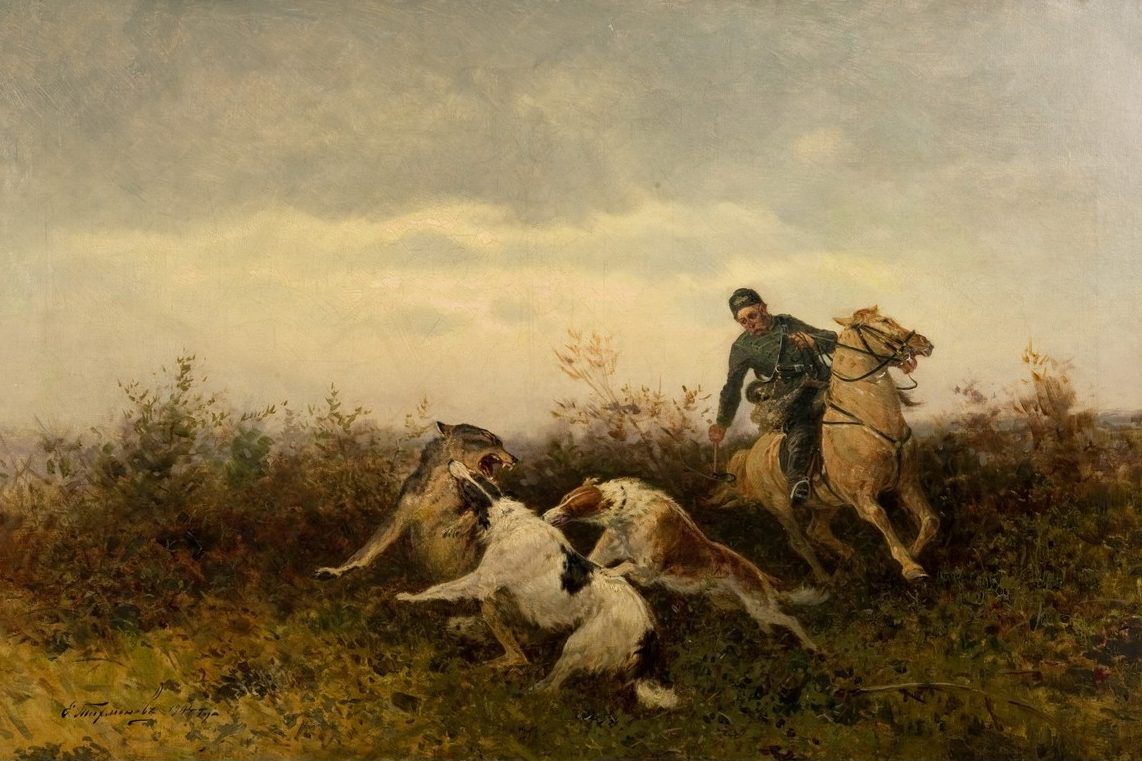
One of the most significant amendments of the draft bill is that the wolf (Canis lupus) is removed from the list of “highly protected species”, currently provided for in Article 2 (a)-(c) (Article 3(a)). This amendment is consistent with the recent adoption of Directive 2025/1237, which modifies the protection status of the animal by removing its reference in Annex IV of the Habitats Directive and amending its listing in Annex V. As a consequence, the wolf is no longer subject to the strict protection regime of Article 12 of the Habitats Directive, but falls under Article 14, which allows Member States to adopt measures regulating the taking and exploitation of the species while ensuring its maintenance at a favourable conservation status. Importantly, however, the Directive does not require Member States to lower the level of protection afforded to wolves under domestic law. Indeed, Recital 6 of the 2025/1237 Directive states that Member States may maintain or introduce more stringent protective measures, remaining free to maintain the status of the wolf at the level of protection provided to strictly protected fauna species. The decision under DDL n. 1552 to remove the wolf from the category of highly protected species therefore is not a necessary consequence required by EU law. This removal has thus attracted criticism, given the important ecological role of the wolf in regulating wildlife population. In particular, the wolf is the principal natural predator of the wild boar, a species whose growing population has been posing significant management challenges in Italy.
Possible Breaches of the Birds and Habitats Directives
In 1991, the Court of Justice of the European Union (CJEU) had already found Italy in violation of the Council Directive 79/409/EEC on the conservation of wild birds (Birds Directive) for its failure to protect various species from hunting activities during the rearing season and the various stages of reproduction and migration periods. After the Court’s decision, Italy adopted the current legislation n. 157 in 1992.
More than three decades after that judgment, DDL n. 1552 reopens a number of legal questions, prompting the European Commission to take action on the matter. Various Italian Environmental Associations recently released parts of a letter from the Commission, dated December 2025 and addressed to the Italian government, which expressed concerns about the draft bill’s compatibility with the Birds and Habitats Directives. Despite the reminders set out in the Commission’s letter, which remained undisclosed until a few months ago, the Italian Minister for Agriculture dismissed the Commission’s concerns, stating that a bureaucrat’s letter will not stop legislative efforts. In the absence of a full version of the letter, the reported concerns allow a preliminary assessment of the provisions most likely to raise compatibility issues with EU law.
Article 7(4) of the Birds Directive is one of the main points of concern. The provision gives effect to the principles of wise use and ecologically balanced control of the species, setting out that Member States are prohibited from hunting during the rearing season or during the various stages of reproduction and return to rearing grounds. This provision is confirmed in the Habitats Directive (Article 12(b)) for other species listed in Annex IV, and the CJEU’s past jurisprudence has consistently interpreted it stringently (see, for instance, case C-344/03, para. 33; case C-76/08, paras. 56 – 68). The fear is that extending the hunting season beyond February 10th (the maximum extension allowed by the 157/1992 legislation) would likely be incompatible with Article 7(4), and would make migratory and rearing species more vulnerable. The new legislation could also undermine the obligation for Member States to maintain bird populations at a level corresponding to ecological, scientific and cultural requirements (Article 2, Birds Directive) if hunting pressure increases and extends without an adequate scientific justification.
The weakening of ISPRA could furthermore give rise to a violation of Article 9 of the Birds Directive. This article allows a series of derogations to the Directive (including public health, air safety, or serious damage to natural resources) when there is no other satisfactory solution and under strict conditions. In the abovementioned case-law, the CJEU also interpreted that provision restrictively, affirming the necessity of compliance with the principle of proportionality. Allowing regions to simply disregard ISPRA’s opinions would certainly be problematic. Without ISPRA’s binding opinions, it would become easier to demonstrate that Article 9’s conditions for derogation are fulfilled.
Finally, in the available parts of the letter, the European Commission also noted that Italy was already subject to the EU Pilot/Dialogue Investigation (2023/10542), the informal dialogue preceding a possible infringement procedure, on the issue of the delayed implementation of the anti-poaching plan adopted by Italian authorities in response to a previous EU Pilot investigation (2013/5283), making this subsequent indication worthy of note with a view to future actions by the Commission. In the past, Italy has dealt with this issue by adopting an Action Plan titled “National Action Plan to Combat Wild Bird Crime”. The Plan was also referred to in the Commission’s letter because the guidelines contained therein have never been implemented by the Italian government and are now at risk of being undermined by the proposed new regulation. In fact, the new draft would allow an unlimited possession and use of live decoys (Article 5(2)), a provision that would increase risks of poaching and illegal trafficking of birds.
The Enforcement of International Wildlife Obligations through EU Law: Considering a Layered Legal Structure
The European Union’s Birds and Habitats Directive give effect, within the EU legal order, to the obligations arising from the Bern Convention on the Conservation of European Wildlife and Natural Habitats of 1979, binding both Italy and the European Union. Indeed, Articles 7, 8, and 9 of the Convention create a combined obligation for States Parties to ensure that hunting seasons, hunting methods, and any exceptions to standard protections are scientifically justified and do not jeopardize the conservation of species. This layered legal framework is particularly relevant to the proposed reform and highlights that the same national measure may therefore raise questions of compliance under both EU and international law.
At the EU level, the European Commission is responsible for monitoring the Member States’ compliance with their EU obligations (Art. 17(1) Treaty on the European Union). As mentioned, the Commission has already made its presence heard, both in the December 2025 letter and through the attempts to establish contact with the Italian authorities that have been taking place in recent weeks. If the Commission comes to the conclusion that Italy has failed to fulfil its obligations under EU law, infringement proceedings may be initiated according to Article 258 of the Treaty on the Functioning of the European Union (TFEU) and, ultimately, the matter could be brought before the CJEU.
Under the perspective of EU law, the Bern Convention represents a mixed agreement, namely an agreement binding both EU Member States and the European Union. On many occasions, the CJEU (see, for instance, C-459/03, paras. 175-6; C-246/07, para 73) has remarked the importance of close cooperation when mixed agreements are concluded – both during the negotiations and in the implementation phase – in areas in which EU Member States and the Union share competences, as in the case of environmental protection (Art. 4(2) TFEU). The practice of mixed agreements often results in overlapping obligations for the Member States and the Union, raising further questions of what should be the legal consequences of non-fulfilment when the organisation and its Member States are bound by the same international obligations. Some treaties address this problem by requiring the Member States and the Union to specify their division of competence, as in the case of Annex IX of the United Nations Convention on the Law of the Sea. When such a declaration is not present, it has been proposed – not uncontroversially – (see here para. 24, and here) that both the organization and its members could incur international responsibility if the obligation is breached. Scholarship has also suggested that the dividing line between individual and shared responsibility could be determined by whether such obligations are classified as divisible or indivisible.
Raising Legal Questions Before Raising the Guns
The Bern Convention contains no equivalent general declaration of competence. Interestingly, however, Article 18(3) expressly anticipates the problem of overlapping obligations at the dispute-settlement stage: where a dispute involves an EU Member State, the Member State and the Union must indicate whether the former, the latter, or both jointly will be party to the dispute. In this context, if Italy were to breach a Bern Convention obligation falling within an area in which the Union has exercised its competence through the Birds and Habitats Directives, would international responsibility attach exclusively to Italy, or could the Union also be called upon to answer for the non-performance of an obligation by which it is itself internationally bound? In other words, if the competence is shared between the Union and a Member State, as in this case, what are the legal consequences of a mixed agreement establishing the same obligations for both parties? In the present author’s opinion, the only scenario in which Italy’s responsibility could be shared with the Union is if the latter failed to take measures falling within its competence in response to the Member State’s non-compliance. In this scenario, such an omission could indeed raise questions about the fulfilment of the Union’s own obligations under the Convention, although the mere decision not to initiate infringement proceedings would not, by itself, establish international responsibility.
This blog post has tried to demonstrate that, should the DDL n. 1552 enter into force, some of its provisions could raise questions of compatibility with the EU Birds and Habitats Directives as well as with Italy’s obligations under the Bern Convention. Moreover, the case highlights the complexities arising from mixed agreements, where overlapping obligations of the Union and its Member States may underline issues concerning the allocation of international responsibility when internal competences are shared between the Union and its Member States, and no declaration of competence has been presented.

Shalom Caruso is a Ph.D student in Public International Law at the University of Padua. Her PhD thesis focuses on the responsibility and liability of international organizations for their activities in outer space.