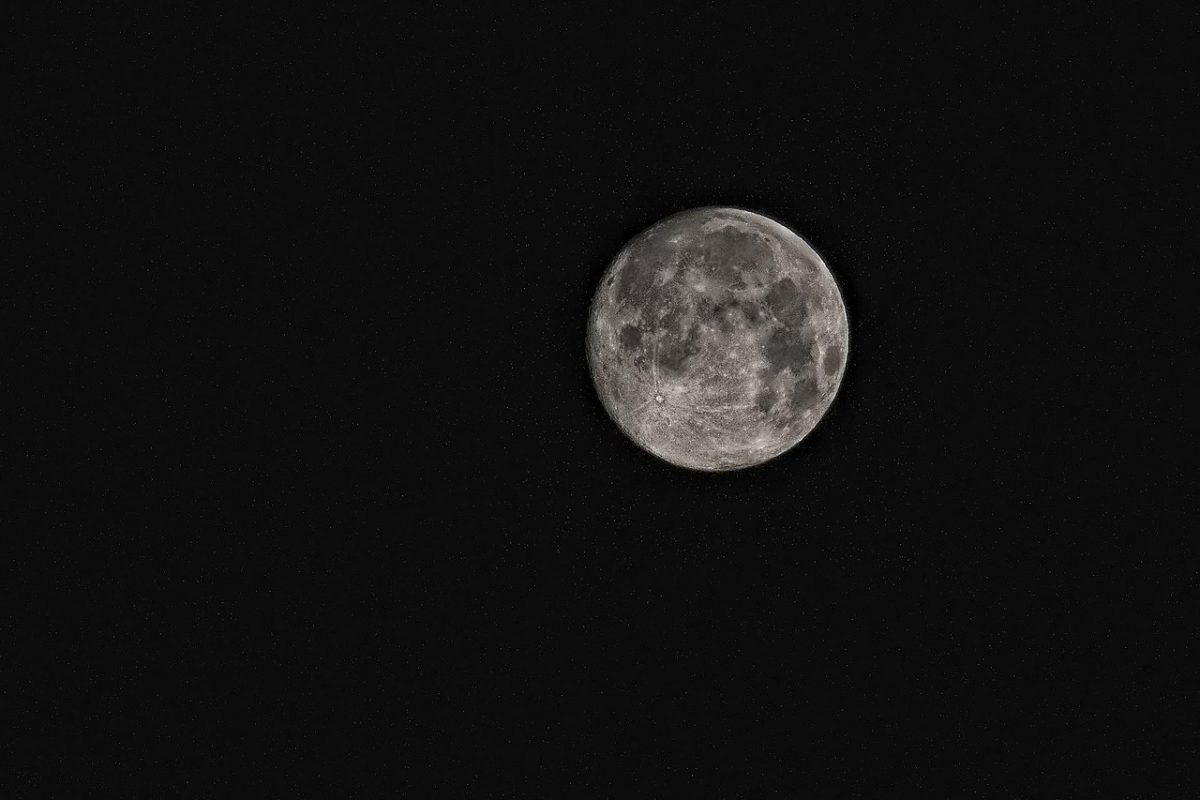
Nothing New on the Moon?
‘Rights of Nature’ for Areas Beyond National Jurisdiction Reflections on the Occasion of the Fifth Anniversary of the ‘Declaration of the Rights of the Moon’
On 2 February 2026, Elon Musk confirmed that SpaceX has acquired the billionaire’s artificial intelligence (AI) start-up xAI with the aim to ‘form an “innovation engine” putting AI, rockets, space-based internet, and media under one roof’. Musk is quoted as saying: ‘This marks not just the next chapter, but the next book in SpaceX and xAI’s mission: scaling to make a sentient sun to understand the Universe and extend the light of consciousness to the stars!’ Apart from making such not further defined ‘sentient sun’, Musk is obviously up to something else: ‘space-based data centers’ as well as ‘self-growing bases on the Moon’ seem to have caught his attention.
This transgression of known ‘planetary boundaries’ humanity is meant to live in is already raising many legal questions: about the general (technical and legal) possibilities and limits of commercial use of outer space, about the compatibility of Musk’s concrete plans with applicable space law – not least the Moon Treaty –, and questions about the effective protection of the moon from pollution, exploitation of existing resources or even human colonization.
Whereas in the past, only objective law was used to protect nature and the environment – whether on, above, below the earth, or beyond –, for about a decade now there has been discussion as to whether granting subjective rights would better serve the purpose of protection. On the occasion of the fifth anniversary of the ‘Declaration of the Rights of the Moon’ on 11 February 2026, this article asks whether the ‘Rights of Nature’ (RoN) concept could be an effective shield for protecting outer space and celestial bodies from the increasing economic exploitation of space and whether existing law regulating the regimes for areas beyond national jurisdiction, especially outer space, could provide a suitable framework for incorporating the idea of a ‘subjectivised’ nature.
‘Rights of Nature’ – For the Moon
The number of worldwide practical examples of national recognition of ‘nature’ as a legal entity and the establishment of original RoN thus continues to grow: Starting with Ecuador in 2008, where RoN were granted as part of a constitutional amendment, there are now cases of legislative or judicial recognition in several states, such as Bangladesh, Bolivia, Columbia, New Zealand or even Spain, especially with a focus on the recognition of legal personality and/or specific rights for rivers. Furthermore, a growing number of civil society initiatives (see, e.g., here, here and here) aiming to initiate such changes, accompanied by a lively academic discourse (see, e.g., here, here and here), can also be observed.
Five years ago, the idea arose to no longer limit the dissemination of the concept of a ‘subjectivised’ nature to the space within the much-cited planetary boundaries. Based on the somewhat esoteric observation that the ‘Moon has a hypnotic hold on humanity, pulling our oceans, illuminating our travel, heralding the time of feasts, and helping to shape cultures and even mystical beliefs’, an Australian initiative, spearheaded by landscape architect Thomas Gooch, founder of the ‘Office of Other Spaces’, as part of his work with the Moon Village Association, an international NGO based in Vienna, initiated public forums about the relationship of humanity with the moon. In August 2020, the question of whether ‘the Moon could be granted legal personality as a way to acknowledge that the Moon had an existence of its own separate from human perceptions’ was brought up. The ensuing discussion between Michelle Maloney (Co-Founder Australian Earth Law Alliance), Ceridwen Dovey (writer), Alice Gorman (space archaeologist), Mari Margil (Executive Director Center for Democratic and Environmental Rights) and Thomas Gooch gave birth to the idea to create a ‘Declaration of the Rights of the Moon’ (hereinafter: ‘the Declaration’). The final version of the (non-binding) Declaration was published on 11 February 2021.
The Declaration is based on the RoN approach, its preamble drawing attention to ‘humanity’s impact on the Earth – causing ecosystem collapse, a new era of mass species extinction and global climate change – and seeking to avoid destruction and change to the natural systems and ecosystems of the Moon’. The creators, speaking on behalf of ‘We the people of Earth’, declare the moon ‘a sovereign natural entity in its own right’, of which, ‘in accordance with established international space law, no nation, entity, or individual of Earth may assert ownership or territorial sovereignty’. The following ‘fundamental rights’ shall be granted to the celestial body thus ‘subjectivised’:
‘(a) the right to exist, persist and continue its vital cycles unaltered, unharmed and unpolluted by human beings;
(b) the right to maintain ecological integrity;
(c) the right to be defined as a self-sustaining, intelligent, cohesive, intact lunar ecosystem, beyond current human comprehension;
(d) the right to independently maintain its own life-sustaining relationship with the Earth’s environments and living creatures; and
(e) the right to remain a forever peaceful celestial entity, unmarred by human conflict or warfare.’
‘Rights of Nature’ – For Areas Beyond National Jurisdiction?
For the creators of the Declaration of the Rights of the Moon, which is solely the result of a civil society initiative and therefore, of course, not legally binding on anyone, it was primarily ‘a way to start the discussion at a global level’. Despite this intention, however, there has been no comprehensive discussion about the ‘subjectivisation’ and granting of subjective rights to celestial bodies in the five years since the Declaration came into existence, as far as is known (see here for one exception, which does not mention the Declaration). The following section aims to provide some food for thought for a potential discussion in this regard.
Any discussion of the possibilities and limitations of implementing subjective rights for nature into the existing regulatory regime for outer space would have to take into account the specific principles that form the basis of this regime. Outer space, like the High Seas, Antarctica, as well as the seabed and ocean floor, and the subsoil thereof, beyond the limits of national jurisdiction, known as the ‘Area’, is a so-called ’area beyond national jurisdiction’. One of the cornerstones of the associated regulatory regime is the principle of the ‘common heritage of (hu)mankind’ (CHM), originally developed within the framework of the rules of the UN Convention on the Law of the Sea (UNCLOS) for the Area (Art. 136 UNCLOS) and extended to outer space in Art. 1 of the Declaration of Legal Principles Governing the Activities of States in the Exploration and Use of Outer Space (‘Declaration of Principles’). The principle was later integrated into the Treaty on Principles Governing the Activities of States in the Exploration and Use of Outer Space, Including the Moon and Other Celestial Bodies (‘Outer Space Treaty’) (Art. 1) and can also be found in the Moon Treaty (Art. 4 para. 1; Art. 5; Art. 11 para. 1). It describes, in simplified terms, that certain defined territories are held exclusively ‘for the benefit of all mankind’.
This raises the question of whether a regime governed by this already highly collaborative principle could be considered particularly open to the integration of RoN. A debate on this issue has already taken place in connection with the extent to which the idea of separate nature rights could inspire novel solutions of and promote (more) effective environmental protection with regard to marine biodiversity in areas beyond national jurisdiction, not least in the context of the negotiations for the ‘Agreement under the United Nations Convention on the Law of the Sea on the Conservation and Sustainable Use of Marine Biological Diversity of Areas Beyond National Jurisdiction’ of 2023 (see, e.g., here and here). It is argued that the earth should be fully incorporated as a protected entity into the CHM concept, thereby taking into account the mutual connection between humans and nature. Against this background and by recognising ocean areas beyond national jurisdiction and their components as rights bearers with their own subjective rights, a paradigm shift from anthropocentric fixation on the protection of humans to ‘where ecological integrity stands at the core of international decision-making’ could be made possible (see here). In this way, the obligations under the CHM principle could be interpreted in a manner that would enable a (more robust) stewardship of nature approach (see here).
Regardless of whether a complete paradigm shift is necessary to enable the possible integration of RoN (see, e.g., here), this proposed combination of the CHM principle and the RoN concept for effective protection not only of the marine but also of the space environment seems conceivable at first glance. This is primarily because protection of the existing balance of the environment of outer space is already established in Art. 7 Moon Treaty, for example, which could be reinforced by a subjective RoN perspective. Apart from Art. 157 para. 1 UNCLOS, which establishes the International Seabed Authority through which States Parties organize and control deep seabed activities and thus are meant to act as a trustee on behalf of mankind as a whole, no other international agreement applying the CHM principle provides for this (see here). Cognisant of the connectivity of outer space and between humans and nature, the RoN concept could thus further a stewardship approach also with regard to celestial bodies. Further, relying on a subjective rights approach for celestial bodies could allow to shift the focus of governance toward responsibility and respecting ecological limits (similar for marine environment here), equalise the balance between non-appropriation (Art. 11 para. 3 Moon Treaty), rights to use within certain limits (Art. 4 para. 1 Moon Treaty) and responsibilities to preserve, and require some mechanisms for representation of the moon – or at least strengthen the aspect of cooperation between the respective State Parties.
However, it must be borne in mind that the CHM principle is still essentially anthropocentric – and not just in name. So, if a paradigm shift towards a more ecocentric approach to protecting outer space as an area beyond national jurisdiction is being sought, it is unclear why and how a principle that is so entrenched in the opposite should provide the starting point for this. Furthermore, even though states have already agreed to conservation and sustainable use of areas beyond state jurisdiction for the common good, this only proves their basic willingness to cooperate in this regard, but does not necessarily imply agreement with a comprehensive protection stewardship approach – especially against the backdrop of an emerging economic race for space. This is particularly true given that the outer space regime has not been brought into line with the legal framework for the Area in this respect (see above). Thus, the suitability of the respective international regimes for areas beyond national jurisdiction as a gateway for the manifestation of RoN in positive international law is questionable; the RoN concept can probably rather ‘provide a framework for creative interpretation’ of the already existing provisions.
Conclusion: Nothing New on the Moon… Yet
According to Altabef (p. 512), ‘outer space presents a carte blanche to explore a new way of considering humanity’s relationship with nature. […] embracing environmental personhood offers humanity an opportunity to test the legal concept as a way to preserve the environment and imagine a new way of coexisting with nature, rather than destroying it’. The resurgence of the space industry, with possibilities unexpectedly enhanced by AI, raises doubts as to whether this opportunity will or still can be seized. In this respect, it remains to be seen which aspects humanity will be prepared (and willing) to consider in view of dwindling terrestrial resources when it comes to the possible expansion of its sphere of activity beyond earth. In any case, actual subjective rights of celestial bodies in the sense outlined by the 2021 ‘Declaration of the Rights of the Moon’ will most certainly not be part of these considerations.

Dr. Camilla S. Haake is a Post-Doctoral Researcher at the Ludwig Boltzmann Institute of Fundamental and Human Rights affiliated with the University of Vienna. Her research focus is on the human rights protection in general international law and European Union law, particularly on intersectional issues in the areas of human rights and business and human rights and the environment.
The article’s distinction between the Moon’s symbolic personhood and enforceable international law is particularly important. Could granting the Moon standing in court create meaningful environmental accountability, or would it remain mainly a framework for interpreting existing obligations?