
This Is Not the End of Justice
There Is a Future for International Criminal Law After the U.S. Sanctions
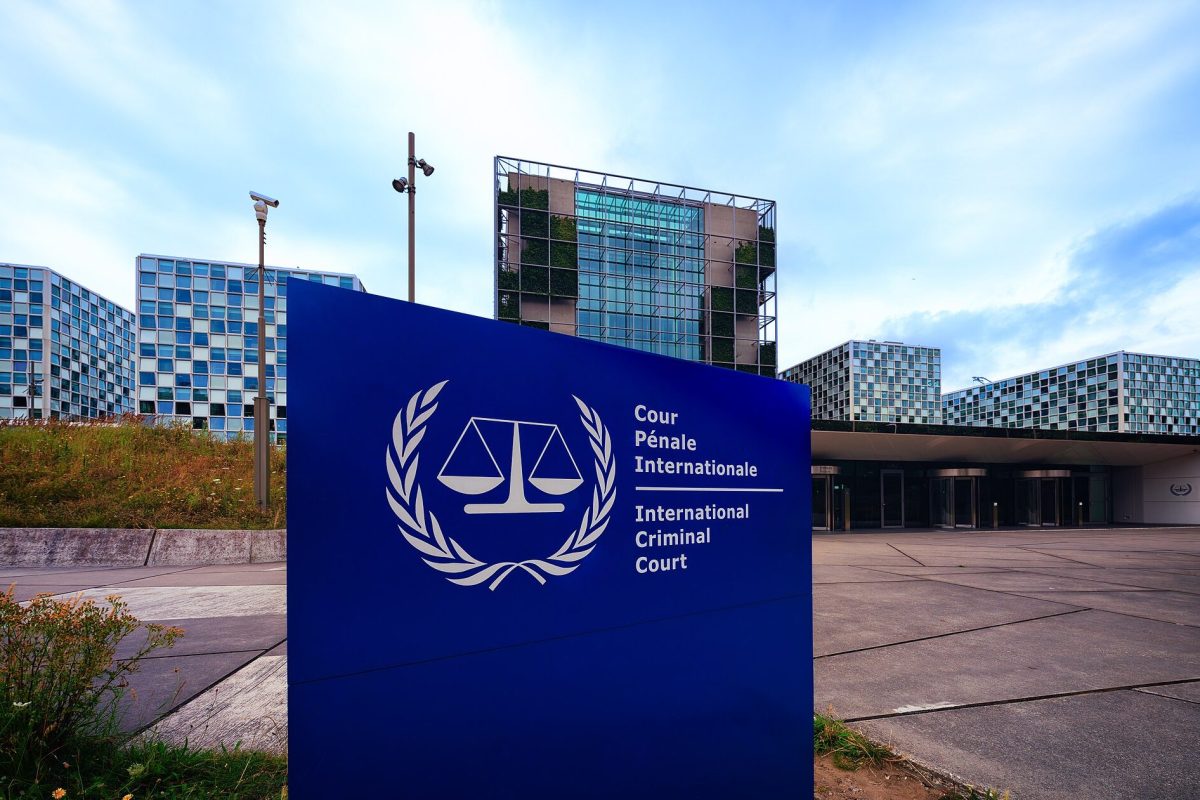
U.S. President Donald Trump has made no secret of his enmity for the International Criminal Court. Since issuing Executive Order 14203 in February 2025, his administration has imposed multiple rounds of sanctions against ICC employees, including former chief Prosecutor, Karim Khan, several deputy prosecutors, and nine of the court’s 18 judges. The Trump administration, not content just to interfere with the lives of the court’s employees, announced on 13 July 2026, that it would dismantle the ICC, ’brick by brick if necessary.’
In furtherance of that goal, the United States imposed economic sanctions against the ICC as an entity on 9 October 2026. The Court was added to the U.S. Specially Designated Nationals and Blocked Persons List (‘SDN List’), triggering the sanctions threatened in Executive Order 14203. The sanctions include: blocking all ICC property and interests in property in the United States or in the control of a U.S. person (as defined in the Executive Order); and all transactions by U.S. persons that involve that property or interest in property. The U.S. Department of the Treasury issued a 180-day general licence authorising the Court’s continued operations, intended to give States Parties time to address U.S. concerns.
Once the licence expires, the sanctions will prevent the ICC from accessing any of its assets in the United States or doing business with any U.S. citizens, residents or organisations organised under U.S. law. This will severely limit the Court’s ability to access its bank accounts, other financial systems, and information technology, making it very difficult for the ICC to continue its day-to-day operations. As a result, the sanctions could force the Court to cease operations altogether.
Past United States’ Interference with the International Criminal Court
This is not the first time the United States has attempted to obstruct the course of international criminal justice. The United States took a threatening and obstructionist position towards the ICC through the passage of the American Service-Members’ Protection Act (‘ASPA’) during George W Bush’s presidency in the early 2000s. While the ASPA was largely focused on preventing any form of federal, state, or local cooperation with the ICC, it also authorised the President to use ‘any means necessary’ to bring about the release of American citizens being detained by the ICC or at its request. The term ‘any means necessary’ seemingly allowed the President to use military force against the seat of the Court in The Hague, leading some to refer to it as ‘the Hague Invasion Act’. While such an invasion never occurred, it demonstrated the extent to which the United States might be willing to go to interfere with the ICC’s work.
The ‘any means necessary’ language of the ASPA was resurrected during Trump’s first term. National security advisor John Bolton stated in a speech that the United States would use ‘any means necessary’ to prevent the ICC from prosecuting individual Americans or citizens of U.S. allies. He also threatened to sanction Court officials, including the imposition of travel bans and economic restrictions. The administration later followed through on that threat in sanctioning Fatou Bensouda, then the ICC’s chief prosecutor, and one of her assistants, Phakiso Mochochoko. This was done in response to the ICC’s investigation into possible crimes committed by American troops in Afghanistan. That investigation was later de-prioritised by Karim Khan on the basis that the crimes allegedly committed by the Taliban and Islamic State were more severe than those asserted against U.S. citizens. The sanctions were ultimately lifted by President Biden.
United States Opposition to Universal Jurisdiction
The United States also played a significant role in limiting the way in which domestic courts could prosecute the alleged perpetrators of atrocity crimes on the basis of universal jurisdiction. Universal jurisdiction is the idea that certain crimes – genocide, crimes against humanity, war crimes, aggression, and torture – impact the shared interests of all states, and therefore all states are permitted to prosecute the people accused of those crimes if they are able. What distinguishes it from other forms of jurisdiction is that a state can choose to prosecute an accused for one of these crimes, regardless of whether that person, their alleged victims, or the perpetration of the crime has any connection to the prosecuting state. In its purest form, often referred to as broad universal jurisdiction, states are able to issue an arrest warrant against an accused who has no formal connection to the state, has never been physically present in that state, and has no intention of ever visiting the state. Universal jurisdiction also exists in a more conditional form, called narrow universal jurisdiction, which typically requires that the accused is physically present in the prosecuting state at the commencement of proceedings, although how the presence requirement is understood can vary between states.
Several states, Belgium and Spain amongst them, enacted statutes that allowed them to prosecute individuals on the basis of broad universal jurisdiction. The Belgian statute, known as the Anti-Atro
city Law, was scrutinised by the International Court of Justice in The Arrest Warrant Case (Democratic Republic of the Congo v Belgium). While the Court ultimately found against Belgium on the basis that the Congolese official they sought to arrest was protected by immunity in his role as foreign minister, it declined to issue a decision about whether broad universal jurisdiction complies with international law. Instead, several judges addressed the issue in separate and concurring opinions, without any clear consensus on the legality of the practice. This allowed for the continued possibility that an individual with no connection to Belgium, and with no intention of entering its territory, could still be the subject of prosecution there.
The United States objected to Belgium’s universal jurisdiction law, and in 2003 set out to destroy it. In March, U.S. Secretary of State, Colin Powell, suggested that American officials might no longer attend meetings at NATO Headquarters out of a fear that they might be arrested when doing so. This was understood at the time as a threat to Belgium’s position as a diplomatic capital and NATO host state. Shortly thereafter the Anti-Atrocity Law was amended, narrowing how and when cases could be brought under it.
This did not appease the United States. In May 2003, a bill was introduced in the U.S. House of Representatives commonly referred to as the ‘Universal Jurisdiction Rejection Act’. While the Bill is not specifically directed at blocking the Belgian law, it was clearly drafted in response to it. This is evident from its ‘Findings’ section, which extensively sets out how the Belgian law was being used against various U.S. government and military officials. Subsequently, in June 2003, U.S. Secretary of Defense Donald Rumsfeld indicated that Belgium must ‘recogni[s]e that there are consequences to its actions’ in enacting the Anti-Atrocity Law. He suggested that because of the law, U.S. officials might no longer be able to visit Belgium, and that funding for a new NATO headquarters in Brussels could be withheld. This pressure brought by the U.S., coupled with growing domestic and international opposition to the Anti-Atrocity Law, eventually led the Belgian government to withdraw it and replace it with a new law that required some form of territorial or nationality nexus for jurisdiction to exist.
Belgium’s capitulation to the United States, along with a similar retreat by the Spanish government in 2009 and 2014, resulted in dire prognostications about the future of universal jurisdiction as a basis for domestic prosecutions. Following the repeal of Belgium’s Anti-Atrocity Law, Antonio Cassese suggested that universal jurisdiction may be ‘on its last legs, if not already in its death throes’. In 2011, Luc Reydams further eulogised the concept in his book chapter ‘The Rise and Fall of Universal Jurisdiction’. It appeared that the United States’ efforts may have worked and that universal jurisdiction would be relegated to a footnote in the development of international criminal justice.
What actually transpired was quite different. Universal jurisdiction, far from disappearing from the international legal landscape, has experienced an upsurge in use over the past 15 years. During the five year period between 2005-2010, there was one documented universal jurisdiction case globally that produced any sort of legal decision. In comparison, the years 2020-2025 saw 85 such investigations and prosecutions. This trend is further confirmed by Maximo Langer and Mackenzie Eason, whose research finds that the number of universal jurisdiction complaints filed in domestic courts for the violation of core international crimes has been consistently expanding. The use of universal jurisdiction by domestic courts is clearly a growing practice, and not one on the verge of extinction. This gives added credence to the long-standing position that the future of international criminal law is domestic.
It must be noted that the type of universal jurisdiction being pursued by Belgium and Spain in the early 2000s differs from that which is primarily practiced today. Where Belgium and Spain were both pursuing broad universal jurisdiction, the recent prosecutions are mostly demonstrations of narrow universal jurisdiction. Therefore, the recent increase in universal jurisdiction prosecutions should not be understood as an acceptance of the earlier Belgian and Spanish practices. Instead they are a more general recognition that states have a responsibility to pursue accountability against those individuals present on their territory who stand accused of atrocity crimes. This practice has become so widespread that even the United States has adopted legislation permitting it to exercise narrow universal jurisdiction in cases involving war crimes and/or torture.
It is also important to recognise that the Rome Statute was instrumental in a number of states adopting universal jurisdiction for the core international crimes. The Statute does not contain an explicit requirement that states enact domestic legislation implementing the Rome Statute. However, many states parties did to enable better compliance with the Court’s complementarity regime. A component of this has been criminalising the core international crimes in their national jurisdictions, creating an obligation in some instances to prosecute individuals domestically for those crimes should they come under the state’s jurisdiction. The increase in domestic universal jurisdiction prosecutions can therefore be attributed in part to the existence of the Rome Statute.
The possibility that U.S. sanctions could close the ICC creates a concern that doing so will also curtail the use of domestic universal jurisdiction prosecutions. However, states did not only undertake the responsibility of carrying out domestic prosecutions for international crimes as a way of ensuring compliance with the Rome Statute’s complementarity regime. Many also do so to avoid being perceived as a place that offers safe haven to international criminals. This is demonstrated by the significant number of universal jurisdiction prosecutions conducted in contexts where there was no prospect of ICC prosecutions and therefore no concerns about falling foul of the complementarity regime. This is best exemplified by the numerous domestic universal jurisdiction cases arising out of the war in Syria, a situation that falls outside of the jurisdiction of the ICC.
Conclusion
The current sanctions regime is not the first time the United States has interfered with international accountability efforts. What history has shown is that American attacks on international criminal justice are not necessarily fatal. The aggressive stance taken by the George W Bush administration towards the ICC and universal jurisdiction did not result in the demise of international criminal justice. Nor did the sanction regime instituted against court officials during the first Trump administration. The current efforts by the United States to obstruct the work of the ICC are more severe than those pursued in the past, and they could very well spell the end of the Court, but they will not result in the end of international criminal justice. International criminal justice has found itself under attack before and has consistently demonstrated the resilience and adaptability needed to continue to hold accountable those individuals who commit atrocity crimes. It is a discipline that will weather this storm and continue to evolve, even if it has to do so without the involvement of the International Criminal Court.
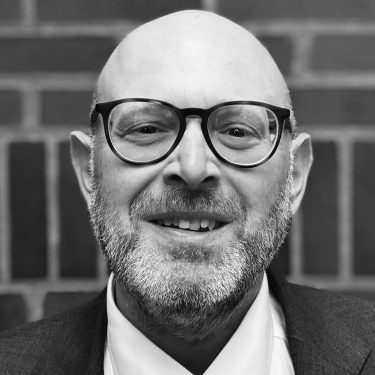
Caleb H. Wheeler ist außerordentlicher Professor für Rechtswissenschaften an der Fakultät für Rechts- und Politikwissenschaften der Universität Cardiff. Seine Forschungsschwerpunkte liegen im Bereich der internationalen Strafgerichtsbarkeit, wobei er sich insbesondere mit der Fairness in internationalen Strafprozessen und -verfahren befasst.