Gender, Justice, and the Climate Emergency
Advisory Opinion AO-32/25 and the Role of the Courts in the Face of Violence against Women Human Rights Defenders in the Climate Crisis
The global climate crisis exacerbates structural inequalities. Women, who defend human and environmental rights, face specific forms of violence that, in many cases, are neither recognized nor adequately addressed by judicial systems.
According to a report by Global Witness, at least 177 land and environmental defenders were killed worldwide in 2022. This brings the total number of documented killings of environmental and land defenders between 2012 and 2022 to 1,910. The data demonstrate that violence persists in a systematic pattern against those who protect nature and territories, highlighting the urgent need to strengthen protection mechanisms and ensure access to justice for these individuals.
The recent Advisory Opinion AO-32/25, issued by the Inter-American Court of Human Rights (IACtHR), introduces an unprecedented recognition of how climate change disproportionately affects women and particularly women defenders, and establishes specific obligations for States and their judiciaries in response.
This blog analyzes the relevance of Advisory Opinion AO-32/25 in the effective protection of environmental women human rights defenders in Latin America, drawing on three emblematic cases: Berta Cáceres, Digna Ochoa, Macarena Valdés, and Julia Chunil, women who have faced, or continue to face, violence linked to their role as defenders. These cases illustrate how access to justice remains hindered by gender stereotypes, institutional negligence, and the lack of a gender and intersectional perspective factors that Advisory Opinion AO-32/25 calls upon States and Courts to address and transform.
The Violence Faced by Women Human Rights Defenders: Berta, Digna, Macarena, and Julia
In Honduras, the assassination of Berta Cáceres, a Lenca leader and global symbol in the defense of Indigenous land rights, became emblematic of the impunity surrounding various forms of violence against women human rights defenders, particularly in its most extreme form. Although the material perpetrators were convicted, the investigation into the intellectual authors was systematically obstructed. In 2025, the Inter-American Commission on Human Rights (IACHR) established the Interdisciplinary Group of Independent Experts (GIEI Honduras) to strengthen the investigation, identify patterns of structural violence, and formulate recommendations for reparations and non-repetition.
The Inter-American Court’s judgment in Digna Ochoa and Others v. Mexico (Series C No. 447, 2021), concerning the case of a Mexican human rights defender who had represented, among others, the imprisoned ecological farmers Rodolfo Montiel and Teodoro Cabrera, set a significant precedent regarding gender-based stigmatization in the investigation of crimes against women defenders. The Court emphasized that women human rights defenders often face additional barriers stemming from gender discrimination and are subject to stigmatization that can distort the investigative process (paras. 48 and 125), undermine the pursuit of justice (paras. 126–127), and negatively influence the evaluation of evidence (para. 129).
In doing so, the Court established international standards aimed at ensuring impartial, independent, and stereotype-free investigations into such cases, while reaffirming States’ obligations to protect defenders and guarantee access to truth and justice in the face of widespread impunity.
In Chile, the 2016 death of Macarena Valdés, a Mapuche activist opposed to hydroelectric projects, remains unresolved. Although the Chilean Legal Medical Service initially classified her death as a suicide, two independent expert reports, challenged this conclusion. British pathologist John Clark, an expert for the International Criminal Court, found the ligature marks sufficiently unusual for suicide, suggesting instead ligature strangulation by another person or persons, with possible post-mortem suspension to simulate hanging. Forensic doctor Luis Ravanal identified two overlapping ligature patterns and no vital signs in neck tissues, indicating the body was not alive when suspended. Valdés’ death occurred one day after hydroelectric company workers threatened her family to leave or something very serious would happen.
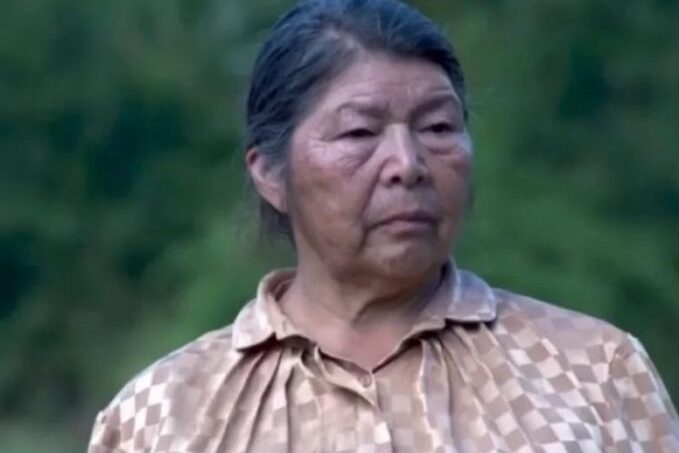
The most recent case is that of Julia Chunil, a Mapuche Lavkenche defender who disappeared in April 2025. In response to the State’s inaction, the Inter-American Commission on Human Rights granted precautionary measures (Resolution-38-25), urging the Chilean government to act urgently to ensure her search and to protect her family.
These cases reveal a common pattern: women human rights defenders face violence not only for exercising their right to defend rights, but also because of their gender. The risks and challenges they encounter differ from those faced by men, and are shaped by gender-based and intersectional factors (A/HRC/40/60, para. 35). Building on this concern, in her latest report (A/HRC/80/114. paras. 88 and 97 (f), the UN Special Rapporteur on the situation of human rights defenders, Mary Lawlor, highlighted the gender-specific challenges faced by women defending human rights in the context of climate change, including social stigma, exclusion from decision-making, and exposure to gender-based violence. The report also notes that institutional discrimination and funding barriers particularly affect Indigenous and trans women-led groups and recommends that States adopt legal and awareness-raising measures to prevent the misuse of criminal and civil law against defenders working on climate and just transition issues. This highlights that protecting women human rights defenders in climate contexts requires more than reactive measures against violence; it demands structural gender-sensitive reforms that ensure their full and safe participation in environmental decision-making.
How Advisory Opinion AO-32/25 Defines State Obligations?
Advisory Opinion AO-32/25, issued on July 3, 2025, recognizes that environmental defenders play a key role in protecting democracy and the rule of law in the face of the climate emergency (para. 563). Given the urgency and gravity of the context, the Inter-American Court affirms that States have a special obligation of protection and must adopt all necessary measures to guarantee the right to defend human rights (para. 575). This obligation requires States to organize the entire state apparatus, including the judiciary, so that it is capable of preventing, investigating, punishing, and redressing human rights violations (para. 225).
This obligation becomes even more pressing in the case of women defenders. The Inter-American Court recognizes that environmental women human rights defenders face gender-based stigmatization, threats, and reprisals aimed at delegitimizing their work, exposing them to specific forms of violence tied to gender stereotypes, which demand a reinforced response from the State (para. 572). It underscores that States must adopt special measures to protect these women from threats, violence, and reprisals (para. 566), and that gender-based violence may intensify after climate disasters, disproportionately affecting girls and women (para. 576).
Moreover, the Court establishes the obligation to collect and analyze sex- and gender-disaggregated data to inform public policies on adaptation, mitigation, and response (paras. 496, 511, and 512). In this framework, gender and intersectional approaches must be actively integrated into all state actions (para. 575).
What Should Judicial Authorities Do?
The Inter-American Court is clear: the State’s obligation of guarantee in the face of the climate emergency is not limited to the executive branch. Judges and other justice system actors have the duty to act with due diligence to ensure access to justice and reparations for victims, particularly those from historically excluded groups such as Indigenous women, people of African descent, and environmental defenders (para. 225).
The various forms of stigmatization, violence, persecution, and other human rights violations against environmental women defenders must be viewed through a gender lens by those responsible for adjudicating and sanctioning these acts, whether committed by private individuals or State agents.
This means the judiciary must prevent, investigate, and sanction violence against women defenders without reproducing stereotypes or obscuring their role. AO-32/25 calls for the elimination of gender stereotypes from judicial proceedings and mandates that investigations incorporate an intersectional approach that recognizes the particular risks faced by women defenders (para. 585).
To fulfill this duty, States must apply all the standards developed by the Inter-American Court of Human Rights since Miguel Castro-Castro Prison v. Peru (Series C No. 160, 2006), including enhanced due diligence in cases of violence against women. These standards, further refined in landmark cases such as González et al. (“Cotton Field”) v. Mexico (Series C No. 205, 2009) and Carrión González v. Nicaragua (Series C No. 550, 2024), require States to provide fair and effective legal procedures. This includes guarantees of women and girls’ rights to effective access to remedies, services provided by professionals trained in gender-based violence, processes free from negative gender stereotypes, and an intersectional approach. These standards complement those previously established by the Court in AO-32/25 (paras. 613, 614).
In line with the recommendations of the UN Special Rapporteur on the situation of human rights defenders, Michel Forst, in his 2019 report, the absence of an intersectional approach significantly undermines access to justice and perpetuates impunity (Report A/74/159, para. 72). Therefore, the Special Rapporteur recommends that justice systems apply international human rights law. Doing so would help incorporate standards and tools that strengthen due diligence in investigations to identify violations against defenders. Specifically, he suggests the use of soft law instruments developed with a differential approach, such as the Yogyakarta Principles on the Application of International Human Rights Law in relation to Sexual Orientation and Gender Identity, or the Latin American Model Protocol for the Investigation of Gender-Related Killings of Women (Report A/74/159, para. 111), which provide clear guidance for integrating gender and intersectionality into the administration of justice.
From Jurisprudence to Action
Advisory Opinion AO-32/25 marks a significant step forward in recognizing the role of environmental women human rights defenders and the structural violence they face. However, this normative progress will only become effective if judicial systems across Latin America transform their practices by incorporating a gender perspective, an intersectional approach, and adherence to international human rights standards at every stage of the judicial process.
Although non-binding, Advisory Opinion AO-32/25 carries strong soft-law power. Like earlier opinions OC-23/17 on the environment and human rights and OC-24/17 on gender identity and equality, AO-32/25 guides State compliance and inspires domestic courts. In Latin America, such opinions often gain de facto normative force, shaping judicial reasoning and legislation. As Main-Klingst and Marjanac note, their authority lies not in enforcement but in their capacity to build shared or community expectations. In Chile, this interpretative momentum coincides with the legislative advancement of Bill No. 16.886-12 to protect environmental defenders. Moreover, the impact of Advisory Opinion OC-32/25 is already emerging in domestic jurisprudence. In Chile, a dissenting opinion of the Constitutional Court cited OC-32/25 to apply the pro actione principle, urging courts to interpret procedural rules in favor of access to environmental justice and consistency with the Escazú Agreement.
Conclusion
Advisory Opinion AO-32/25 marks a turning point in the recognition of how climate injustice and gender-based violence intersect in the lives of women environmental defenders. By centering the experiences of Berta, Digna, Macarena, Julia, and countless others, the Inter-American Court has affirmed what these women have long known: defending the environment is defending life itself, and those who do so deserve protection, not persecution. The challenge now lies in translating this recognition into concrete action by States across the region.
On January 15, 2026, the Chilean Public Prosecutor initiated criminal proceedings against the sons of Julia Chuñil in relation to a homicide investigation. The case remains at an initial stage, with the investigation period now underway. Proceedings are ongoing and no findings have been reached.
Maturana is a lawyer and judge, a doctoral candidate in the Advanced Studies in Human Rights program at Carlos III University of Madrid, and Director of Chilean Women Judges.

Lorena Zenteno Villa is a Chilean attorney specialized in human rights, former member of the judiciary in Chile. She is currently enhancing her qualifications by pursuing an SJD at the University of Miami, focusing on climate change and human rights in Latin American Courts.