
- Symposium
- Interview
- From Incarceration to Erasure: Palestinian Prisoners in the Architecture of Genocide, Apartheid, and Torture
The Plight of Palestinian Prisoners in Israel
An Interview with Janan Abdu
لقراءة المقابلة باللغة العربية، الرجاء الضغط هنا.
We are honored to welcome Advocate Janan Abdu, a distinguished attorney, researcher, and human rights defender who provides legal counsel to Palestinian prisoners. Specializing in torture cases, Janan works in the legal department of the Public Committee Against Torture in Israel (PCATI). Through her extensive legal acumen and steadfast dedication to the protection of human rights, she has played a pivotal role in documenting and challenging the harsh conditions and ongoing violations of prisoners’ rights within Israeli detention facilities, including acts of mistreatment that constitute torture under international law. These violations have intensified since October 7 and the commencement of the war on Gaza, underscoring the broader legal and political frameworks that govern the treatment of Palestinian prisoners.
Thank you for your time, Janan!
To begin, could you tell us why human rights advocates and lawyers often refer to Palestinian prisoners as political prisoners?
In people’s struggles, terms like political prisoners, prisoners of freedom, or prisoners of conscience are often used to describe detainees imprisoned for opposing repressive, racist regimes or resisting occupation. These terms place their detention within broader liberation movements fighting injustice, occupation, and oppression. The same applies to the Palestinian situation and their ongoing struggle.
Palestinians living in the occupied territories since 1967 are protected under international humanitarian law (especially, Fourth Geneva Convention and Additional Protocol I), which recognizes them as protected persons, and legitimizes their struggle to end the occupation. However, Israel has established a parallel legal categorization within its national legal system—through its Penal Law, 5737-1977; the Counter-Terrorism Law, 5776-2016; or Military Order No. 1651 (2009), which is mostly applicable in the West Bank — by designating these detainees as security prisoners. This categorization serves to depoliticize and delegitimize their actions, strip them of their status as participants in a struggle against occupation, and instead classify them as what is called the Security Prisoners to portray as a threat to state security and existence.
From your experience, how would you describe the legal, political, and living conditions of Palestinian prisoners, especially in recent years?
Years of working as a human rights defender, a researcher, and later a lawyer with PCATI, I have witnessed firsthand the harsh conditions endured by Palestinian prisoners. Conditions that are frequently classified as cruel, inhuman, and degrading treatment, and even amount to torture. These abuses have become far more severe since October 7, 2023. All those brutal practices turned into systematic and cruel forms of torture, the likes of which we had not seen before, with such brutality and intensity, in all prisons operated by the Israeli Prison Service (IPS), as well as in military detention centers.
It is not to say that the situation was “ideal” before late 2023.
By labeling Palestinians as Security Prisoners, Israel imposed a strict regime that deprived them of basic rights commonly granted to prisoners in countries that consider themselves democratic. This classification leads to systematic discrimination compared to criminal prisoners. For instance, political prisoners were held in separate wings or prisons, isolated from criminal inmates, and denied rights such as direct family visits (which are instead conducted through glass); this prevents hugs, for example, between the prisoner and his family. Visits were limited only to first-degree relatives. That is, those with deceased parents or if single, with no spouse or children, most likely would not receive visits. Palestinian political prisoners were also denied unrestricted access to lawyers, the meetings were conducted through glass, denied telephone privileges, temporary leave, and opportunities to work while incarcerated. Even before the war on Gaza, Palestinian prisoners’ daily lives were highly restricted. For example, they were not allowed to use ordinary knives and had to cut fruits and vegetables with plastic tools. Imagine how you can cut vegetables or fruits with a plastic knife. This is, of course, if the fruits were found, as many of them were not brought to the prisoners. But even that little is over yet. Furthermore, the cells were very crowded. For example, the average per person is 3.5 meters, while the European average is twice this number. Unfortunately, even the Israeli Higher Court enabled this. Prisoners were living in tents, such as Ktzi’ot Prison at Naqab (Negev).
The situation has deteriorated dramatically since October 7, 2023.
Based on visits to prisons – including Ketziot, Ofer military prison, Rakafet (an underground prison in Ramlla), and Damon prison for women near Haifa—as well as through direct testimonies from prisoners, my colleagues and I have encountered shocking evidence of systematic abuse and torture. These acts are perpetrated by both IPS’s guards and soldiers stationed in military detention facilities.
The torture inflicted on prisoners is difficult to convey. For instance, some prisoners are held in so-called ‘disco rooms’- sealed spaces without windows, filled with deafening noise. Palestinian prisoners are kept there for hours or even days. One of my clients reported spending nine days in such conditions, which left him exhausted, disoriented, and completely disconnected from time. Dogs are also used against prisoners, who are thrown to the ground while the dogs trample over them, as happened with many prisoners, even most of our clients.
Other punishments include being forced into stress positions (such as standing with hands raised against a wall) and being made to balance on one leg for hours. One prisoner reported to us at PCATI that hot water was poured on him, resulting in burns. Many were subjected to sexual violence and beatings to the genitals. Medical care was often denied, with grave consequences. In one case, my client’s leg was amputated during his detention. After a severe beating by a soldier; his leg became inflamed. He suffered from pain and asked for treatment, but did not get it. Another prisoner was initially declared dead. After his wife asked me for help, I petitioned the court to find out the cause of death. Suspecting that he had not died a natural death, I requested his medical file and learned that he had lost half his body weight and arrived at the hospital unconscious with broken ribs, despite having no prior illnesses before his impressment. Furthermore, political prisoners have been deliberately deprived of sunlight and confined to cold, damp, and poorly ventilated cells. Those who attempt to file complaints often meet further abuse and threats from guards.
There are countless other violations.
Some prisons and detention facilities are literally underground, such as Rakafet prison in Ramlla. This facility had been closed for years due to unsafe conditions, but it was reopened by the National Security Minister, Itamar Ben-Gvir. When a colleague and I visited prisoners there, we found that even the room reserved for lawyers (also located underground) was infested with insects. If the lawyers’ room was in such a state, it is not that hard to imagine the conditions inside the prisoners’ cells! Meeting the prisoners and listening to their testimony confirmed my suspicions about the situation and treatment inside this prison.
Naturally, Israeli courts offer Palestinian prisoners no justice.
One of the starkest examples of this is the Israeli higher court permitting IPS’s deliberate starvation policy to continue. After the fall of 2023, Palestinian prisoners reported that food became scarce, nutritionally inadequate, and often, they were given spoiled food. All the prisoners whose cases I follow have suffered severe weight loss and malnutrition, typically losing between 20 and 40 kilograms.
Testimonies from prisoners released in the early stages of the war on Gaza confirmed that this policy was intentional. However, gathering testimonies from those still detained has proven exceedingly difficult. Many prisoners requested anonymity, leading to a significant lack of testimonies. This also hindered efforts to challenge policies through individual petitions, prompting human rights groups to submit general petitions without names. The Israeli Higher Court, citing procedural issues, would dismiss these petitions for lack of “specific individual cases,” offering only vague statements to IPS about operating “according to legal standards” without clarifying what those standards are. Only in September 2025 did the Israeli higher court require the IPS to provide adequate food. Nevertheless, reports suggest that the starvation policy continues.
Another example of the complicity of the Israeli higher court is its inaction in the legal case against the 2023 amendment of the Unlawful Combatant Law, 5762-2002. Israel has designated this law to apply to Palestinians from Gaza. One of the most draconian amendments enacted in late 2023 is an increase in the period during which detainees are barred from meeting a lawyer from 21 days to 180 days. The maximum duration of detention without a warrant has also been extended dramatically, from 96 hours to 45 days. As a result, detainees can be held for weeks without any disclosure of their whereabouts or conditions and without access to legal counsel.
In early 2024, PCATI, on behalf of other human rights organizations, challenged the 2023 amendment by submitting a petition to the Israeli higher court. Since then, the law has undergone a series of amendments over the last three years and has been extended seven times; the last extension was until the end of June 2026. When IPS and the army detention centers finally permitted legal visits, we discovered the full extent of torture and mistreatment suffered by detainees—abuse that continues to this day.
To connect to the first question, the label unlawful combatant is itself a political classification designed to deny prisoners the protections afforded to prisoners of war under the Geneva Conventions. Under this law, Israel has detained thousands of civilians from Gaza, including women, older people, and children. Most of these individuals were eventually released. According to Israel’s official records, about 90 percent were civilians, not combatants. Despite this, they faced torture and inhumane treatment, with the number and severity of these incidents being staggering.
Can you share what challenges you and other advocates face?
The challenges are extremely significant and have intensified since October 7, 2023, when Israel first declared a state of emergency and prisons were closed. In addition, a full lockdown was implemented—meaning no entry or exit from the prison. This lockdown is announced each time Israel enters a state of war, as happened in June 2025 and again now, since the war with Iran began in late February.
We face major difficulties in visiting prisoners, ranging from unanswered visitation requests to visits being scheduled far in advance—sometimes two to three months later. In many cases, lawyers arrive at the prison only to have a ‘state of emergency’ declared, which cancels the visit. There is also unlawful interference with and inspection of the documents we carry. Upon entry, there are delays in bringing prisoners in, or visits are restricted to only half an hour, and sometimes even less, despite international law stating that there should be no time limit for legal consultations.
At times, prison guards interfere in conversations in ways that constitute a serious violation of confidentiality between detainees and their lawyers. There is also no guarantee that these conversations are not being monitored. Court hearings have also been converted to video conferences (VC), which prevents lawyers from meeting prisoners in person and assessing their conditions, particularly to check for bruises or signs of physical abuse.
Furthermore, IPS has targeted certain lawyers, accusing several Palestinian lawyers of ‘passing messages from families to prisoners,’ such as greetings or reassurances about their families’ well-being. As a result, many lawyers faced bans on their visits, with some prevented from seeing prisoners for months. This situation is particularly concerning given that visits by the Red Cross and families have been prohibited since late 2023.
When we first spoke, you mentioned that you rely on a feminist approach in your work. Could you explain how this approach shapes your work? Does this perspective reveal dimensions within prisons that are often overlooked in mainstream legal discourse on Palestinian prisoners (such as power relations and gender roles)?
I am a human being before I am a lawyer. I chose to practice law because of my belief in the value of human life and dignity. I am also a mother and a wife, and I understand what both female and male prisoners feel, especially after Israel deprived them of family visits and any form of communication. I believe that the personal is public and that the personal is political. As a Palestinian woman with a feminist perspective, these dimensions cannot be separated. My identity and professional concepts have been shaped through this lens, as has my belief in human rights and in the right of peoples to freedom and to end occupation.
When I visit prisoners to provide legal counsel and follow up on their cases, I see things through the lens of a woman and a mother. For example, when a female prisoner tells me about gender-based abuse she is experiencing—such as being denied access to sanitary pads and the impact this has on her and other women prisoners—it deeply informs my understanding. Similarly, when I visit a prisoner and discover she has been placed under 24-hour surveillance with cameras, violating her privacy as a woman, or when I meet a young woman in her twenties, the same age as my daughters, my feminist awareness and identity are inevitably present. My identity as a lawyer is shaped by this background, as is my commitment to defending human rights and opposing injustice.
Historically, I have worked to establish Palestinian groups to support women and children survivors of violence and to challenge such violence. At the same time, I understand these issues within their broader colonial context, including the role of the state, which fails to protect women and often treats domestic violence dismissively—while exporting organized crime into our communities and “failing to act” decisively against it, even as it actively pursues political cases and targets activists.
My work as a lawyer is part of my broader struggle for justice against oppression, torture, and abuse. When I send a letter to prison authorities regarding the degrading treatment of us as lawyers, I act from the same principles as when I submit a complaint on behalf of a prisoner.
Power relations are clearly manifested within prisons, along with resistance to them. A prison guard or a soldier—regardless of background, culture, or age—derives authority from their uniform, which enables them to control, oppress, and abuse prisoners. This authority is often used in degrading and harmful ways that, in many cases, amount to crimes. The prison system itself is inherently coercive, violating privacy and built on control and unequal power dynamics. When a detainee is perceived as belonging to the ‘enemy’ group, this further empowers the guard, as a representative of the system, to exercise power in negative and unlawful ways—often without oversight. In this context, we as lawyers become the eyes of accountability.
For example, when I visited two female prisoners and learned they had been transferred to a cell with three surveillance cameras under the pretext of weight loss, I immediately contacted the prison authorities and demanded that the surveillance be stopped, warning that I would petition the court if necessary. I emphasized that this measure was unlawful and violated their privacy. During my next visit, the prisoners told me that the cameras had been turned off.
These may seem like small matters, but for prisoners, they mean a great deal. Every improvement, every small success, in such harsh and inhumane living conditions has a real impact on their lives.
Overall, a feminist approach in my line of work exposes the limits of mainstream legal discourse, which often focuses on formal legality while overlooking the lived realities of incarceration. By centering gender, power relations, and everyday practices of control, this perspective reveals forms of harm—such as gendered humiliation, surveillance, and deprivation—that are frequently rendered invisible in legal analysis. In this sense, it allows us to better understand the full scope of prisoners’ experiences beyond what the law formally recognizes.
On 30 March 2026, the Israeli Knesset approved a bill proposed by the party of Itamar Ben-Gvir, expanding the application of the death penalty in both military and civilian courts. What are the legal, political, and practical consequences of this law? To what extent does the law comply with Israel’s obligations under international law?
The death penalty is not new in Israeli law. In fact, it already exists. Historically, it has been allowed in cases such as genocide and wartime espionage, and not against Palestinians. Yet, no executions or death sentences have been carried out since 1962. What is new, however, is that the recent death penalty law introduces amendments to the legal framework applicable in the occupied territories—specifically Military Order No. 1651. Under these amendments, the death penalty is defined and imposed as a mandatory sentence in the territories occupied in 1967, to be decided by a simple majority rather than the previous requirement of unanimity. This applies only to Palestinians of the West Bank, while Israeli settlers are not subject to the order. The amendments also remove the military commander’s authority to grant clemency or commute sentences to life imprisonment.
These measures contravene the international laws and conventions applicable to occupied territories, as the Israeli Knesset is not permitted to legislate for those areas. Furthermore, the new law amends the Israeli Penal Code applicable to Israeli citizens. Previously, the death penalty could be imposed for killing an Israeli citizen on what is defined as “terrorist” grounds. The amendment expands this to include killings motivated by the intent to “eliminate the existence of Israel.” However, this definition does not apply to a Jewish individual who kills a Palestinian citizen of Israel or a Palestinian from the occupied territories. As a result, the amendment effectively exempts Jewish perpetrators from the death penalty under both the military order and the civilian legal framework.
In addition, the law is harsh and arbitrary, and it runs counter to the international and European trend toward abolishing the death penalty. Indeed, all European countries have abolished it. It also contradicts Israel’s agreements with the European Union, which require respect for the right to life—a right that is violated by this discriminatory and arbitrary law. This law contradicts many international norms, such as international humanitarian law, international human rights laws, the Rome Convention, the Geneva Conventions, the Hague Convention, the Advisory Opinion regarding the Legal Consequences Arising from the Policies and Practices of Israel in the Occupied Palestinian Territory since 1967, and so on.
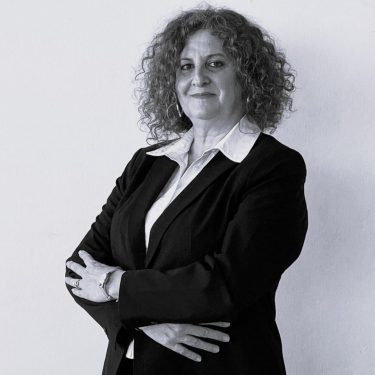
Janan Abdu is a lawyer, researcher, and human rights activist specializing in torture cases and working as a lawyer with the Public Committee Against Torture in Israel.

Khaled is working as a law clerk at the Higher Regional Court of Berlin. Prior to this, he worked as a research assistant at the Chair of European and International Law at the University of Potsdam. His research interests focus on international environmental law, the law of the sea, and the procedural law of international courts and tribunals. He is also a Managing Editor at Völkerrechtsblog.