A Lesson Not Learned
The Ebola Outbreak and Responses under International Health Regulations
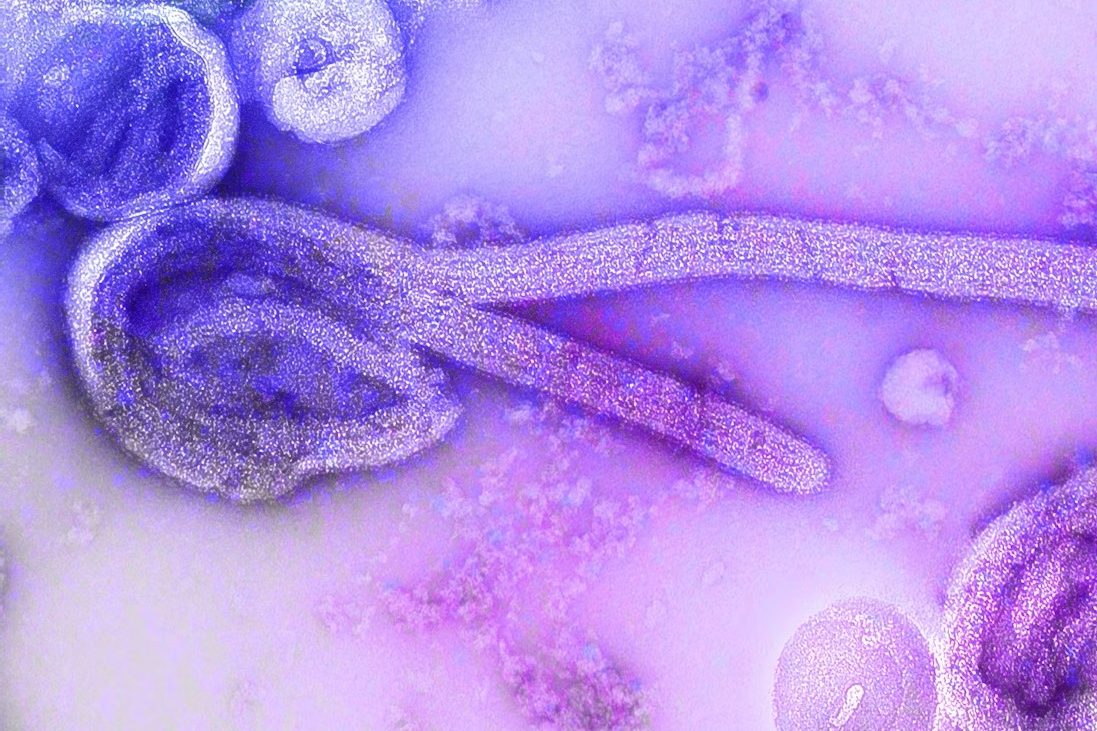
On 17 May 2026, the World Health Organization (WHO) Director-General announced the outbreak of the Ebola disease, caused by the Bundibugyo virus in the Democratic Republic of the Congo (DRC) and Uganda, as a Public Health Emergency of International Concern (PHEIC). The PHEIC declaration under Article 1 of the International Health Regulations (IHR) is intended to emphasise the disease’s extraordinary nature, its potential to spread internationally, and the necessity of ‘international cooperation’ in tackling it.
This latest PHEIC declaration reflects the urgency and severity of the situation. Several factors contributed to this assessment, including the outbreak’s higher transmissibility than previous Ebola variants, the lack of a specific treatment, the inability of existing vaccines to provide adequate protection, and the ongoing security conflicts in the DRC and Uganda. Indeed, the WHO’s determination of the current Ebola outbreak as a PHEIC is a significant move. On the one hand, it is the first time since the 2024 amendments to the IHR that a disease has been declared a PHEIC. On the other hand, it is the first time that a Director-General has declared a PHEIC before convening the Emergency Committee.
While the PHEIC declaration by the Director-General marks an important step in translating the lessons of the COVID-19 pandemic into practice, lessons that WHO Member States sought to embed in the 2024 IHR amendments and the Pandemic Agreement, the State responses it has triggered tell a more troubling story. The growing number of infections and deaths, combined with a clear tendency among States to impose measures that are disproportionate and unsupported by scientific evidence, exposes the continuing fragility of the international consensus underpinning global health governance. Besides reviewing the legal framework available to the WHO and its Member States for responding to the current Ebola outbreak, this blog post examines ongoing State practice and evaluates it against the law. This discussion focuses primarily on major Western donor states and the European Union, without suggesting that these actors have been the only participants in the response. Other regional and international actors, including the African Union and neighbouring States, have also responded to the outbreak in ways that raise both similar and distinct legal and policy questions, but their practices fall beyond the scope of this analysis.
International Health Regulations and the PHEIC Declaration
Adopted in 2005, the IHR is the only legally binding instrument focusing on governing the international spread of infectious diseases. They emerged largely from the institutional failures exposed during the 2003 SARS outbreak, which demonstrated both the speed of transnational disease spread and the absence of any clear legal mechanism for coordinated international action. The previous regime, the IHR 1969, was limited to a narrow list of named diseases, had proved wholly inadequate for novel global health threats. Article 1 of the IHR defines a PHEIC as “an extraordinary event” that constitutes a public health risk to other States through international spread and may require a coordinated international response. The threshold to announce a PHEIC is deliberately broad to ensure the WHO maintains a comprehensive overview of emerging threats and to encourage early state reporting.
The declaration procedure is set out in Article 12 of the IHR. The process begins with the Director-General, who determines, based on information received, principally from the affected State Party, whether an event constitutes a PHEIC. This is not a unilateral act since if the Director-General reaches a preliminary determination, Article 12(2) requires prior consultation with the affected State Party. Only where both agree does the Director-General then seek the views of the Emergency Committee on appropriate temporary recommendations. Where no consensus is reached within 48 hours, the matter proceeds under Article 49, which provides the procedural pathway for a determination in the absence of agreement.
State Responses to the PHEIC Declaration: Practice and its Legal Limits
Once a PHEIC is declared, Article 15 authorises the issuance of temporary recommendations to Member States. These recommendations are not legally binding, and States are not required to transpose them into domestic law or formally link them to the activation of national emergency powers. The practical significance of a PHEIC therefore depends largely on how States respond to it. The declaration should not be seen as an end in itself.
The PHEIC speaks to States in two distinct ways. Domestically, research drawing on the COVID-19 experience shows that PHEIC declarations were routinely invoked in executive decrees, relied upon to justify restrictive public health measures, and considered by domestic courts when assessing the legality and proportionality of those measures. In this sense, the PHEIC operates less as a hard legal obligation and more as an instrument of de facto authority: formally of advisory nature, but structurally influential in shaping national legal responses.
Internationally, the PHEIC is a trigger to a specific mode of international cooperation and action. Accordingly, the WHO issues temporary recommendations, and Member States are expected to base any additional health measures on scientific principles, human rights standards, and proportionality. Article 43 of the IHR makes this explicit: States may adopt measures that go beyond WHO’s recommendations only if they can justify them on public health grounds, notify WHO within 48 hours, and revise or remove them if WHO finds them unjustified. These two registers of the PHEIC, domestic authority and international obligation, are by design not in tension. But as the current outbreak demonstrates, they can pull sharply in opposite directions in practice.
State Responses to the Ebola PHEIC Declaration: Cooperation and Proportionality Under Pressure
What has followed the Ebola PHEIC declaration, however, tells a different story. Within days of the WHO’s determination, the United States imposed a nationality-based entry ban on travellers from the DRC, Uganda, and South Sudan. Also, the United States negotiated the establishment of a quarantine facility solely for Americans on a Kenyan military base, built and staffed entirely by Americans with no Kenyan public health involvement, a plan subsequently suspended by a Kenyan High Court. Canada suspended immigration documents for residents of those three countries for ninety days, explicitly linking the measure to the FIFA World Cup. These are not isolated incidents of poor policy coordination. They are symptoms of a structural tension at the heart of pandemic governance and the IHR framework. This section examines three overlapping problems: the collapse of international cooperation, disproportionate and discriminatory travel restrictions, and the unilateral assertion of extraterritorial health infrastructure.
A first and foundational problem is the collapse of international cooperation that the PHEIC declaration was designed to mobilise. The most striking illustration of this gap is the dramatic withdrawal of US engagement. The consequences have been severe. The cancellation of approximately 80% of USAID global health awards led to the termination of thousands of community health workers who acted as disease sentinels, and the loss of these surveillance networks meant that American officials did not learn of the current outbreak until it had already spread across international borders. Meanwhile, the WHO’s own capacity to respond is constrained as the US was its single largest contributor, and this funding shortfall has forced the organisation to reduce or cut certain programmes, including in the DRC and Uganda. Other major donors have also fallen short of what the crisis demands. Germany, currently the largest donor to the WHO, has nonetheless reduced its own contributions, with its Ministry for Economic Cooperation and Development budget having been scaled back for several years running, a trend that, as one German health policy expert noted, contributes to outbreaks going unnoticed for a long time before becoming apparent. While the EU has stepped in with €15 million in humanitarian funding and an air bridge delivering 100 tonnes of emergency supplies, and while Germany has pledged around €160 million in broader development aid to the DRC and Uganda for 2026 and 2027, these efforts remain insufficient to bridge the widening gap between needs and available resources, with field coordination reporting persistent shortfalls in the ability to meet operational demand.
A second and legally more direct problem concerns the blanket travel restrictions that several States have imposed in response to the outbreak. Adopting additional measures beyond the WHO’s recommendations is not a problem under the IHR, as Article 43 expressly preserves the State’s sovereign discretion. However, it conditions discretion on a set of substantive and procedural requirements. Accordingly, additional measures must be grounded in scientific principles and available evidence, must not be more restrictive of international traffic than necessary to achieve an equivalent level of health protection, and must not be more “invasive” than reasonably available alternatives. Therefore, as Article 43 indicates, the evaluation of the proportionality of travel restrictions should go beyond merely requiring that “States assess the evidence for public health risk” and should take into consideration human rights aspects of the measures by evaluating whether travel restrictions are the least intrusive measure and are proportional in the narrow sense.
This is particularly relevant in the current Ebola context, as a blanket measure sits uneasily with Article 43’s proportionality requirement. As Forman and Habibi argue, Article 43 embeds a proportionality clause rooted in State obligations under international human rights law, and the drafting history of the provision reflects a clear intent to constrain governments from imposing measures that are discriminatory, disproportionate, or insufficiently rooted in scientific evidence. Indeed, studies of past outbreaks have consistently shown that travel restrictions delay rather than prevent disease spread, and that their effectiveness is short-lived and highly context-dependent, waning considerably over time and proving ineffective unless accompanied by robust domestic public health measures such as testing, contact tracing, and physical distancing. Blanket restrictions of the kind currently imposed thus risk not only violating the letter and spirit of Article 43 but also undermining the broader aims of the IHR by disincentivising transparent reporting of future outbreaks, precisely the outcome the 2005 revision of the IHR was designed to prevent.
A third and legally distinct problem is raised by the United States’ establishment of a quarantine facility on Kenyan soil. Unlike the travel restrictions discussed above, this measure does not fit neatly within the Article 43 framework, which governs measures states adopt within or at their own borders. The Kenya facility represents something qualitatively different: the unilateral projection of national health infrastructure onto another State’s territory, negotiated bilaterally and excluding the host State’s own public health authorities from any role. The Kenyan High Court’s suspension of the plan signals the legal fragility of such arrangements, but the episode also raises a broader question that the IHR does not clearly answer: what obligations govern a State which, having withdrawn from multilateral health governance, seeks to manage its own citizens’ exposure to an outbreak through extraterritorial means? The IHR framework was not designed with this scenario in mind, and the current outbreak has exposed that gap.
Conclusion
The first PHEIC declared under the reformed IHR has produced a deeply ironic outcome. The declaration itself reflects the lessons of COVID-19, in its swiftness, procedural grounding, and in its issuance under the new framework that Member States spent years negotiating. But the State responses it has triggered reproduce, almost point for point, the failures that made reform necessary in the first place: funding withdrawn from the surveillance systems that catch outbreaks early; travel restrictions imposed by nationality rather than by epidemiological risk; and unilateral infrastructure that bypasses the multilateral framework entirely. The IHR’s architecture of constrained sovereignty, Article 43’s proportionality requirements, the 2024 amendments’ facilitation mechanisms, and the notification and review obligations remain formally intact. The current outbreak demonstrates that formal architecture is not enough. Without political will to treat the IHR’s obligations as genuinely binding in substance, not merely in form, the lesson of the COVID-19 pandemic will remain, as this blog’s title suggests, to be learned.

Reza Khabook is a doctoral researcher at the Academy for European Human Rights Protection (University of Cologne). His research focuses on the intersection of global health governance, state of emergency, and constitutional and international law.
Really nice work, thanks for posting
Great Article! Just for the record: Völkerrechtsblog has already in 2016 held a symposium on this issue. The articles can be found here: https://voelkerrechtsblog.org/de/symposium/international-health-governance/