
An Elective, or a Foundation?
Decolonial Method and the Question of Resilience
This blog post concludes the symposium “The Rooms We Wanted: What a Year of Decolonisation Seminars Revealed about a Law School”, reflecting on the Decolonisation Seminar Series at the University of Edinburgh.
With this symposium it was our aim to bring together participants’ and speakers’ reflections as well as our perspective as organizers, adopting a collective and reflexive mode. The reflection that follows comes from a different position than most in this symposium. Dr Siddharth de Souza was a panellist who spoke on the session on Decoloniality and the Digital World, one of three sessions during the series’ day-long workshop. During the panel, he discussed his scholarship, which draws upon critical and decolonial theory to examine how law and justice are shaped in digital spaces. Specifically, he discussed how data infrastructure and regulation, such as content moderation procedures within social media platforms, is dependent upon marginalised labour. In his reflection, he steps back to ask a question about the Decolonial Theory and Methods Seminar Series as an institutional form.
We have framed much of this symposium around what the series made possible, the questions that were asked, the spaces it created. Siddharth’s reflection shifts the question from what such spaces achieve to whether they can be sustained, and at whose expense. This distinction Siddharth identifies is crucial and pressing. An elective or a workshop or a series can be admired, funded a little, and left at the margins indefinitely, because it asks nothing structural of the institution that hosts it. To place decolonial questions at the core of how research is taught is a commitment of another kind. That difference between what an institution permits on its premises, and what it embeds into its own structures, is the ground on which the future of an initiative like ours will be decided.
Siddharth de Souza
The Decolonial Theory and Methods Seminar Series makes an important intentional choice to examine the colonisation of knowledge not as an event but as a continuous process through which knowledge is shaped, validated, and transferred in academic contexts. The value of the series is that it enables staff and students to engage with their present, and at the same time reflect on a variety of issues such as the histories of knowledge production in their disciplines, the dynamics of power in project design and research practices and the political economy of university policies and priorities (e.g. Edinburgh University connection to the slave trade and race theories) in critical and reflective ways.
Crucially, such an initiative gives researchers the chance to examine their academic journeys, and find spaces to think, feel, act and build solidarities with people around them. For many, such spaces are rare to non-existent. Matilde and Bhavinee reflect on how they waited for such rooms to be built, and in taking this initiative, their work provides a commitment to giving voice to non-western epistemologies and to enabling researchers with different epistemic locations to be seen and heard.
To me this seminar series, is as much about the sharing of techniques of ‘doing’ decolonial research as it is about creating conditions to ask how research could be done otherwise. I was involved in the session on Decoloniality and the Digital World, where speakers not only discussed thematic concerns around the regulation, infrastructures and political economies of technologies but also unpacked the everyday choices of managing and shaping such research. These emerged in decisions around determining which academic and industry partners to align with, what funders to approach, and how to navigate institutional pressures and bottlenecks that shape research choices. As a result, the conversations turned from techniques of decolonial research to strategies for creating decolonial research conditions.
A telling takeaway from the seminar, was that discussions on decolonial research are currently based on interest, led by initiatives of those who are passionate about these issues. A challenge going forward is how to sustain such conversations so that they can influence curriculums, classroom interactions and university policies. Institutional support can enable such initiatives to have resilience, for instance by making them part of foundational trainings for staff and students rather than elective options. Such an approach is critical if we wish to cultivate researchers who can question power structures that shape legal knowledge. Further, building resilience requires institutions where researchers can continue to independently organise. This is critical especially at a time where academic freedom is shrinking in the United Kingdom and across Europe. Underlying attempts to build sustenance require demanding institutional support that is responsive to the needs of the academic body, and not piecemeal and tokenistic.
Organisers’ Concluding Reflection: Where Do We Go from Here?
This small initiative at the University of Edinburgh can only maintain its momentum by engaging with other circles, both well-established and emerging, who seek to create the same kinds of spaces.
The testimonials we have included in these blog posts, most of which are from early career researchers, evidence the immediate effects of providing alternative spaces which accommodate personal discussions about the labour and rewards (or challenges) of doing legal research. The questions raised in the series helped researchers confront unexpected complexities in their projects, reflect upon deep-rooted and personal questions of positionality, and reach for new methodological tools which align more closely with the aims of their project. For instance, in the reflections gathered in this symposium, Hilda questioned whether a world built on digital extraction can be decolonised at all, while Linn made their own position as a white European scholar part of their method, letting affected communities’ accounts of loss anchor their climate research.
Just as our series will ultimately, hopefully, only be a stepping stone in their personal intellectual journeys, we have also worked within a growing body of initiatives across the UK and beyond. In organising our series, we drew upon a wealth of information, ranging from reading lists to research toolkits and networks. Decolonising law school is, for better or for worse, by no means a new initiative. Whilst our focus was on bringing these existing initiatives to bear upon the Edinburgh community, we are keen to give back to the community which has inspired us. In writing this series of blog posts, our hope was not only to share our experience within Edinburgh, but also to create new beginnings with other like-minded academics.
Limits and Possibilities
It is worth being candid about what a series like this can and cannot do. Four events across an academic year do not decolonise research in a law school, and to suggest otherwise would reproduce precisely the tokenism that decolonial scholarship has taught us to distrust. If decolonisation is to be used for long-term and deep institutional improvement, as Tuck and Yang state, serious material and epistemic commitments to “disorder” what is considered established and objective must be made. While we did not focus on the curriculum or the syllabus because these questions have been taken up in depth in projects like Kent’s Towards Anti-racist Legal Pedagogy: A Resource and Bristol’s Decolonising the curriculum, implementing decolonial research certainly calls for decolonial pedagogy and faces similar institutional barriers.
What spaces like the ones we created can do, however, is more modest yet still important: they interrupt the assumption that the conditions of research are settled and they give early career researchers the vocabulary and space to discuss their concerns and explore alternative methodologies. That the interest so plainly exceeded the provision, that students and staff members kept coming to our events, that reflections have been contributed from those who had attended, tells us the appetite is institutional and that its usual absence is a choice the institution makes.
This also raises more difficult questions the series could not address, but which it might open the door to. Spaces convened at the margins of an institution, through the goodwill of those who organise them and the unpaid hours of those who speak at them and engage, remain structurally precarious and even dangerous for one’s career trajectory. They rely on the very (racialised, gendered) labour decolonial critique identifies as being commodified, unequally distributed and unequally rewarded, because those who feel ‘othered’ within global north universities feel the most urgent need to carve out spaces which allow for genuine self-expression. At the same time, they carry the burden of justifying and articulating their sense of ‘dysphoria’ (in the words of Dr Ahmed Memon, a key contributor to the series) within these institutions: they must explain how the system excludes them by using the language the system recognises, thereby reinforcing the dominance of that grammar. This goes all the way down, with Jonathan Chan writing in Varsity, the University of Cambridge student newspaper, that “It should not be incumbent upon the student body to educate their educators, not least when the work of decolonisation is sustained almost entirely by non-white students.” Jing Min Tan, when reflecting on her experience as a decolonial student organiser, remembers the emotional toll that such work enacts upon the most fervent movers and shakers: “when institutions are resistant to change, the burden of labour is externalised to students working to dismantle the hierarchy of knowledge currently observed in our curriculum and faculty. The cost of that labour is often untold and too painful for any academic theory to ever redeem.”
Outlook
The challenge remains whether such initiatives can move from the margins to the centre, from seminars organised in spare time to course curricula, pedagogical training sessions, and ethics committees. These are challenges we want to confront in the company of allies. We are far from alone in this, and we continue to learn from the writings and critical race pedagogies networks like Professor Foluke Adebisi’s blog African Skies, the Decolonial Dialogues collective, event series such as Discussing Decolonisation at York St John University and Critical Legal Pedagogies of Race and Empire. These networks and their writing continue to sustain us in our attempts to create spaces for challenging and personal inquiry. Through this series of blog posts, our attempt was not to prescribe how legal academia should be decolonised, but to gather, in one place, the experiences of those who have begun the work, so that others need not begin alone. We hope that our experiment in Edinburgh, as explored in this symposium, might be of some use to anyone setting out to build something similar.

Matilde Masetti Placci is a Hauser/Remarque Joint Fellow at New York University. She recently completed her PhD in the history and theory of international law at the University of Edinburgh Law School.
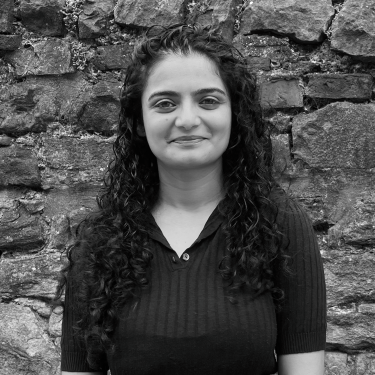
Bhavinee Singh recently completed her PhD at the University of Edinburgh Law School, funded by the Swiss National Science Foundation. Her research examines constitutional law theory and fiscal federalism in India.
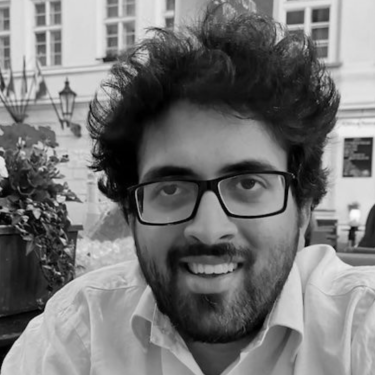
Dr Siddharth de Souza is Assistant Professor in AI and Society at the Centre for Interdisciplinary Methodologies (CIM), based at the University of Warwick. His research interests include studying developments in law and technology from a legal pluralist, data justice, and decolonial perspective; he is specifically interested in how data is governed globally in contested, and plural settings, and in examining the role that civil society, and social movements play in shaping data governance and data law frameworks.