

The Rooms We Wanted
What a Year of Decolonisation Seminars Revealed about a Law School
In July 2025, the University of Edinburgh published Decolonised Transformations, the findings of a four-year long inquiry into its own history of enslavement, eugenics and colonialism, for which the University Principal issued a formal apology. In the Law School, as far as we are aware, the report was never collectively discussed. No seminar, no reading group, no session on what an institutional reckoning of that kind might mean for how law is taught, researched and examined in the building. This symposium began in the wake of that silence.
The Decolonisation Seminar Series that followed had a longer history too, most of it conducted in private. For several years as doctoral researchers, we had been having the same conversation with one another, usually in corridors and never on a programme. We felt shut out of the spaces where knowledge gets made. Our theoretical toolkit was thin whenever our work turned to questions of power. We had almost no exchange with departments a few streets away doing precisely this work: for example, doctoral students conducting research in medical law had almost no contact with ethics systems within the medical sciences. Doctoral training focussed primarily on how to read a case, and how to gain informed consent from interviewees with no training including considerations of power, or political access. All these concerns about the Law School’s pedagogical insulation from the wider University and the lack of reflection about the ways in which the research conducted in the Law School was contingent upon the University’s privileged position within the Global North had been topics of backdoor conversations between ourselves and other doctoral students for years.
As we came to the end of our doctorates, we decided to build the rooms we had spent years waiting for someone else to build. What surprised us was how quickly they filled.
Why Decolonisation, and Why Here
We chose to work under the heading of decolonising legal training and research for two reasons. The first was disagreement. “decolonial thought” gathers a wide range of positions, several of them in open tension with each other, and we deliberately invited scholars from different traditions, including some sceptical of the label itself. Drawing from Foluke Adebisi, we explicitly engaged with the question of whether decolonisation was even possible if it relied upon the colonial logics and spaces it sought to fight against and untangle. As Adebisi writes,
‘As we live through and hope to survive the sixth mass extinction, we need to carefully consider why we are still operating on these same colonial logics and if we really expect different outcomes. Or are we just hoping to be fed and sustained for a while, unlike those living on the other side of the abyssal line?’
This careful engagement with what it would really mean to decolonise legal research, even if it is just one research project at a time, at the personal level, was one of our aims with this series. Where a law school has hosted few sustained discussions of this literature, the first ones should not strictly tie themselves to a particular interpretation of what it means to decolonise the space.
The second reason is that, for all their internal disagreements, these traditions share a preoccupation with power: with who is authorised to speak, whose knowledge is recognised as knowledge, and what happens to work that does not resemble what a discipline has learned to call rigorous. Decolonial scholarship does not stop at asking how marginalised voices might be accommodated within existing standards. It asks whether those standards are worth keeping.
While decolonising legal scholarship is addressing the failures of our institutions to reckon with colonial legacies, it is also opening up new possibilities for knowledge production and a better understanding of the structures that shape our legal systems. That is why we feel that such conversations need to be hosted not only at law schools but in legal academia overall.
For international lawyers, this is not unfamiliar terrain. The discipline has been arguing with its own colonial formation for decades, and there is a growing literature on what that argument means for the curriculum. Edinburgh’s own review includes an appendix on Balfour’s imperial legacy and its afterlife. What gets discussed rather less is how those critiques travel back into the ordinary machinery of academic life: ethics applications, peer review, editorial boards, and the calculations early-career researchers make about what is safe to write.
Asking “Why”
We started from a conviction we take from Nawal El Saadawi that the most important knowledge is the kind produced by asking “why” – why is some research deemed to be more authoritative than others? Why is the academic expected to remain removed from her research? Why are academic ethics committees only interested in a certain form of consent? Why does writing about certain topics affect my career trajectory, and what can I do to bridge the gap between what the wider academic community understands to be valuable or impactful research, and the research I want to do?
In the words of El Saadawi, “History belongs to everyone who possesses an amount of imagination”, and indeed, we sought to cultivate spaces in which scholars who had lived with these questions could put them to people at the start of their academic careers, and be honest about the answers. We were fortunate that we only received positive replies to our invitations – all the scholars we had invited, many of whom we were interested in because we had been reading their work in order to design the series’ programme, were eager to set aside some of their valuable time to join us in Edinburgh and to share their experiences with our community. We were interested in exploring the promises and, cognizant that no theory can answer all questions, the limits of decolonial thinking in all aspects of academic research: community, research design, ethics applications, and publication strategy.
The series ran across the 2025-26 academic year: three events in person, one online, each focussed on a single question. Dr Karla Perez Portilla (Glasgow Caledonian University) asked the question of why legal scholarship is expected to be neutral and, when closely examined, what racial, gender, and class signifiers the concept of “neutrality” serves to mask and protect. A month later, Dr Morshed Mannan (University of Edinburgh) and Dr Rebecca Tapscott (University of Glasgow) took the question into institutional ethics review, and the narrow constructions of consent and safety that decide which research designs survive approval. In March, we ran a full-day workshop across three panels: exploring decoloniality and the digital world, decoloniality and feminist as well as critical race scholarship, and the ways in which legal writing (and its associated institutions and actors, such as the boards of academic journals) can be itself a decolonial act. Finally, we ended our series with an online event, a discussion between Dr Rohini Sen (Jindal Global Law School) and Dr Ahmed Memon (Cardiff University), on centre-margin dynamics within academia, and the unrecognised labour of writing about law from the margins.
All three in-person events were filled to capacity. More telling was who came. Alongside doctoral and early-career researchers, academic and administrative staff attended the sessions, people with no assessment to pass and no supervisor to impress, giving up an afternoon for a conversation they evidently could not have elsewhere in the building. The discussions remained grounded in ongoing research and the problems that researchers encountered and felt unable to grapple with.
About the Symposium
We hope that this symposium provides resources and a starting point for those who would like to (further) engage with decolonial methodologies, as well as those who are unfamiliar but curious about its facets and potential areas of application without, however, claiming to be exhaustive. This symposium adopts a collective and reflexive mode, bringing together participants’ and speakers’ reflections as well as our perspective as organizers. Therefore, the contributions that follow are not only from the people we invited to speak but also from members of the audience. That, more than the attendance figures, is what we think the series produced, because a full room demonstrates interest, but a room that sends its listeners away wanting to write in public has done something else. Rather than treating positionality as a preliminary disclosure, this symposium understands reflection as an ongoing practice of examining how legal researchers narrate, translate and legitimise knowledge. In doing so, it traces the intellectual, emotional and methodological labour of unlearning inherited academic conventions. Publishing this symposium outside of Edinburgh is important because the conversation is only worth having if it finds the people already having it elsewhere and inspires those that find themselves experiencing the same constraints in their respective institutions.
The first blog post of this symposium, titled “Unravelling the Neutral Scholar”, brings together reflections on our first event led by Dr Karla Perez Portilla on Decolonial Theory and Epistemology and our final event on Epistemologies from the Margins in conversation with Dr Ahmed Memon and Dr Rohini Sen. While the first session examined the myth of legal neutrality by discussing the transformative effect of autobiography and autoethnography as a legal method and the confinements that the notion of neutrality poses in legal knowledge production, the last event – a biographical conversation – centred once again the question of whose knowledge we reproduce when aiming to conduct “neutral” legal research. Featuring testimonies from the doctoral researchers Alexandrine Lamarre and Linn Pfitzner alongside the organisers’ – Matilde Masetti Placci and Bhavinee Singh – closing reflections, the contribution emphasizes that the deconstruction of the neutral legal scholar, of the objectivity of legal scholarship, and the reflection on one’s own positionality is a continuous endeavour.
The first blog post is followed by our first Intervention. In conversation with Dr. Ahmed Raza Memon, we explore how one finds a scholarly voice within the established framework of legal scholarship in the blog post “Writing from the Margins”. This question is explored by Dr. Rohini Sen as well in the blog post “Beyond the Traditional Framework”. These reflections from speakers who chose to take part in the seminar series also reveal how much it can mean to share our experiences with other researchers in order to create community.
The blog post “A Form to be Signed” focusses on the second event, where the speakers Dr Morshed Mannan and Dr. Rebecca Tapscott as both researchers and board members on their respective departments’ ethics committee explored the evolution of ethics review processes in light of their Eurocentric foundations. The reflections of doctoral researcher Chloe Young and the organizers offer insight into the relationship between what is considered ‘truth’, the recognised methods for obtaining research findings and traditional power structures embedded in academic research.
Our second intervention features reflections from the speakers themselves, Dr Morshed Mannan and Dr Rebecca Tapscott. Both take the opportunity in the blog post “From Inside Ethics Review Committees”, to expand upon the medical and natural science origins of ethics review committees, as well as the ways in which Edinburgh Law School has been attempting to change how ethics review works in order to accommodate more reflexive and nuanced legal fieldwork.
The blog post “Decolonial “and”” reflects on the day-long workshop exploring three aspects of decolonial theory: decoloniality and the digital, intersectional decoloniality and writing as an act of decolonial knowledge production. The first reflection by Hilda Tizeba, who chaired the first panel with Dr. Siddharth de Souza, Dr. Natalie Tegama and Dr. Deval Desai, takes a look at the panel’s discussion on the reconcilability of decolonial research and digitally mediated research. Kağan Sürücü then reflects on the third panel chaired by Fangyi Li with Dr Francisco-José Quintana, Dr Nora Jaber and Dr Leila Ullrich exploring the consequences of decolonial writing. They relate the content of the panel discussion back to their fieldwork and how manifestations of inequality of expertise underscore the significance of decolonial practice not only regarding the expertise credited to individuals but also to written texts and documents.
The final blog post “An Elective, or a Foundation?” reflects on the sustainability of this series. Moving away from the previous question of what the research series provided, Dr Siddharth de Souza examines how the rare space that was created within this series can be sustained. Concluding this symposium, the organisers – Matilde Masetti Placci and Bhavinee Singh – recap this series of blog posts, reflect upon the process and aim of organising the research series on Decolonial Methodology and take a look at the road ahead for maintaining the space created here.
Acknowledgements
This series could not have been possible without the ongoing support of several key people within the University of Edinburgh. Thank you to Dr Deval Desai and Dr Dan Carr for their guidance regarding the ways in which this series can become a more permanent fixture of doctoral training within the Law School. Thank you to the Edinburgh Futures Institute, in particular the Critical Data Studies cluster, and the Postgraduate Research Student Board for their funding, without which none of this would have been possible. Thank you to the Law School’s administrative team, who were invaluable to the organisation of these events.

Matilde Masetti Placci is a Hauser/Remarque Joint Fellow at New York University. She recently completed her PhD in the history and theory of international law at the University of Edinburgh Law School.
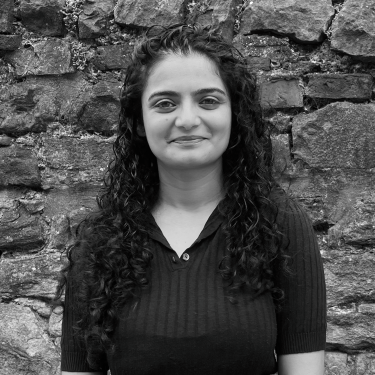
Bhavinee Singh recently completed her PhD at the University of Edinburgh Law School, funded by the Swiss National Science Foundation. Her research examines constitutional law theory and fiscal federalism in India.
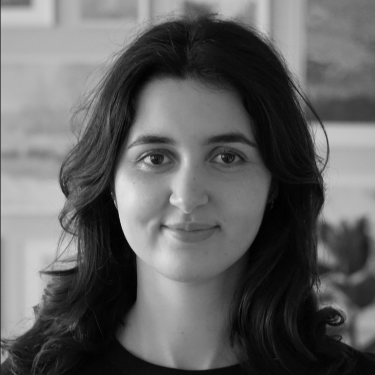
Btissam is a doctoral candidate at the Leibniz University Hannover, as well as a research associate at the University of Potsdam. Her research focuses on the right to self-determination in the context of decolonization, human rights protection, and the intersection of domestic and international law.