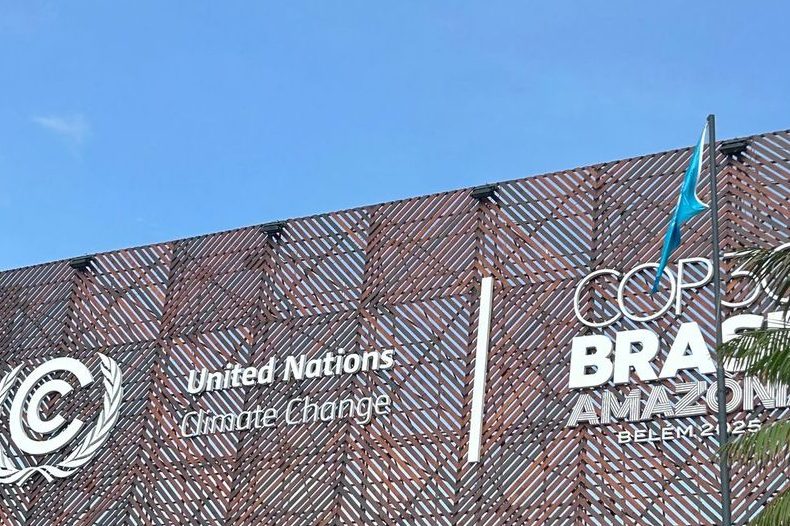
The Thirtieth Conference of the Parties to the United Nations Framework Convention on Climate Change (UNFCCC) (COP 30) was held in November 2025 in Belém, Brazil. It took place at a moment of increasing legal clarity regarding states’ climate obligations following recent international advisory jurisprudence on climate protection, alongside intensifying geopolitical tensions and growing pressure to deliver outcomes amid accelerating climate impacts. In this context, the Brazilian presidency framed COP30 as an opportunity for a “Global Mutirão”, a joint global effort to reinvigorate multilateral climate cooperation.
Taken together, these dynamics rendered consensus within the UNFCCC process both more fragile and more consequential, heightening the importance of negotiation techniques used to secure agreement. Against this backdrop, COP 30 brought into focus a subtle – but potentially consequential – development in negotiation practice. Across several negotiation tracks, footnotes were increasingly employed not merely as technical drafting devices but as pragmatic tools to facilitate agreement and reach consensus. In practice, however, their use often fragmented the normative content of decisions in ways that complicate their interpretation and weaken their capacity to guide state conduct, thereby risking a hollowing out of their legal and political significance. Even where footnotes were introduced in good faith to enable adoption, the growing reliance on footnotes raises concerns about the integrity of consensus as both a procedural principle and a source of normative legitimacy within the UNFCCC process. This post examines how this development manifested in relation to human rights obligations and gender, focusing on both negotiation practice and adopted outcomes, to show how seemingly technical drafting choices can carry significant – and often obscured – legal and normative consequences for the integrity of consensus-based decision-making under the UNFCCC.
I. Human Rights
Human rights provide a first illustration of how this emerging practice operates in concrete negotiation contexts. The International Court of Justice’s (ICJ) recent Advisory Opinion (AO) on climate protection (see the symposium here) has clarified that responding to climate change is not merely a matter of political discretion but also one of legal obligation (see also the analysis on this blog here). As the Court emphasised, states are required to prevent significant climate harm, cooperate in addressing loss and damage suffered by people and ecosystems, provide reparation where harm occurs, and ensure that climate responses comply with international human rights law. These obligations derive not only from international environmental treaty law (including the Paris Agreement) and customary international law, but also from international human rights law, including the rights to life, health, and an adequate standard of living. Human rights obligations thus form an integral part of states’ duties in responding to the climate crisis.
This enhanced legal clarity, however, was only unevenly reflected in the practice of COP30. Despite sustained advocacy to acknowledge the ICJ’s findings in operative text – particularly by civil society, the Alliance of Small Island States (AOSIS), and the Independent Association of Latin America and the Caribbean (AILAC) – several (oil-producing) states opposed their inclusion. This divergence was not unexpected. While small island developing states welcomed the AO as a landmark contribution to international climate justice, major negotiating groups expressed concerns about its potential implications for international legal responsibility and liability (see the discussion on this blog here). In a consensus-based process such as the UNFCCC, even a single opposing state can effectively block textual developments. As a result, proposals to reflect the Court’s reasoning did not make it into the “Belém Political Package” (i.e. the final decisions adopted at COP30), including the text adopted in the review of the Warsaw International Mechanism (WIM) on Loss and Damage, where resistance from groups such as the Arab Group and the Like-Minded Developing Countries (LMDCs) proved decisive.
These dynamics were reinforced by increasingly opaque negotiation practices. During the WIM review alone, more than seventy hours of negotiations took place in “informal-informal” settings (i.e. behind closed doors), with observers granted only very limited access. As Amnesty International observed: “the lack of participatory, inclusive, and transparent negotiations left both civil society and Indigenous Peoples, who answered the global mutirão call in large numbers, out of the real decision making.“ This reflects a broader trend at recent COPs, where substantial parts of the main negotiations have been conducted exclusively among state delegations, with limited oversight by civil society. While confidential negotiations are a long-standing and legitimate feature of diplomatic practice that may facilitate compromise, their extensive use raises concerns regarding the legitimacy, accountability, and effectiveness of COP decision-making – particularly where negotiations concern fundamental legal obligations, including human rights.
Against this background, explicit human rights language does not appear in the final text of the WIM review. Any such references are confined to a single footnote referring to a preambular paragraph of the Paris Agreement. This marginalisation is not merely symbolic. By relegating human rights to footnotes, COP decisions risk obscuring legally binding obligations, weakening legal clarity, and diminishing the interpretative guidance such decisions provide for the implementation of treaty commitments. While footnotes may facilitate formal agreement, they do so at the cost of normative coherence, creating the appearance of consensus while qualifying or displacing substantive legal content. As the civil society network ECO succinctly put it: “You can’t footnote your way out of the law.” This concern is underscored by the ICJ’s AO, which affirmed that states’ obligations to address climate harm are grounded, inter alia, in binding international human rights law. Although the ICJ’s AO is not legally binding in a formal sense, it clarifies the scope and applicability of existing binding international law and the obligations with which states must comply.
Attempts to marginalise human rights through drafting techniques cannot alter the binding nature of international human rights obligations, nor do they absolve states of responsibility. Instead, they send a troubling signal: that human rights – despite their universal character – are negotiable or peripheral within international climate governance. Compromising on human rights language in the name of consensus risks hollowing out the normative foundations of the UNFCCC process. Consensus cannot serve as an end in itself where it is achieved by sidelining the rights of those most affected by climate change.
Notably, the marginalisation of human rights language was not universal across all legal outcomes adopted at COP30. In contrast to the WIM review, the negotiations under the Just Transition Work Programme (JTWP) demonstrate that robust human rights language – and meaningful engagement by civil society, including Indigenous Peoples – can shape COP decisions in tangible ways. Sustained advocacy and grassroots mobilisation contributed to the establishment of a Just Transition mechanism aimed at coordinating efforts to protect the rights of workers, individuals, and communities affected by the phase-out of fossil fuels.
The JTWP text explicitly recognises “the importance of just transition pathways that respect, promote and fulfil all human rights and labour rights,” including the right to a clean, healthy and sustainable environment, the rights of Indigenous Peoples, migrants, children, persons with disabilities, and people in vulnerable situations, as well as gender equality, women’s empowerment, and intergenerational equity. It further emphasises the importance of the rights of Indigenous Peoples, including the obligation to obtain their free, prior and informed consent, in accordance with the United Nations Declaration on the Rights of Indigenous Peoples, and to respect internationally recognised collective and individual rights, including the right to self-determination. As Climate Action Network International observed, “no COP decision has ever carried such ambitious and comprehensive language on rights and inclusion.”
The contrast between the WIM review and the JTWP outcome underscores a central point: the exclusion of human rights from COP decisions is neither legally inevitable nor procedurally unavoidable. Rather, it reflects political choices and negotiation dynamics within the consensus-based architecture of the UNFCCC. As the UN High Commissioner for Human Rights has stressed, effective climate governance requires a more consistent commitment to climate action firmly grounded in human rights.
II. Gender Backlash
The dynamics identified in relation to human rights – the use of footnotes to accommodate disagreement on politically contested issues – similarly manifested with particular intensity in negotiations on gender. Against an increasingly polarised geopolitical backdrop, shaped in part by a broader backlash against gender equality, negotiations under the Enhanced Lima Work Programme (LWPG) and the establishment of a new Gender Action Plan (GAP) proved especially contentious. Several party groupings, including the Arab Group, resisted the inclusion of intersectional and non-binary language, thereby challenging established approaches to gender mainstreaming within the UNFCCC. As a result, previously agreed language was placed at risk, raising concerns about a rollback of hard-won progress in addressing the gender-differentiated impacts of climate change.
Beyond substantive resistance to inclusive language during the negotiations, some states went further by proposing that their own restrictive, subject-binary interpretations of gender – rather than a shared understanding – be reflected in the draft text through footnotes. While such positions are not surprising in light of the broader gender backlash, their proposed insertion into the negotiated text was striking and provoked strong criticism from civil society, including the official Women and Gender Constituency (see their statement here). Although none of these proposed footnotes ultimately appeared in the adopted text, this intervention highlights the risk that embedding national interpretations within footnotes could fragment the normative coherence of the outcome by inscribing competing understandings of gender directly into the consensus text.
As in the human rights context, the resort to footnotes must be understood within a consensus-based decision-making process operating under heightened political pressure. The prospect of negotiations ending without agreement is highly undesirable, particularly given the urgency of collective climate action. Compromise-oriented drafting techniques, including the use of footnotes, may thus appear attractive as a means of preserving formal consensus.
Importantly, rejecting the use of footnotes to record unilateral national interpretations does not undermine state sovereignty. Within the UNFCCC process, states remain free to articulate their interpretive positions through statements made following the formal adoption of a decision. This long-standing and widely accepted practice allows states to clarify their legal views without interfering with the normative coherence or legal implications of the agreed text as ultimately done by some parties, including Argentina, Paraguay, Russia, as well as the Holy See. The distinction is not merely technical: while footnotes inserted into negotiated outcomes risk fragmenting the consensus reached, post-adoption interpretive statements do not affect the legal character or normative force of the decision itself.
III. Conclusion
The concerns raised in this post are likely to be amplified in future summits. Upcoming COPs – particularly COP31 in Türkiye and COP32 in Ethiopia – are expected to face additional challenges related to civic space and democratic participation. Under such conditions, the legitimacy and effectiveness of COP outcomes will depend not only on substantive ambition, but also on the conditions under which they take place. Transparency, meaningful civil society engagement, and the freedom to observe, criticise, organise, and peacefully demonstrate are not peripheral concerns: they are essential prerequisites for climate governance that is both effective and firmly grounded in human rights, as the Just Transition outcome at COP30 demonstrates.
In this context, the legal and institutional implications of the growing reliance on footnotes to accommodate substantive disagreement warrant careful scrutiny. If footnotes become a routine mechanism for managing disagreement – particularly on politically contested issues such as human rights or gender – they risk incentivising states to avoid genuine compromise by embedding dissent directly into agreed texts. Over time, this practice risks weakening the normative clarity and legal significance of COP decisions, leaving consensus formally intact but substantively hollow.

Zilan Linnéa Hansen ist studentische Hilfskraft von Prof. Dr. Dr. h.c. Anne Peters LL.M. (Harvard) am Max-Planck-Institut für ausländisches öffentliches Recht und Völkerrecht in Heidelberg. Sie studiert Rechtswissenschaften an der Ruprecht-Karls-Universität Heidelberg mit Schwerpunkt Völkerrecht.

Laura Kraft ist Doktorandin und wissenschaftliche Mitarbeiterin am Max-Planck-Institut für ausländisches öffentliches Recht und Völkerrecht in Heidelberg. Sie studierte Rechtswissenschaften an der Freien Universität Berlin und der University of New South Wales in Sydney und hat einen Master of Science in Refugee and Forced Migration Studies von der University of Oxford.