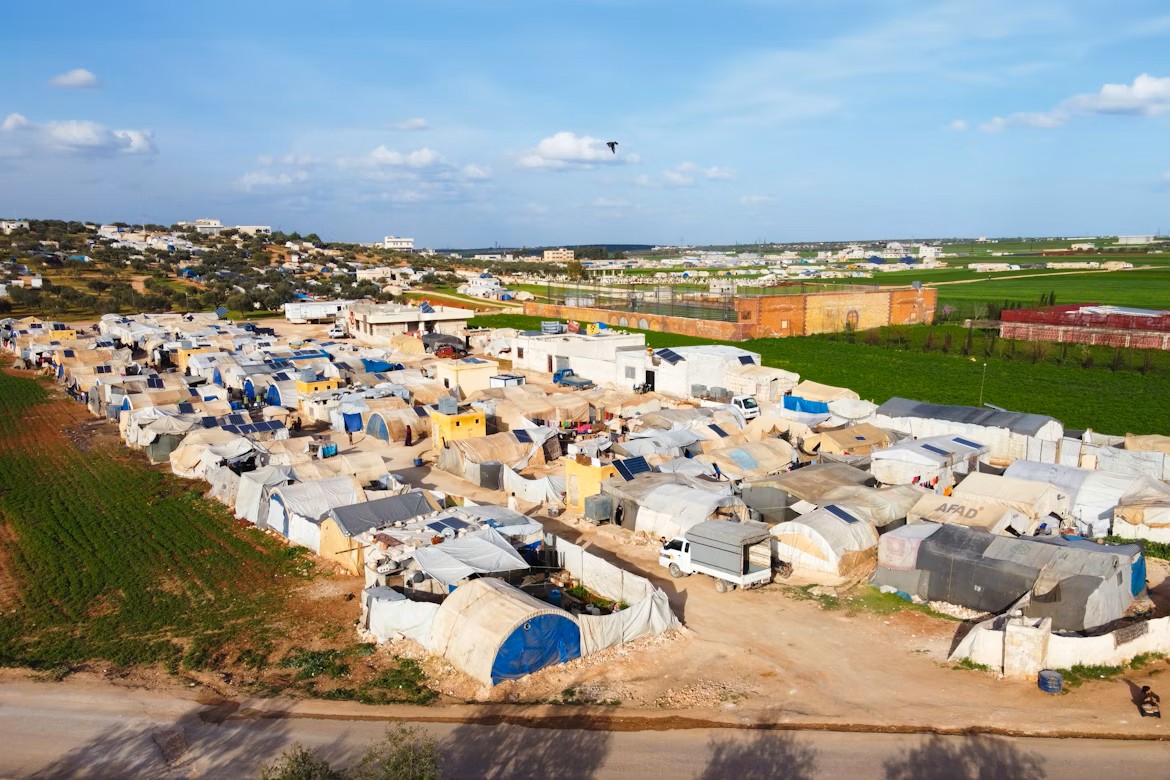
The International Organization for Migration reports that, over recent decades, 218.6 million people have been internally displaced due to climate change, and some projections estimate that up to 1.2 billion people could become “climate refugees” by 2050.
Yet, there is no consensus on the definition of “climate refugee” (p.372), and international law does not recognise them as a distinct protected category. This is largely due to the difficulty of proving a clear causal link between climate change and forced displacement, and the strict interpretative requirements (para 75) of the Convention relating to the Status of Refugees (1951) (the Convention), which constrain recognition. The UNHCR’s opposition to expanding the Convention, driven by concerns that broadening its scope could dilute the protection attached to refugee status, further limits reform.
Without a comprehensive legal framework, those affected by climate change remain vulnerable when crossing borders in search of safety. This article argues that climate displacement can instead be addressed through EU subsidiary protection under Qualification Directive (QD) 2011/95/EU, which complements refugee status and protects people who cannot meet the Convention’s stringent criteria.
Existing Framework and Judicial Decisions
The Convention and its 1967 Protocol are the main legal instruments used in international refugee law. They define the term ‘refugee’ and lay down obligations for state parties in respect of refugees present on their territory. Article 1(A)(2) defines a refugee as:
Owing to well-founded fear of being persecuted for reasons of race, religion, nationality, membership of a particular social group or political opinion, is outside the country of his nationality and is unable or, owing to such fear, is unwilling to avail himself of the protection of that country [..]
In the context of climate-related harm, fulfilling these criteria can be challenging, especially when considering the element of persecution. A landmark case in the field of climate litigation is the Human Rights Committee’s (HRC) Teitiota case, which recognized that climate change impacts, like sea-level rise threatening food/water/land in Kiribati, could trigger a state’s obligation not to deport individuals to places with a real risk to their right to life. Meanwhile, the New Zealand Immigration and Protection Tribunal held that the risk of being persecuted must be well-founded on the accounts of facing “sustained or systemic violation of core human rights, demonstrative of a failure of state protection” (para 53). This reasoning entails that persecution must always be carried out by a human agent, which is often not the case, at least directly, when considering climate-related harm. Climate change is a complex phenomenon, involving multiple actors and decentralisation, but this case highlights that courts apply standards of direct human agency for refugee claims while dismissing the indirect contributions of major contributors to greenhouse gas emissions.
Proposals for an amendment to the Convention have been advanced by several nations. In 2006, the Maldives suggested extending the scope of the Convention (p.6). However, as noted by McAdam, a new convention should not be a solution, as it would shift the focus from preventing and mitigating climate change (p.5), without solving the issue (p.17).
Establishing a nexus to a Convention ground is difficult because climate change displaces people geographically rather than for reasons stated in Article 1(a)(2). Generally, climate-related harm can fall under the “membership of a particular social group” ground, which implies that the group be defined “by innate, unchangeable characteristics” (Canada v Ward, p.692). Some argue that island-nation residents share climate threats and constitute such a group (p.16). Yet persecution requires discriminatory targeting by a human agent, excluding natural disasters: climate change is not a persecutor. Still, as Sussman suggests, a claim may arise if, after a climate disaster, the state deliberately withholds aid from a minority because of its social-group membership.
Subsidiary Protection
An individual may benefit from subsidiary protection where there are reasons to believe that, if refouled, he would face a “real risk of suffering serious harm”. In climate change cases, the most relevant type of “serious harm” is the risk of “torture or inhumane or degrading treatment in the country of origin” (Article 15(b) QD). In the Elgafaji case, the CJEU confirmed that Article 15(b) QD corresponds to Article 3 ECHR (para 28), meaning the relevant ECtHR case law can guide interpretation. In Soering v UK, the ECtHR established the prohibition of refoulement where extradition would expose the applicant to a real risk of treatment exceeding the Article 3 threshold (para 111). Such ill-treatment must reach a “minimum level of severity” (para 100) and is assessed case-by-case, considering factors such as method and duration (para 162). Although the Court has not ruled on climate-caused inhumane treatment, Article 3 reasoning remains relevant where climate change renders a person powerless by depriving them of adequate living conditions (para 221) and causing extreme mental pain (p.11–14).
Article 6 QD specifies that serious harm may only be perpetrated by the state, parties controlling the state, and non-state actors. In M’Bodj v Etat Belge, the CJEU confirmed that “harm must take the form of conduct on the part of a third party” (para 35) and that “risks to which the population […] is generally exposed do not normally in themselves create an individual threat which would qualify as serious harm” (para 36).
This interpretation significantly limits the scope of the QD because climate change lacks distinguishable human agency, as multiple actors are often involved, weakening the link between cause and harm (p.12). Consequently, the scope of Article 6 QD extends solely to instances where an identifiable actor, such as the state, causes serious harm by implementing inadequate responses in managing or preventing natural catastrophes (p.385). In contrast to this strict actor-based approach, in the Teitiota case, the HRC held that “the effects of climate change may expose individuals to a violation of their rights under articles 6 or 7 of the Covenant, thereby triggering the non-refoulment obligations of sending states” (para 9.11). This reasoning leans towards a risk-based approach, where, if an individual can prove both a personal and imminent threat (para 9.3), then the general assessment shifts from focusing on a direct human perpetrator to a broader source of harm. This idea is rooted in Article 3 ECHR, as the removal of an individual to a place where they face a real risk of inhuman or degrading treatment would render refoulement unlawful.
The Detrimental Effects of Climate Change as a Form of Inhumane Treatment
Subsidiary protection, as currently framed, largely applies only when a clear human perpetrator can be identified, limiting its reach. Still, it can offer meaningful relief if “serious harm” is interpreted to include the harmful impacts of climate change as inhuman or degrading treatment.
In this regard, the ECtHR, in the Duarte Agostinho case, raised the question, albeit unanswered, of whether the exposure of the applicants to climate change could fall under the scope of Article 3 ECHR (para 68). The Court’s jurisprudence reveals a flexible approach to what conduct constitutes inhumane and degrading treatment. Perhaps, “intense physical and mental suffering” (para 120) constitutes inhumane treatment, but “a permanent state of anxiety” could also fall under Article 3 ECHR. Therefore, this extended scope may allow for harm caused by climate change to amount to inhumane treatment. As suggested by Mavronicola, climate-anxiety (p.219-220) can amount to inhumane treatment because it elicits in the victim a sense of fear and powerlessness, and at the same time, it leads to a loss of hope, which was recognised as a violation of Article 3 ECHR (p.220).
A significant issue with climate-related harm is that climate change effects are often experienced generally by the population rather than on an individual level (p.590), which is a conditional requirement of the QD. Under Article 3 ECHR, general situations of violence and instability do not suffice (para 70) to trigger non-refoulment; applicants must demonstrate a special feature that distinguishes them (para 112). In such circumstances, the Court can consider whether the victim is in a vulnerable position, and the age of the applicant may play an important role; in Bouyid v Belgium, the ECtHR held that “police behaviour towards minors may be incompatible with the requirements of Article 3 simply because they are minors, whereas it might be deemed acceptable in the case of adults” (para 110). Therefore, it may be argued that climate change can expose minors to such a sense of mental pain because of their age that it would be incompatible with Article 3 ECHR.
Furthermore, the Court held that belonging to a group systematically exposed to ill-treatment can engage Article 3 ECHR where there are reasons to believe the risk is real (para 132), without requiring separate proof of individual risk. SERAC and CESR v Nigeria illustrates this logic. The Ogoni minority were systematically exposed to environmental degradation from oil exploitation by the state-owned oil company NNPC (para 1), and the African Commission found that Nigeria breached Article 4 of the African Charter (right to life) by supporting targeted killings and land exploitation essential to Ogoni survival for oil extraction (paras 67–69). This case highlights that where a state supports premeditated environmental harm to oppress a minority, Article 3 ECHR may be engaged.
Finally, it is necessary to determine whether a state’s failure to fulfil obligations to protect from inhumane treatment can breach its duty to protect. In climate-change terms, this may arise from inadequate mitigation or unwillingness to reduce emissions. The ICJ Advisory Opinion on Climate Change confirms the approach that states must protect the climate system so individuals can effectively enjoy human rights (para 403), and that an intentional failure is an internationally wrongful act with a “panoply of legal consequences” under State responsibility (para 445). However, it is important to recognise that the result is not the determining factor in the attribution of responsibility, but rather the failure to adopt all measures which are within the state’s power to prevent significant harm (para 409).
The issue then is what behaviour can trigger Article 3 ECHR. In Portillo v Paraguay, the HRC held that failing to prevent toxic agrochemical spraying near the applicant’s home interfered with the right to life and freedom from inhumane treatment, stressing standards of care in dangerous activities. In MSS v Belgium, the ECtHR required living conditions respecting human dignity (para 221). Thus, intentional disregard of a duty of care that contributes to dignity-undermining environmental degradation, e.g., permitting land exploitation that degrades an applicant’s living environment, may violate Article 3 ECHR and trigger subsidiary protection.
The difficulty in classifying the detrimental effects of climate change as inhumane and degrading treatment lies in establishing state accountability, since climate change alone is unlikely to meet the threshold. Article 3 may be triggered where climate impacts reach a minimum level of severity and physically or mentally affect the victim due to state action or inaction. Although climate effects are often universal, some individuals are disproportionately affected. Accordingly, receiving states should carefully examine the conditions of the applicant’s country of origin, as environmental degradation can, in context, amount to ill-treatment. Courts must also consider whether the state has intentionally exposed individuals to environmental degradation, which may engage Article 3 if the requisite severity is shown. Ultimately, whether climate change constitutes inhumane and degrading treatment depends on the state’s role in exposing individuals to conditions incompatible with Article 3.
Conclusion
In conclusion, in its present form, the Convention is limited in its scope and fails to respond to complex displacement patterns. To this end, subsidiary protection offers a much more promising alternative for climate refugees. The strength of subsidiary protection lies in the concept of serious harm. While defined, its scope remains flexible, particularly with regard to the types of treatment that meet the threshold of Article 3 ECHR. National and international jurisprudence are beginning to reveal a greater degree of activism in the field of climate change, and as such, subsidiary protection, at least in the short term, might constitute an effective protection mechanism for victims of climate change when they can prove a risk of inhumane and degrading treatment.

Kabir Kumar is a third-year B.B.A. LL.B. (Hons.) student at Jindal Global Law School, O.P. Jindal Global University.