,_Theseus_at_Delos_and_Centauromachy.jpg)
Rebuilding the Ship of Theseus
The Trump Administration, Reform, and the Identity of the “Rules-Based Order”
The remarks of US Secretary of State Marco Rubio at the Munich Security Conference illustrate contemporary anxieties about the “rules-based order” (RBO). Rubio declared that “[…] we can no longer place the so-called global order above the vital interests of our people and our nations”. German Chancellor Friedrich Merz took it further, claiming that the RBO “no longer exists”. A few weeks prior, Canadian Prime Minister Mark Carney said that the international legal order is enduring “a rupture” and that we ought to “stop invoking RBO as though it still functions as advertised”. Similarly, Denmark’s Prime Minister Mette Frederiksen said that “the old world order no longer exists”.
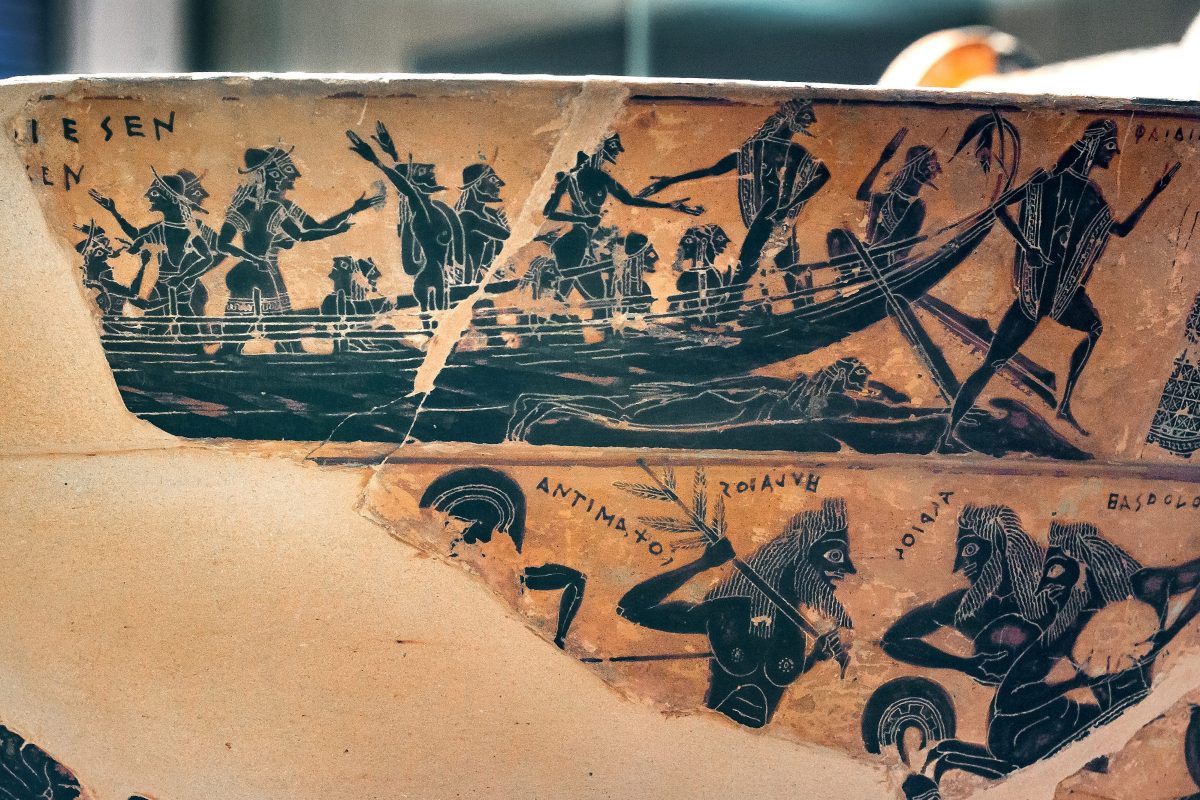
The growing chorus declaring the demise of the RBO evokes a familiar philosophical dilemma. In Plutarch’s Ship of Theseus thought experiment, an object incrementally replaced plank by plank becomes a puzzle of identity: once sufficient parts are substituted, continuity rests on interpretation rather than substance. The metaphor translates readily to the RBO: as norms and institutions are replaced, the identity of what is still termed the RBO comes into question.
Identifying the Ship
It should first be acknowledged that considerable conceptual ambiguity persists regarding the relationship between international law, the international legal order, and the RBO. These are distinct yet interrelated notions that illuminate different dimensions of international normativity. International law properly denotes the corpus of binding rules and principles governing the conduct of States and, increasingly, other international actors, its authority resting upon the consent of States expressed through treaties, customary law, and general legal principles. The international legal order encompasses this body of law but extends beyond it to include the institutional, procedural, and value-based structures through which international law is created, interpreted, and implemented – ranging from international courts and tribunals to the United Nations and related mechanisms of governance. The RBO, by extension, represents a wider and more politically inflected construct, merging legally binding norms with non-binding political commitments and aspirational standards advanced by both State and non-State actors. Emerging largely from post-1945 Western liberal thought, the RBO was further consolidated in the aftermath of the Cold War, when the apparent unipolar moment enabled the projection of liberal norms as the organising principles of global order.
While international law remains rooted in consent and obligation, and the international legal order embodies its systemic institutionalisation, the RBO deliberately blurs this boundary by fusing legal and political norms into a broader schema of legitimacy and expected behaviour that extends beyond the confines of the law. Against this backdrop, the RBO may be conceptualised as akin to the Ship of Theseus, in its current state subject to significant change. However, because of the interrelation between the RBO, international law, and the international legal order, discourses that contest, recalibrate, or seek to preserve the RBO inevitably exert a domino effect on the latter two.
The “Planks” of the RBO
If the RBO were conceived as Theseus’ ship, its endurance would hinge on the continual renewal of its constituent “planks”, though much debate persists over what those planks actually are. Nonetheless, certain core elements can be discerned – some institutional, others substantive, and still others geopolitical – together forming the ship’s distinctive identity.
Institutional planks form the architecture that allows the RBO to operate. Chief among them is the United Nations system. Yet these institutional foundations have come under increasing strain. For instance, the central competence of the Security Council has been undermined by unilateral uses of force as well as by ad hoc security mechanisms and proliferating unilateral sanctions. President Trump’s “Board of Peace” epitomises this trend.
The substantive planks of the international order consist of the legal norms and principles that confer coherence and legitimacy upon it – most notably the UN Charter’s prohibition on the use of force, the system of collective security, sovereign equality, territorial integrity, and pacta sunt servanda. Increasingly, however, these norms are being re‑interpreted or strategically instrumentalised. This is evident in coercive regime‑change operations illustrated by the recent abduction of Maduro and the expansive invocation of anticipatory self‑defence in a purported “double pre‑emptive” war against Iran. These recent developments reflect an increasingly pronounced disregard for the territorial integrity and political independence of other states.
Geopolitical planks concern the distribution of power and alliance structures through which the RBO is articulated and enforced. In recent years, this architecture has been visibly re‑configured, most notably through President Trump’s deliberate rapprochement with far‑right leaders such as Benjamin Netanyahu, Javier Milei and Viktor Orbán, and his open disparagement of traditional partners in the European Union, Canada and the UK, as well as his recurrent questioning of the NATO. These shifts signal an attempt to re-anchor the order in a narrower constellation of ideological allies, loosening its historic moorings in broader Western consensus and professed commitments to multilateralism.
The crucial question is whether these changes still serve the RBO, or whether they mark the emergence of a successor system.
Materialist Analogies: When Planks Matter
According to a materialist reading, if core rules such as the prohibition on the use of force, the principle of sovereign equality, or the binding character of treaties are eroded or re‑conceptualised beyond recognition, the “ship” has, in substance, been replaced. Applied to Rubio’s remarks, a materialist would be suspicious of any reform agenda that, in the name of “vital interests”, normalises broad exceptions to foundational rules or relegates multilateral restraints to merely optional tools. If such reforms systematically privilege flexible, interest‑driven bargains over generalisable, reciprocity‑based norms, the planks that once defined the order’s identity may be removed one by one. Under this account, past some threshold of replacement, we should find ourselves looking at a new vessel.
Functional and Continuity Views: Structure and Purpose
Continuity theories would underline the persistence of function: a normative framework that structures expectations among States by allocating competences and furnishing procedures for cooperation and dispute settlement. Even if particular rules and institutions mutate, the enterprise remains the same order so long as it continues to organise relations among entities recognised as States or functionally analogous actors, claims a certain formality in rule-making and interpretation, and preserves its basic roles of coordination, cooperation, and constraint. Rubio’s call to “reform” and “rebuild” the RBO presupposes that deep structural change is compatible with continuity of identity; he presents the United Nations as retaining “tremendous potential to be a tool for good in the world” while conceding its “failures” in Ukraine and Gaza, and his framing further suggests a hierarchy in which national interest may trump international commitments. This forms part of a broader discourse that laments the erosion of the post‑1989 RBO while simultaneously advocating its selective preservation, exemplified by Trump’s assertion that he “does not need international law”, even as such claims paradoxically confer normative consistency to the RBO. From this angle, Rubio’s insistence that “abandonment” is unnecessary reads as an affirmation of functional continuity: the ship is still expected to cross the same seas, albeit with a different hull and course. On such a view, shifts in the balance between national interest and multilateral commitment do not destroy identity, provided that the system’s basic function – supplying relatively stable, general, and prospectively applicable norms – remains intact, a perspective reinforced by the observation that this order has long accommodated alterations in its material components – new States, treaty regimes, and institutions – without relinquishing its claim to be “the same”.
Culturalist and Practice-Based Accounts: Who Is to Say What It Is?
A culturalist account asks whether states that once championed the RBO still regard their conduct as compatible with it. The statements surveyed above – all but Rubio’s – largely signal resignation to its erosion, pointing not just to decline but to potential replacement. What might supplant the RBO remains unclear, as those statements shed little light on the matter.
For decades, the RBO largely expressed the voice of Western liberal states. Yet rival conceptions of order have long exposed deep disagreements over its fundamental nature. China, for example, advances a sovereignty-centred order prioritising territorial integrity, non-intervention, and regime security over liberal universality – recasting international law as a tool to curb hegemonic interference while preserving great-power autonomy. Russia promotes a “multipolar” order that reserves full sovereignty for great powers and rejects “rules-based” liberalism as a Western project, a stance reflected in its 2016 joint declaration with China “on the promotion of international law”. These are not mere policy preferences but competing templates for legal and political authority. So far, they have coexisted within a shaky yet functioning system buttressed by the veto power of these major players. The current uncertainty over the RBO’s successor, however, introduces new risks.
If these visions harden into stable practices of invocation – through BRICS, the SCO, coordinated UN General Assembly voting, or forums like the “Board of Peace” – they may give rise to parallel normative orders that share international law’s vocabulary but pull it in radically divergent directions The question would then become whether the international order can endure the strain of being drawn in opposing directions.
The Sea Corrupts: Bad Faith as the New Environment of the RBO
Carney, Frederiksen and Merz’s somewhat resignatory adherence to the view that we’ve reached the end of the RBO as we know it – far more radical than Rubio’s remarks – may suggest that the problem is not the ship in itself, rather in the waters upon which it sails: waters that have grown increasingly turbid with bad faith, deceit, and a frank indifference to the very idea of restraint. For decades, internationalits consoled themselves with the thought that even when the ship creaked and leaked, the surrounding sea was at least normatively hospitable: negotiations were presumed to be in good faith, treaty participation signaled a minimal willingness to be bound, and the rhetoric of sovereign equality operated as a thin but real constraint on unilateral excess. Noncompliance was marketed – notably by the US, however unconvincingly – as compliance. Today, by contrast, we are confronted with an environment in which a sitting head of state can be courted through ostensibly serious negotiations and promises of concessions, only to find himself abducted and paraded before a foreign court a few hours later.
The Trump administration did not invent this instrumentalism, but it gave it a vernacular and a program: a vocabulary of volatile “deals” (see examples here and here) and “America first” (illustrated by the “need” for Greenland, Panama and even Canada, alongside Rubio’s emphasis on national interest) that recast multilateral bargains as disposable transactions, normalised threats of withdrawal from foundational regimes, and made it intellectually respectable to argue that international law binds only so long as it serves immediate national advantage. If the RBO is a Ship of Theseus, the deeper anxiety is that the surrounding waters have changed their chemical composition altogether: once structured, however imperfectly, by ideals of good faith and mutual restraint, they now seem to reward perfidy, selective compliance, and the overt subordination of legal order to geopolitical opportunism. Under such conditions, the question is not simply whether the ship remains “the same” over time, but whether any vessel can preserve its identity when the sea itself has turned corrosive to the very materials from which the order is built. One can only dread whatever order might supplant the RBO under such conditions.

Mira Hamad holds a PhD in Public International Law from the Institute of Higher International Studies of Paris (Panthéon-Assas University). Based in the GCC, her research focuses on disputed territories, maritime delimitation, and mechanisms of dispute resolution under international law.