In Conversation with François Alabrune
Dear Ambassador Alabrune, thank you very much for accepting the invitation from Völkerrechtsblog. This interview will be part of a Völkerrechtsblog interview series: The Person behind the Practitioner.
Thank you very much, dear Aurelio, for inviting me to contribute to this very insightful interview series and to share my experience as a practitioner of international law.
To frame the following interview, it would benefit our readers to know a bit more about your extensive career in international law. Could you introduce yourself to us?
I am a jurist and diplomat.
I served in the Legal Affairs Directorate of the French Ministry for Europe and Foreign Affairs as legal adviser (1988–1992), Deputy Director (2001–2004), and Director (2014–2022), and was also legal adviser to the Permanent Mission of France to the United Nations (1997–2000).
I have contributed to the negotiation of numerous multilateral treaties shaping the international legal order, including the Rome Statute establishing the International Criminal Court (1997–1998). I have also an extensive litigation experience, having acted as Agent for France in many cases before the European Court of Human Rights, the Court of Justice of the European Union and the International Court of Justice from 2016 to 2025.
Since 2022, I serve as Ambassador of France to the Netherlands and to the multilateral institutions based in The Hague, in particular the International Criminal Court (ICC), the International Court of Justice (ICJ), the Permanent Court of Arbitration (PCA) and the Organisation for the Prohibition of Chemical Weapons (OPCW).
I have been a member of the French Society of International Law since 2001 and of the International Law Association since 2014.
My candidature for the position of Judge at the ICJ has been chosen by the French group of the PCA, for the elections to be held in November 2026 in New York.
Dear Ambassador Alabrune, to start our conversation I would like to know why – and when – you decided to pursue a career in international law.
It started by a passion I felt when, as a student, I followed the courses given by Gilbert Guillaume and Ronny Abraham, who later became Judges and Presidents of the ICJ. This passion was reinforced when I was able to practice international law in the legal affairs’ office of the Ministry of Europe and Foreign Affairs, being exposed, on a daily basis, to the interaction between law and diplomatic realities.
Currently, there is a lot of talk about the crisis of the international order and the decline of international law. What is your view on this? Is the time of international law over?
The current tensions do not signal the end of international law, but rather reflect a broader crisis of multilateralism. As the former ICJ President Nawaf Salam has emphasized, international law and multilateralism are symbiotic: international law gives legitimacy and binding force to collective decisions, while multilateralism provides the framework through which those rules are negotiated and applied.
Today, we are witnessing a weakening of multilateral institutions and the attempt to create alternative power structures, which inevitably challenge the role and relevance of both multilateralism and international law in an increasingly polarized world. Some openly contest the UN Charter and subsequent legal frameworks, particularly in areas like international humanitarian law and human rights.
However, it is important to keep in mind that international law is far broader than its most visible branches. It governs many aspects of everyday international interaction, such as trade, transport, communications, and more, and the vast majority of these rules continue to be respected. Moreover, most States remain deeply attached to the multilateral system and to international law. The growing caseload of the ICJ demonstrates that States still rely on and believe in these mechanisms.
History shows that international law has regularly faced periods of tension. What we are witnessing today is another such moment, one that calls not for resignation, but for continued commitment to defend and strengthen international law.
This period of tension, as you call it, might be exacerbated by competing perspectives on international law. China has its understanding and vision of international law, as has Europe, the United States and Russia, to just name a few. All States invoke the language of international law, but they often mean something different even when they use the same terms. Do you see a risk of regional or ideological fragmentation of the international legal order?
There is indeed a constant risk of fragmentation, as States may attempt to promote distinct interpretations of international law shaped by their political priorities and strategic interests. While all States invoke the same legal vocabulary, divergences may emerge on core principles such as sovereignty, or the balance between security and human rights.
International law has always evolved through the interaction between different visions as each region is shaped by different legal traditions. The real danger arises when differences lead to selective application, undermining the law’s universality.
This is precisely where international courts, and especially the International Court of Justice, play a crucial role. Through its judgments and, importantly, its advisory opinions, the Court helps clarify and promote a common interpretation of international treaties and international law, thereby reinforcing coherence across the system.
A complete fragmentation therefore remains unlikely. States retain a strong interest in a stable and predictable legal order and continue to engage with common institutions.
After having spent decades in the French diplomatic service, how would you characterise France’s approach towards international law and the international legal order? In particular, what relevance does the ICJ have in French foreign policy?
France is closely involved in the development and implementation of international norms through multilateral diplomacy. Respect for international humanitarian law is a central priority, as recently illustrated by the Global Initiative to Galvanize Political Commitment to IHL, launched with partners and the ICRC, which brings together more than 130 States. France is also highly engaged in climate and environmental law, playing an active role, alongside the European Union, in the negotiation of the BBNJ Agreement and strongly supporting the implementation of the Paris Agreement.
The ICJ occupies an important place in this approach. France supports the Court’s independence and impartiality, participates in its proceedings when appropriate, and provides voluntary financial contributions, notably to its trust funds supporting access to dispute settlement to all States and the Judicial Fellows programme. More broadly, France sees the ICJ as a central pillar of the international legal order and a key instrument for the peaceful settlement of disputes.
You mentioned the ICJ’s very full docket of cases as a sign of States’ continued interest in international law. However, the unprecedented number of proceedings, coupled with the drastic rise in interventions in these last years, also leads to a high workload at the Court. Cases take quite a long time until they are completed. Do you see room for improvement in the Court’s inner workings and procedures?
There might be room for discussion on the ICJ’s internal functioning, particularly in a context in which the Court is under significant pressure due to more numerous, complex, and politically sensitive cases, as well as expanding procedural demands. This situation calls for adequate budgetary resources and adapted working methods, so that the Court can continue to respond to requests within a reasonable timeframe.
Efficiency benefits from dialogue among judges and between judges and the Registry, and by enhanced coordination to facilitate the sharing of information and avoid duplication of work. At present, each judge and their team largely carry out factual summaries and initial analysis individually. Pooling certain procedural tasks, such as the preparation of summaries of facts, might reduce redundancy and improve overall efficiency.
Judges could also make fuller use of their ability to ask questions to States and participants, in order to focus the proceedings on the key issues, limit repetition, and streamline debates.
In addition, States should be reminded of the possibility, provided for in the Statute, of referring cases to chambers or to ad hoc chambers established with their consent. These smaller formations have in the past demonstrated their usefulness in expediting proceedings.
Finally, greater use of new technologies for non-judicial tasks could contribute to more efficient case management.
Now, I would like to ask some more personal questions. Do you see yourself primarily as a lawyer or diplomat?
I would say that I see myself primarily as a lawyer with diplomatic experience. For almost forty years, I have practised international law in a diplomatic environment, where a significant part of my work has consisted in providing legal advice and drafting legal analyses. My professional identity is rooted in legal reasoning, interpretation, and contribution to the development of international law.
What is your favourite and least favourite part of being a lawyer-diplomat?
My favourite part is the opportunity to exchange views with foreign colleagues on issues of international law. I don’t really have a least favourite part because I find that all aspects of my work are very rewarding.
Besides practicing international law, you have also published and taught in the field. How do you view the relationship of international legal practice and scholarship? Do you draw on scholarly publications in your practical work?
I would see the relationship between international legal practice and scholarship as an organic and mutually reinforcing one. As reflected in Article 38 of the ICJ Statute, the teachings of the most highly qualified publicists are recognised as a subsidiary means for the determination of rules of law. This already illustrates the close connection between both fields.
In practice, courts’ decisions are taught and analysed in academia, while States and judges themselves regularly rely on scholarship to support and structure their legal reasoning. Practice generates new questions, which in turn feed scholarly debate. Scholarship then helps to refine, systematise, or sometimes challenge existing answers, offering practitioners new arguments or reasons to reconsider their views.
In my own work, scholarship is very important. When I am called upon to express a legal position in a given field, I make sure to be fully aware of the relevant doctrinal debates and issues, and academic writings are one of the main sources I rely on to do so.
That is encouraging to hear. Do you have any advice for academics to improve the practical relevance of their work?
My main advice would be to keep a close connection with the political and diplomatic realities in which international law operates. This is essential to ensure that scholarship remains relevant for courts and for the practical use of international law by its subjects.
It is also important to focus on questions of genuine and acute practical relevance. Classic doctrinal debates will always have their place, but when new issues arise, timely academic contributions are particularly valuable.
I know many of our readers are students, young scholars and young professionals. Would you like to share with us what in your opinion are some of the most important skills for an aspiring international lawyer to develop? Do you have any advice for them?
I would say that strong legal reasoning and clarity of analysis are essential. International law requires precision and the ability to handle complex materials in a structured way. Language skills are also very important as they open access to different sources and legal cultures, and often different ways of thinking. A real interest in the diversity of legal traditions is equally valuable. International law is shaped by that diversity, and it helps to avoid a narrow approach.
More generally, it is important to keep in mind the political and diplomatic context in which international law operates, so that legal analysis remains relevant and grounded.
Finally, would you like to share with us a highlight of your career? I would be interested in hearing from a project that was particularly close to your heart.
One highlight that immediately comes to mind is my role as Head of Delegation at the Preparatory Committee and later as a member of the Drafting Committee during the Rome Conference for the establishment of the International Criminal Court.
Being involved in such a landmark moment in the history of international law, and in the global fight against impunity, was deeply meaningful. It is the kind of experience that gives real purpose to a career, and more broadly to one’s professional life.
Dear Ambassador Alabrune, thank you very much for taking the time to do this interview and for sharing your views. I am certain that your reflections and advice will be greatly appreciated. It has been a pleasure to have you at the Völkerrechtsblog!
Thank you very much, dear Aurelio, for giving me the opportunity to share my views with your readers!
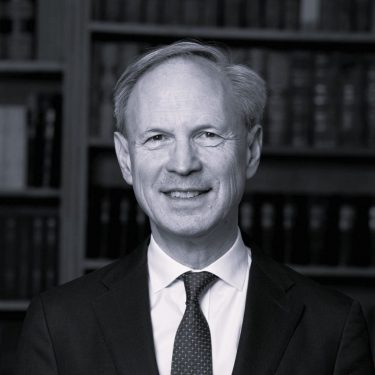
François Alabrune is the French Ambassador to the Netherlands and to the international institutions based in The Hague. He served in the Legal Affairs Directorate of the French Ministry for Europe and Foreign Affairs as legal adviser, Deputy Director, and Director, and was also legal adviser to the Permanent Mission of France to the United Nations.

Aurelio is a research fellow and doctoral candidate at the Chair of Public and International Law at Humboldt University Berlin. He is an Editor at Völkerrechtsblog.