
Over the past two years, international courts have entered the climate arena with unusual force. Advisory opinions from the International Tribunal for the Law of the Sea, the International Court of Justice, and the Inter-American Court of Human Rights signal a decisive shift in State obligation against climate change.
Yet something remains missing.
Despite growing recognition that climate harm is unevenly distributed, the law of the sea has not yet fully engaged with gender. The 2024 ITLOS Advisory Opinion on climate change obligations under the United Nations Convention on the Law of the Sea illustrates this gap. While the Tribunal made important advances by recognising greenhouse gas emissions as marine pollution and affirming stringent due diligence obligations under Articles 192 and 194 of UNCLOS, it did not develop the human and specifically gendered dimensions of ocean degradation. This post argues that the legal framework already permits, and in part requires, such an interpretation. The Tribunal identified relevant interpretive tools but did not carry them through into its reasoning. It contains only a passing reference to gender, but one that nonetheless creates a point of entry for developing a gender-transformative reading of UNCLOS.
The Dominant Legal Framing of UNCLOS
UNCLOS obligations are assumed to be interpreted through an ecological and state-centric lens. States must protect and preserve the marine environment. They must prevent, reduce, and control pollution. These are central obligations, but they are framed in a way that prioritises environmental harm at the level of ecosystems and state responsibility while overlooking the differentiated social effects of climate-related marine degradation.
Climate-related marine degradation does not affect all communities equally. Women in coastal and small island contexts often bear disproportionate burdens due to structural inequalities in access to resources, livelihoods, and decision-making as reported by the Intergovernmental Panel on Climate Change. Yet they are largely absent from the dominant legal framing of UNCLOS.
The ITLOS Advisory Opinion adopts a dominant framing where the ocean is primarily an environmental object to be managed by states, rather than as a social space shaped by unequal marginalisation and rights violations. The question, therefore, is why the Tribunal has not yet reflected or applied such an approach to social and gendered impacts.
Competing Readings Through Systemic Integration
A gender-transformative interpretation of UNCLOS does not require the creation of new obligations. It can be grounded in existing law through the principle of systemic integration under Article 31(3)(c) of the Vienna Convention on the Law of Treaties. Under this principle, treaties must be interpreted in light of other relevant rules of international law applicable between the parties.
This includes the Convention on the Elimination of All Forms of Discrimination against Women, which establishes binding obligations of substantive equality and non-discrimination. Article 1 and 2 of CEDAW provides the general framework of de facto equality, non-discrimination and state obligation, while its General Recommendation 28 (par 2) on the core obligations of States parties under article 2 further articulates that it is a dynamic instrument that develops with international law. Moreover, the CEDAW Committee has stated in General Recommendation No. 37 that climate mitigation and adaptation measures must be designed and implemented in accordance with principles of substantive equality, non-discrimination, participation, and accountability. With near-universal ratification and recognition of its core norms as customary international law, CEDAW forms part of the normative environment within which UNCLOS operates.
Climate law reinforces this interpretive pathway. The Paris Agreement explicitly calls for gender-responsive climate action, particularly in adaptation under Article 7(5). Notably, ITLOS refers to this provision at paragraph 393 of its Advisory Opinion. This builds on the Tribunal’s earlier finding at paragraph 130, under the principle of systemic integration, that UNCLOS should be interpreted in light of the Paris Agreement as a living instrument. Furthermoe, a wide range of international instruments supports the gender-climate nexus, including UN Human Rights Council resolutions, OHCHR reports, and joint statements from UN treaty bodies, all of which affirm that states must account for gendered impacts in climate action. Together, these sources create a normative environment in which a gender-transformative reading of UNCLOS is required.
Taken together, these elements establish more than contextual background. They provide the basis for a competing reading of UNCLOS in which environmental obligations are understood in light of states’ existing commitments to gender equality. Gender is not an external value that must be introduced into the law of the sea. It is already embedded within the applicable legal framework that ITLOS itself recognised.
An Unfinished Engagement in the ITLOS Opinion
The ITLOS Advisory Opinion contains several indications of a broader approach, but these are not carried through into the substance of its reasoning.
The Tribunal acknowledged at paragraph 66 that climate change “represents an existential threat and raises human rights concerns.” It also referred to gender-responsive adaptation through its engagement with Article 7(5) of the Paris Agreement. However, these elements remain peripheral. They do not shape how the Tribunal defines the content of due diligence obligations under Articles 192 and 194 UNCLOS.
This is where the Opinion is most open to critique. Having accepted systemic integration and having cited gender-responsive language, the Tribunal did not develop the legal consequences that follow from them. It stopped short of asking how due diligence obligations should be interpreted when climate harm is unevenly distributed along gendered lines.
The separate declarations underscore this point. ITLOS judge Infante Caffi emphasised that the Tribunal’s reasoning could have been expanded to include human health and human rights considerations. ITLOS judge Pawlak similarly noted that recent developments in international law were not fully reflected. Even Judge Kittichaisaree acknowledged that the Tribunal did not engage with the potential role of human rights under Article 293 UNCLOS.
These observations suggest that the limits of the Opinion are not rooted in the absence of legal tools, but in the scope of their application. The Tribunal identified relevant norms but did not fully integrate them. The result is an opinion that advances the law of the sea on climate change, while leaving part of its normative potential unrealised.
What a Gender-Responsive Reading Requires
If UNCLOS is interpreted consistently with CEDAW and the Paris Agreement, the content of due diligence obligations under Articles 192 and 194 must be understood differently.
First, states would be required to account for the differentiated impacts of marine environmental harm. This would include incorporating gender-transformative analysis into environmental impact assessments for activities that contribute to marine pollution or climate change.
Second, due diligence would require meaningful participation of affected groups in decision-making processes. In coastal and small island contexts, this entails ensuring that women are not only included but are able to influence adaptation and mitigation strategies.
Third, states would need to ensure that measures adopted to address marine pollution and climate change do not reinforce existing inequalities. Policies relating to fisheries, coastal protection, and marine resource management would need to be assessed for their distributive effects.
These requirements do not transform UNCLOS into a human rights treaty. They remain grounded in the due diligence standard that the Convention already imposes. What changes is how that standard is specified. Systemic integration ensures that it is interpreted consistently with states’ broader legal obligations, including those relating to gender equality.
The Role of CEDAW as Binding Law
A key point in this debate is the legal status of CEDAW. It is not merely persuasive authority. It is binding on the vast majority of states that are also parties to UNCLOS. In addition, the core prohibition of gender discrimination as a State Obligation reflected in CEDAW GR28 (par 42) forms part of customary international law.
This has two implications. First, states cannot treat gender equality as an optional policy consideration when implementing UNCLOS obligations. Second, interpreting UNCLOS without regard to these commitments risks creating inconsistency within international law.
From this perspective, the omission of gender considerations is not simply a gap. It raises questions about whether existing obligations are being fully recognised. If due diligence under UNCLOS is interpreted in a way that ignores well-established gendered impacts of climate change, it risks falling short of the standard required when read in conjunction with binding equality norms.
A Shifting Landscape: The Role of the ICJ
Developments in other forums reinforce this point. In its 2025 advisory opinion, the International Court of Justice (par 383) explicitly engaged with CEDAW GR28 in the climate context and recognised the relevance of gender and vulnerability in assessing state obligations.
This makes the limits of the ITLOS Opinion more visible. While ITLOS acknowledged the relevance of external norms, it did not integrate them to the same extent. The result is a divergence in how international courts are approaching the relationship between climate change, human rights, and treaty obligations.
At the same time, the ICJ’s approach demonstrates that a more integrated reading is both possible and already emerging. The law of the sea does not exist in isolation from this broader trajectory. The question is how quickly it will align with it.
The Institutional Dimension
The development of international law depends not only on legal arguments, but also on institutional context. The composition of courts, the arguments presented before them, and the broader political environment all shape which interpretations gain traction.
The ITLOS bench is comprised twenty-one judges, only four of whom were women. Of the five judges who appended declarations, Judge Infante Caffi, one of the four women, explicitly argued that the Tribunal’s reasoning on human rights could have been developed further. The CEDAW Committee, in General Recommendation No 40, has emphasised the importance of inclusive representation in decision-making bodies, including courts. The absence of gender parity on the bench is not offered here as a simple causal explanation for the Opinion’s silences, but it is consistent with the feminist claim that the institutional conditions for a more expansive, gender-responsive jurisprudence have not yet been created. Building those conditions is part of what the work of subsequent interpretation and institutional engagement
This context helps to explain why certain arguments are developed more fully than others. It also points to the importance of continued engagement. Expanding the interpretation of UNCLOS to incorporate gender perspectives will depend on sustained advocacy across litigation, scholarship, and institutional practice.
The Work Ahead
The ITLOS Advisory Opinion should be read not only for what it says, but for what it enables. By recognising the relevance of the Paris Agreement and incorporating gender-responsive language, the Tribunal has already taken an important step. It has identified the materials from which a more expansive interpretation can be constructed.
The next step is to develop that interpretation. This will require future cases to articulate more clearly how systemic integration operates in practice, and how due diligence obligations are shaped by intersecting legal regimes.
Conclusion
The ITLOS Advisory Opinion marks a significant development in the law of the sea’s response to climate change. But it is not the endpoint.
A gender-transformative interpretation of UNCLOS is legally available, grounded in the principle of systemic integration and supported by binding obligations under CEDAW and the Paris Agreement. The Tribunal recognised these elements but did not fully develop their implications. As a result, the dominant legal framing of UNCLOS remains incomplete.
Gender equality is not external to the law of the sea. It is part of the legal obligations that shape how those rules must be understood. Interpreting UNCLOS without recognising this risks overlooking the differentiated impacts of climate change and the corresponding duties of states.
Gender equality is an obligation under the law of the sea. Failing to give it effect in the interpretation of UNCLOS risks reproducing inequality in the application of international law itself.
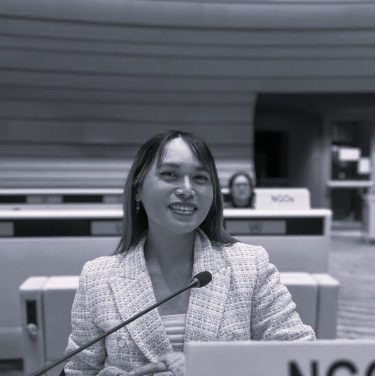
Vashti Ortego is a transfeminist activist specialising in gender equality and international women’s human rights law, with experience in CEDAW advocacy.