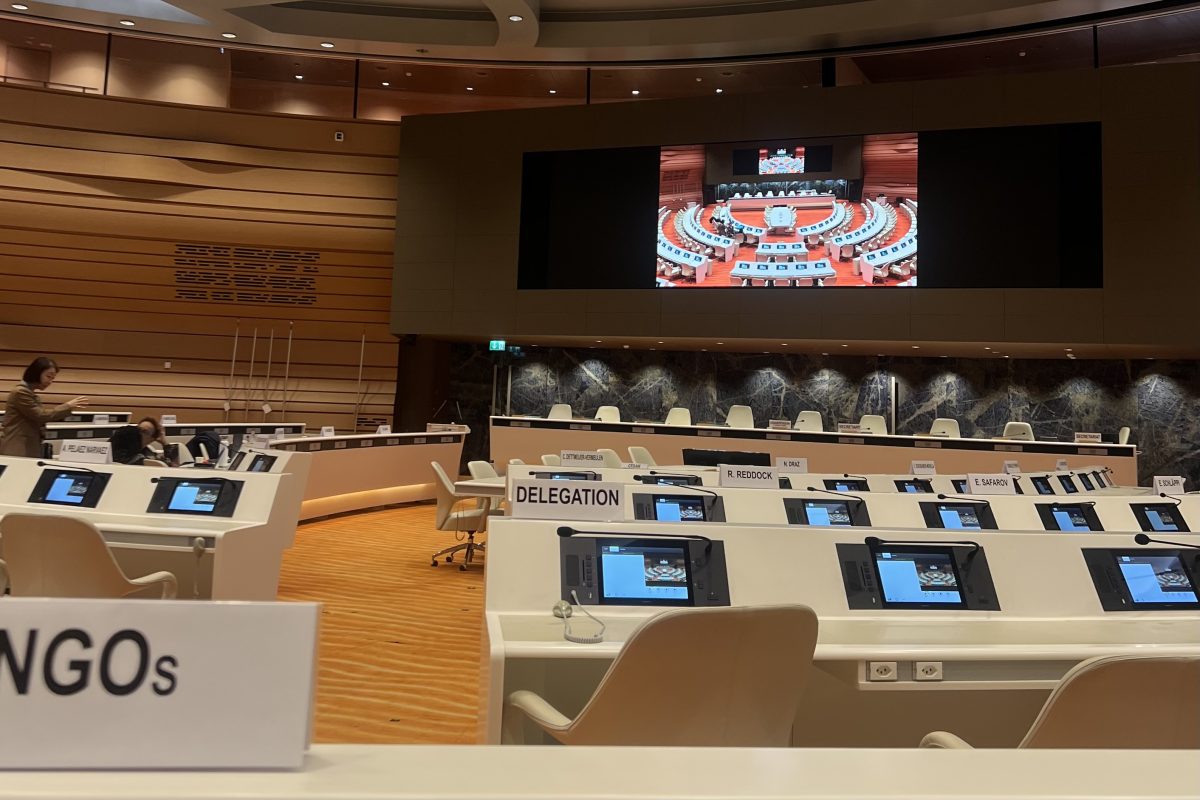
Forty-five years after its entry into force, and with the adoption of General Recommendation No. 41 on gender stereotypes, can the CEDAW Committee confront gender backlash without reproducing the narratives it aims to dismantle?
On 3 September 1981, the Convention on the Elimination of All Forms of Discrimination against Women (CEDAW) entered into force. With 189 state parties, the “international bill of rights for women” is the third most ratified human rights treaty. But it turns 45 in a hostile climate. In 2024, the UN Working Group on discrimination against women and girls (WGDAWG) warned of an escalating backlash against gender equality, reaching extreme proportions in some states, including gender apartheid. It defined backlash as the “denial of the recognition, enforcement and realization of women’s and girls’ rights, or retrogression in that regard” (para. 11). In 2025, it added that the backlash targets the very concept of gender, driven by transnational movements against so-called “gender ideology” (para. 2).
The Committee’s response has been double-edged. It has confronted backlash in Afghanistan to Argentina and Iraq while elements of its practice have echoed its language. Tracing the Committee’s work from 2022 to the adoption of General Recommendation No. 41 (GR41) on gender stereotypes in October 2026 reveals not a linear story of regression and correction. GR41 recognizes organized backlash and reinforces transformative equality, providing a foundation for further developing states’ obligations. If CEDAW is to lead the response to gender backlash, the Committee must consistently build upon its evolving normative framework without retreating from the progress it has already made.
Forty-Five Years of Growth and Blind Spots
CEDAW’s strength has always been its capacity to respond to changing circumstances. The CEDAW Committee described the Convention as a “dynamic instrument” (para. 3), whose content has been progressively clarified since its adoption. For instance, although the Convention was initially silent on violence against women, the Committee later clarified that gender-based violence “is a form of discrimination that seriously inhibits women’s ability to enjoy rights and freedoms on a basis of equality with men” (para. 1). Furthermore, it likewise clarified that discrimination against women encompasses both sex- and gender-based discrimination (para. 5). It also recognised that this discrimination is inextricably linked to other factors such as race, class, sexual orientation and gender identity (para. 18).
This dynamic reading is consistent with the general rule of treaty interpretation. Article 31(1) of the Vienna Convention on the Law of Treaties (VCLT) requires a treaty to be interpreted in light of its object and purpose, allowing CEDAW to address emerging and resurgent discrimination, despite anti-gender resistance.
On the other hand, the Convention’s growth has been uneven. Some women waited decades for it to see them. For example, while LBTI women advocated their rights since the 1990s, the Committee explicitly mentioned that LBTI women are rights holders under the Convention only in 2022 (para. 9.7). Which women CEDAW sees and when, has partly reflected the Committee’s own blind spots.
Echoing the Backlash
In its 2022 concluding observations on Portugal, the Committee noted with concern “the gradual dilution of the concept of ‘sex’ and its replacement by the concept of ‘gender’ across policies and legislation” (para. 18). It recommended “avoiding the broad use of the concept of ‘gender’ when addressing the rights of women” (para. 19). This framing sits uneasily with the Committee’s own practice, which recognises the interconnected nature of sex- and gender-based discrimination. Said concluding observation on Portugal reflects the anti-gender movement’s core aim to displace gender or erase sex in treaty-body language. It also sits against the rest of the same document, which calls for “a gender perspective” in sexuality education (para. 29c) and uses the term “gender-based violence” throughout. The inconsistency exposes an unresolved tension in the Committee’s own use of the terms sex and gender.
A year later, the Committee reviewed Germany, Spain, and Iceland, all of which had adopted or proposed laws on legal gender recognition based on self-identification. The dialogues and concluding observations show how the same framing entered the Committee’s texts.
In the dialogue with Germany, a Committee member asked whether the proposed self-determination law protected “biological women’s” right to privacy and their right to take part in sporting events without having to compete against “biological males” (para. 25). This is the vocabulary of gender-critical campaigns, down to the word “biological”. The concluding observations then recommended that the law’s evaluation be expanded to assess its impact on “the rights of all stakeholders in the state party, including women and girls” (para. 16).
With their dialogue with Spain, another Committee member raised the concern against self-identification through child protection and the age of consent (para. 25). While the concluding observations welcomed Law No. 4/2023 as a “positive aspect” (para. 4b), it proceeded to list its recommendation concerning the law under the sub-heading “Discriminatory laws” (para. 11). There, it recommended assessing the law’s impact on “the rights of all stakeholders, including women and girls” (para. 12).
Iceland’s review followed a similar line. A Committee member asked whether the 2019 Act on Gender Autonomy would affect “safe spaces reserved for females only”, such as shelters, and whether affirmative action for women included trans women, “and if so, why that was the case” (paras. 30, 43). The concluding observations did not take up this line of questioning but recommended assessing the impact of Iceland’s gender-neutral legislation “on the availability of safe spaces for women and on data collection” (para. 14b).
The wording may appear neutral. But it closely tracks a framing advanced by the Special Rapporteur on violence against women and girls, Reem Alsalem. In the same session, she met informally with the Committee to inter alia discuss gender self-identification and access to “sex-based and gender-based safe spaces” (Part 1 Chapter II Section E para. 12). She later developed her position paper on the definition of a “woman” as “biological females”. Eventually, she published a report on “sex-based violence” (para. 4, 15, 21), which strips trans women of the category of “women” altogether. This contradicts the Committee’s own position, which – in a concluding observation on Costa Rica – called for respecting transgender women’s “autonomy, self-determination and legal recognition of their gender identity” (para. 42). Yet some of CEDAW’s own remarks and recommendations on trans rights echo Reem’s language.
These formulations reproduce the discourse the WGDAWG identifies as driving gender backlash: the portrayal of gender as being in tension with the protection of women’s rights.
However, they should not be read as a unified institutional turn. The Committee is composed of 23 independent experts serving in their personal capacity, drawn from different legal traditions and holding different views on sex and gender. Questions raised in dialogues are those of individual members; concluding observations are negotiated texts adopted collectively. Any inconsistencies are best understood as the visible trace of that internal disagreement. Yet, once adopted, concluding observations speak with the authority of the Committee. A framing that enters the room as one member’s question can leave it as the Committee’s recommendation. Like this, it confronts the backlash and lends it authority at the same time.
Naming and Confronting the Backlash
In the same period, however, the Committee has also shown CEDAW at its most useful, confronting very different manifestations of gender backlash.
In Afghanistan, the backlash transformed into a system of rule. At its 91st session in June 2025, the Committee became the first UN treaty body to Afghanistan since the Taliban takeover. It documented a systematic pattern of gender persecution that had erased women from public life “in a system that may constitute gender apartheid” (para. 13). Further, it stressed that gender apartheid should be recognized under international criminal law (para. 14). By using the concept, the Committee added its authority to calls for its inclusion in the negotiated Crimes Against Humanity Treaty.
In Argentina, the gender backlash takes form through institutional dismantling. Under President Javier Milei, the Ministry of Women, Gender and Diversity was abolished. Additionally, a range of gender-equality institutions and programmes were dismantled, reduced or defunded. In its February 2026 review, the Committee raised concerns about the regression in women’s rights institutions, cuts to programmes addressing gender-based violence, the weakening of comprehensive sexuality education and adolescent pregnancy prevention. It called on Argentina to ensure that legislative and executive measures remain compatible with the Convention and do not result in retrogression (para. 11a). By treating these developments as questions of state obligation and retrogression, the Committee showed how CEDAW can respond to forms of backlash its drafters could scarcely have anticipated.
Iraq shows backlash operating through both law and language. In its February 2026 review, the Committee noted with concern a 2023 directive replacing the term “gender” with “justice between the sexes”, alongside school curricula portraying the Convention as incompatible with family and societal values (para. 25b), and discriminatory laws justified through religious doctrine (para. 30c). By this, Iraq shows that disputes over words like “gender” are not merely semantic.
Now: GR 41 and the Choice Ahead
CEDAW cannot fully respond to gender backlash while reproducing some of the framings the backlash itself perpetuates. Greater consistency is necessary. Three steps could help.
First, the Committee should articulate more clearly what gender backlash is and how the Convention requires states to respond. That account should be intersectional. Backlash does not affect all women the same way. It frequently targets those facing intersecting forms of discrimination. Also, it increasingly targets the concept of gender itself, despite gender having long formed part of the Committee’s interpretation of the Convention.
Second, the Committee should consistently apply the transformative approach to equality reinforced in its recently adopted General Recommendation No. 41 (GR41) on gender stereotypes. While GR41 explicitly recognizes organized gender backlash and democratic regression (para. 6), it does not articulate specific recommendations to prevent or reverse such regression. The Committee should therefore translate its transformative framework into clearer state obligations to prevent retrogression, safeguard existing protections, and dismantle the structural conditions that sustain gender backlash.
Furthermore, the Committee’s explicit recognition of discrimination and violence against lesbian, bisexual, transgender and intersex (LBTI) women in GR41 (para. 22) is welcome. Yet CEDAW should also extend its protection to nonbinary and gender-diverse persons. GR41 recognizes that gender stereotypes have individual and collective impacts extending beyond women and girls to LBTI individuals (para. 14). Rigid gender norms harm nonbinary and gender-diverse persons through the same structures of inequality that constrain women. This recognition should inform a more inclusive interpretation of the Convention’s protections. Under Article 31(3)(c) of the Vienna Convention on the Law of Treaties, CEDAW’s interpretation should also be informed by relevant international human rights law, including the CRPD Committee’s 2026 Guidelines on addressing intersectional discrimination against women and girls with disabilities, which expressly includes transgender, intersex, nonbinary and other gender-diverse persons with disabilities (para. 5) within their scope. These developments offer a foundation for further clarifying CEDAW’s inclusive and transformative interpretation.
Beyond this, while GR41 expressly recognizes states’ obligations to regulate and hold non-state actors accountable for perpetuating gender stereotypes (paras. 40–41), this provides an opportunity to further articulate the extraterritorial dimensions of these obligations. Article 2(e) of CEDAW requires states to eliminate discrimination by “any person, organization or enterprise”, while the Committee elaborated (paras. 9–13) states’ due diligence obligations concerning private conduct. Much of today’s backlash is driven by transnational anti-gender campaigns, increasingly amplified through digital platforms. Building on GR41, the Committee could clarify how states’ obligations apply to transnational corporate activities, including measures to assess and mitigate the amplification of discriminatory stereotypes while safeguarding freedom of expression in accordance with the principles of legality, necessity and proportionality.
Third, the Committee should apply the same standard to its own practice. Consistency cannot mean unanimity among 23 independent experts. It can, however, mean shared discipline in the texts the Committee adopts: terminology in concluding observations aligned with its own general recommendations, and closer scrutiny so that framings raised by individual members in dialogue are not carried into recommendations that contradict the Committee’s established interpretation.
45 years after CEDAW entered into force, the Convention’s continued evolution is a necessity if it is to address contemporary forms of discrimination against women. Its herstory shows that evolution is essential to fulfilling its promise of meaningful equality. The Committee’s authority in confronting gender backlash will depend, in part, on ensuring that its own practice does not retreat from that progress.
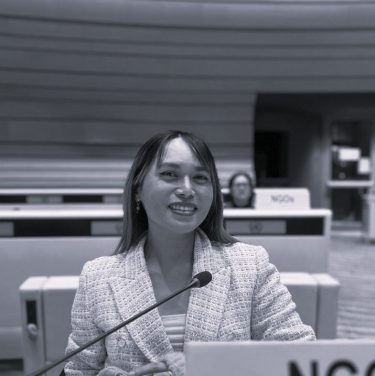
Vashti Ortego ist eine transfeministische Aktivistin, die sich auf Geschlechtergleichstellung und internationales Frauenrecht spezialisiert hat und über Erfahrung in der CEDAW-Interessenvertretung verfügt.