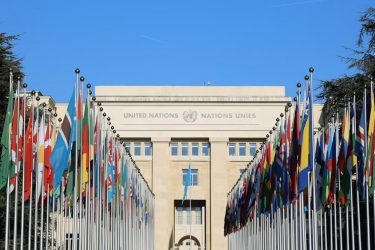
In Conversation with Ana María Mondragón Duque, Assistant Judge of the Special Jurisdiction for Peace
Judge Mondragón, thank you very much for accepting this invitation, which will be a part of the Völkerrechtsblog symposium: The Person behind the Practitioner.
[AMMD] Thank you, Antonio, for the invitation to share some reflections with you and the readers of Völkerrechtsblog.
Before diving into the many interesting questions we prepared for you today, it would be to our audience’s advantage to offer a brief summary of your distinguished career as an international lawyer. Judge Mondragón is an Assistant Judge at the Special Jurisdiction for Peace (SJP) since 2018, where she decides cases related to crimes committed in the context of -the longest internal armed conflict in the western hemisphere- the Colombian armed conflict. She has more than fifteen years of experience working in international law. Before joining the Tribunal, she acted as a lawyer at the Independent Consultation and Investigation Mechanism (MICI) of the Inter-American Development Bank, where she conducted investigations related to business and human rights.
Judge Mondragón holds an LL.M. from Harvard and an LL.B. from Pontificia Universidad Javeriana. She has also worked for the Center for Justice and International Law (CEJIL), the Interamerican Association for Environmental Defence (AIDA) and the Inter-American Court on Human Rights.
Today, she is with us, on Völkerrechtsblog, helping us understand this amphibious tribunal and her role as an assistant judge.
Judge Mondragón, before joining the SJP you were on the box of the victims seeking accountability and public recognition on their behalf. Almost eight years ago, you transitioned to the bench. How do you manage to reconcile the tensions between retributive justice -so central for a human rights attorney- and restorative justice and how different is your role as a judge compared to the ordinary criminal system?
[AMMD] One of the most transformative aspects of joining the SJP was realizing that my own understanding of justice had to evolve. Before joining the tribunal, I largely understood accountability as the process of identifying perpetrators, establishing responsibility, and imposing punishment. That perspective was deeply connected to my previous work alongside victims seeking justice and reparations for grave human rights violations.
Working within a transitional and restorative justice model helped me understand that victims are often seeking something broader and more complex. Of course, criminal accountability remains essential. The SJP was created to investigate, prosecute, and sanction the most serious crimes committed during the armed conflict, and as judges we have a duty to uphold international human rights and international humanitarian law standards. Yet victims are also seeking truth, acknowledgment of responsibility from those who committed the crimes, and, above all, the possibility of being genuinely dignified, seen, and heard by those responsible and by society as a whole.
In this model, criminal investigations and sanctions are only one part of the equation. The process itself is equally important. Through hearings and restorative dialogues, victims have the opportunity to engage directly with those responsible, express their truth demands, and bring their reparation expectations into the process and the public sphere. At the same time, perpetrators are called upon to acknowledge publicly the harms they caused and to commit themselves to repairing those harms.
This has a profound impact on the meaning of justice. In many ordinary criminal systems, victims participate primarily as witnesses and often remain peripheral to the proceedings. In the SJP, victims are placed at the center of the process. Their participation is not symbolic; it actively shapes judicial proceedings, restorative measures, and the truth that ultimately becomes part of the historical record.
In this context, when dealing with international crimes, the restorative justice paradigm expands and deepens the meaning of accountability. The role of the judge therefore extends beyond adjudicating responsibility. It also involves creating the conditions for meaningful encounters between victims and perpetrators that restore mutual recognition of their shared humanity, while safeguarding due process. The judge remains a guardian of the law, but also a guardian of the conditions that make peace and non-repetition possible.
It is, then, much more than sanctions, yet this has also changed for the tribunal. The Special Jurisdiction for Peace has introduced alternative sanctions, which have generated different reactions. Some former FARC members argue that the system is moving towards more traditional, punitive penalties, while some victims consider these sanctions insufficient. Could you please explain what these alternative sanctions involve, and what value the SJP places on prioritising redress over retribution?
[AMMD] The SJP has a hybrid model that combines criminal justice in a transitional setting with the principles of restorative justice. As a result, it relies on different mechanisms to ensure accountability and operates through a carefully designed system of incentives.
Those who fully comply with their obligations towards victims and the tribunal—including providing a complete and truthful account of the crimes committed, acknowledging responsibility, and contributing to guarantees of non-repetition—may access what we call a restorative sanction. This means they will not serve a traditional prison sentence. Instead, they will be required to carry out activities designed to repair the harms caused by their crimes under strict restrictions on rights and liberties.
These sanctions have two components: the retributive and the restorative. The first implies that individuals under sanction remain subject to strict supervision, including electronic and in-person monitoring. They must reside in designated locations and obtain authorization from the tribunal for certain movements. The second component is the implementation of restorative projects that directly contribute to repairing harms suffered by victims, affected communities, territories, and society more broadly.
These are not community service measures. They are criminal sanctions designed to fulfil the goals of accountability through restoration while promoting the reintegration of those responsible as a guarantee of non-recurrence. Their design takes into account victims’ reparation demands, the nature of the harms caused, and proposals submitted by perpetrators, who are expected to become active agents of reparation, deconstructing their previous identities shaped by war.
Drawing on international standards on reparations and adequate and effective sanctions, the tribunal has developed different lines of restorative sanctions. These include memory initiatives, the construction of community infrastructure, humanitarian demining, environmental rehabilitation, and educational projects, among others.
This is one of the most innovative aspects of the Colombian model and also one of its greatest challenges. While judges in ordinary justice systems have a penitentiary system already in place, we have had to create our own “Restorative System.” Therefore, the effectiveness of restorative sanctions depends not only on judicial decisions but also on sustained public policy, institutional coordination, and adequate funding. More broadly, it requires societies to move beyond an exclusively retributive understanding of justice. That is, ultimately, a cultural transformation.
This is fascinating, people tend to underestimate and misrepresent the importance and severity of sanctions, and also the goals of the tribunal. In October 2024, the former and first Prosecutor of the International Criminal Court (ICC), Luis Moreno Ocampo, commented that the SJP was in a self-made maze, as it was choosing to hear hundreds of individual cases and investigating the facts around them instead of charging the highest ranks of both sides of the conflict and sentencing.
If the SJP were to prosecute all crimes committed during the Colombian armed conflict, its mandate would need to be extended for decades. Against this backdrop, how do you reconcile the role of the SJP as a tribunal meant to have the final word on an internal conflict (political closure), and also as the last chance for so many victims to find justice?
[AMMD] Another of our greatest challenges is the sheer scale of the crimes we are called upon to investigate and adjudicate.
The SJP applies a model based on patterns of macrocriminality. Our objective is not only to attribute responsibility to those most responsible for the crimes committed, but also to uncover the policies, structures, and practices that enabled large-scale violence.
In practice, this means dealing with proceedings involving thousands of victims, numerous perpetrators, and extensive bodies of evidence. For example, in Case 01 concerning kidnappings committed by the former FARC-EP, more than 4,500 victims have been accredited and are participating in the proceedings. In the case concerning extrajudicial executions in which I work, we have documented 7,837 victims.
This creates a permanent tension between the individual and collective dimensions of justice. Victims understandably seek answers about their own experiences and often expect accountability for every person involved in the crimes that affected them. Yet the mandate and tools of the SJP are designed to establish broader patterns of criminality and to prosecute those who played a determining role in their commission.
To address this tension, we have learned that senior commanders often cannot provide the level of detail many victims need regarding specific events. For this reason, the tribunal has progressively incorporated mid-level commanders and direct perpetrators into its investigations and proceedings. Their participation often contributes essential information that allows victims to gain a more complete understanding of what happened.
Ultimately, our challenge is to strike a balance between fulfilling victims’ rights to truth, justice, and participation while remaining faithful to the legal mandate of a transitional justice tribunal focused on those most responsible for the gravest crimes. No transitional justice mechanism in the world has ever been able to investigate every crime committed during a protracted armed conflict. The challenge is therefore not to achieve complete judicial coverage, but rather to maximize truth, accountability, and victim recognition within realistic institutional limits, while establishing effective coordination mechanisms between the ordinary justice system and the SJP so that each can contribute to a broader ecosystem of accountability in the country.
An immense task indeed, one can doubt whether this could be achieved by an international institution. After the establishment of the SJP back in 2016, many mistakenly claimed that the peace agreement (between Colombia and the FARC) was an international treaty, and that -by extension- the SJP would be an international tribunal… today it is undeniable that the SJP is a domestic institution that applies international law -save perhaps for procedural matters-.
The tribunal could have been rooted in the UN system, but it was designed as a domestic institution. To what extent do you think this was the right institutional choice, considering the turbulent times and the backlash against international institutions?
[AMMD] Without a doubt, I believe this was the right political and legal choice. The SJP is a domestic institution, but it is also an internationalized tribunal. Although rooted in the Colombian constitutional order, it directly applies and interprets international humanitarian law, international criminal law, and international human rights law.
Through our decisions, we have become active contributors to the development of international law. This can be seen in areas such as the interpretation of the limits of amnesties under international law, the application of command responsibility in transitional justice settings, and the domestic implementation of the Rome Statute. Our jurisprudence has also engaged with questions concerning victims’ right to participation and, as I mentioned earlier, the development of new standards on effective, adequate, and proportionate sanctions for international crimes within a restorative and transitional justice framework. The tribunal has further generated innovative legal developments from a Global South perspective. For example, the SJP has recognized certain territories and elements of nature as victims of the armed conflict, drawing on Indigenous peoples’ worldviews and legal traditions.
In a context in which international institutions are increasingly challenged, a domestic tribunal anchored in the Constitution enjoys an important source of stability and permanence. This institutional design allows us to remain closely connected to the communities affected by the conflict and the country’s social, cultural, and political realities, while simultaneously engaging in a global dialogue.
That is certainly an advantage during these times, and perhaps also a broader trend. Still, the SJP is said to work in favour of positive complementarity, as understood in Article 1 of the Rome Statute. How has the tribunal innovated on this front, and how is it setting an example for so many States? This might be just the reason to have preferred a domestic institutional design…
[AMMD] This is perhaps one of the clearest expressions of the internationalized character of the JEP.
The tribunal maintains a close and constructive dialogue with the Office of the Prosecutor of the International Criminal Court and with the Inter-American human rights system. Through memoranda of understanding and other forms of cooperation, we have embraced a positive complementarity approach based on the understanding that accountability is strengthened when institutions work collaboratively while respecting their respective mandates.
Our engagement with the ICC Office of the Prosecutor, for example, has involved technical exchanges on some of the most complex issues in international criminal law, including gender-based crimes, environmental crimes, and corporate accountability. These dialogues also have an important institutional and political dimension, particularly in contexts where the independence and functioning of the tribunal may come under pressure.
Similarly, our interactions with the Inter-American Commission and Court of Human Rights have enriched discussions on states’ duties to investigate, prosecute, and sanction human rights violations; victims’ rights to truth, justice, reparation, and non-repetition; and the question of whether specific human rights standards can be developed to reflect the distinctive features of a transitional and restorative justice model.
These dialogues have helped ensure that our work remains aligned with evolving international standards while contributing new perspectives from the Colombian experience. They reflect a process of mutual learning in which domestic and international institutions strengthen one another, generating lessons that may be relevant for other countries seeking pathways from conflict to peace without sacrificing accountability.
If the twentieth century was the era of international criminal tribunals, the twenty-first century may increasingly depend on strong domestic institutions capable of implementing international justice in ways that are locally legitimate.
Judge Mondragón, thank you very much for your time and generous disposition in this interview. It has been a pleasure to talk to you, and I am sure that with your insights many readers will benefit and better understand the complexity and the challenges that the SJP faces right now.
[AMMD] Thank you for this thoughtful conversation. I hope that sharing the SJP Colombian experience can contribute, even in a small way, to broader discussions on how societies can confront mass violence while pursuing both accountability and peace. These are difficult questions with no perfect answers, but they are conversations worth having.
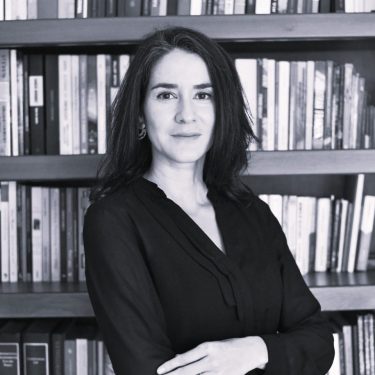
Judge Mondragón is an Assistant Judge at the Special Jurisdiction for Peace (SJP) since 2018.
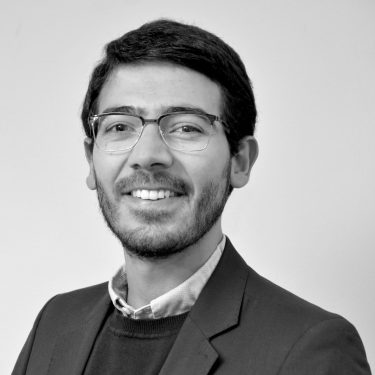
Antonio is a Junior Researcher in International Human Rights Law at the T.M.C. Asser Institute in the Hague. Antonio holds an LL.B. from Pontificia Universidad Javeriana, a Certificate in Transnational Law from the Georgetown CTLS and an LL.M. in International Law from Cambridge. He is an editor at Völkerrechtsblog.