
Globalization in the 21st century has created a governance gap that continues to have adverse effects on society, especially in Africa. Although the United Nations Human Rights Council (HRC) endorsed the United Nations Guiding Principles on Business and Human Rights (UNGPs) in 2011, scholars (e.g. Deva et al.) and stakeholders have criticized it for not going far enough to hold corporations accountable. The endorsement of the UNGPs marked the emergence of various regulatory initiatives at the international, regional, and national levels. At the international level, the Open-ended Intergovernmental Working Group on Transnational Corporations and other Business Enterprises with Respect to Human Rights (OEIGWG) is currently hosting treaty discussions, which have produced three revised drafts, the most recent of which is the 2023 release, and updated with proposed amendments in 2024 and 2025.
This blog post asks a central question: what may rights-holders from Africa expect from the OEIGWG process? I argue that, although Third World states sponsored the Resolution 26/9 to remedy the perceived failure of the UNGPs, substantive and procedural gaps continue to trail the treaty-making process. This casts doubt on whether Third World states, and consequently rightsholders from the Third World, can achieve stronger accountability norms through the treaty. Given this emerging reality, I conclude that the treaty may either be abandoned, significantly weakened, or command low compliance levels among developed states.
The following section examines gaps in the procedure and substance of the treaty process. It argues that they cast doubt on whether rightsholders in the Third World can realize their expectations of strong accountability norms through the treaty. Given this emerging reality, the last section concludes that the conceptual, economic, and political contestation surrounding the treaty discussion means that the treaty may not materialize, and even if it does, the final version may be weak. And peradventure the discussion produces a strong treaty that addresses the plight of Third World rightsholders, the treaty may not elicit strong compliance from developed states.
The OEIGWG: Procedural and Substantive Gaps
The discussion below examines the extent to which the OEIGWG procedural framework determines which voices are included and excluded, shaping and setting the agenda for treaty discussions. It then briefly assesses the emerging content of the draft treaty, arguing that they are starting to reflect the voices of the most powerful in the treaty discussions. To be clear, this discussion is limited to the third revised draft and the 11th session of the OEIGWG, as the proposed amendments have not yet been agreed upon.
Procedural Gaps: Exclusionary Processes and Corporate Capture
The inclusion of rightsholders in treaty discussions has a material impact on how problems are identified and addressed (see McDonnell). It is doubtful whether the majority of the world’s rightsholders, including local communities, human rights defenders, Indigenous groups, and social movements, see the OEIGWG formal arrangement as adequately representing their views. Rightsholders are required to travel to Geneva annually, and even then, they do not have formal standing to be heard in the process. It could be argued that civil society organizations (CSOs) represent the voices of rightsholders in OEIGWG sessions. However, the adequacy of representation is doubted (e.g. Hamm). This is partly because CSOs face financial, logistical, and structural barriers at the OEIGWG. These problems include denial of visas and inability to permanently make the session hybrid, ECOSOC status requirements, unsustainable costs or travel length, lack of translation and interpretation, accessibility for people with disabilities, access to technology, and safety issues. Although the 10th session was initially scheduled for October 2024, it was postponed without prior notice to December 2024. One of the representatives of a CSO group stated that this “is a direct attack on Global South voices. Postponing the negotiations to December, a time when many in the Global South are engaged in cultural celebrations and family traditions, is deeply insensitive and exclusionary.” This financial constraint is not peculiar to Third World rightsholders. The UN is also facing liquidity problems of its own. States, including the US, China, and Russia, have failed or refused to make contributions in an attempt to defund the UN. This makes it difficult for the UN to fund or continue some of its activities, as there is a danger of a financial collapse. Therefore, logistical and financial constraints both at the individual and institutional levels exacerbate the problem of inclusion in the treaty process.
Despite the absence of a formal status for most rightsholders in OEIGWG sessions, the OEIGWG grants Business Interest Associations (BIAs) formal status in treaty discussions. The intertwined economic and political interests of developed states and some big businesses have created a formidable neoliberal force that rejects stronger accountability norms (see Ogunranti). At several sessions, some BIAs lobbied their home states, opposed the treaty, supported maintaining the UNGPs standards, called for a restricted scope for the treaty, and rejected any direct obligation on corporations. A CSO group succinctly puts it as follows: “[t]here is an elephant in the room – it’s corporate capture of the United Nations! We must stop it. We can see its impact on the treaty process in attempts by corporate representatives to weaken provisions on legal liability and extraterritorial obligations.” In effect, there is an ongoing corporate capture of the treaty process, making it doubtful that a strong treaty can be negotiated.
Substantive Gaps: Coverage and Watering Down Treaty Provisions
There is a polarization along economic and political lines between developed and developing states on several substantive issues, including the territorial and material scope of the treaty, human rights due diligence obligations (HRDD), MNCs’ liability as legal persons, the jurisdiction for victims’ rights, the characterization of victimhood under the treaty, and the institutional arrangements created by the treaty. Due to limited space, I discuss only some of these issues below.
Determining the treaty’s scope is undoubtedly one of the most difficult challenges the OEIGWG faces (e.g. Deva). Although Article 3.2 of the Zero Draft treaty only covered MNCs, as contemplated in Resolution 26/9, the EU’s proposal seeks to extend the scope of subsequent draft treaties to include “all business enterprises”. This proposal remains controversial. Adopting the EU’s interpretation means the treaty’s scope is overly broad, failing to focus on the peculiar risks arising from transnational corporate activities. Apart from the fact that most states already regulate domestic corporations within their borders, domestic companies, compared to MNCs, have limited opportunities to contribute to human rights abuses on a global scale (e.g. Skinner). If the proposed scope is retained in the final treaty, domestic companies would incur higher compliance costs, putting them at a competitive disadvantage compared to MNCs, which have the resources and leverage to comply with regulations.
Beyond controversies over the treaty’s scope, some of the strong accountability provisions continue to be watered down due to opposition from developed states and BIAs. For example, although the initial version of the draft imposed direct obligation on MNCs in international law, the revised version replaced it with a weaker version, providing that businesses have only the “responsibility to respect internationally recognized human rights”. This framing is similar to Pillar II of the UNGPs, which is criticized for not going far enough (see Deva). Furthermore, several provisions regarding HRDD and jurisdictional scope are increasingly being watered down. For example, although Article 8.7 in initial drafts provides that HRDD shall not automatically absolve MNCs from legal liability, the third revised draft excluded this provision. Also, Article 8.2 of the revised draft subjects international rules on legal liability to the legal systems of states parties, making it difficult to create a unified liability regime under international human rights law. A CSO representative from Brazil lamented that “[w]e need a treaty that puts victims and communities affected by TNC violations at the core of reparation processes, but many good provisions present in the 3rd revised draft, like the exclusion of forum non conveniens, were simply deleted.” Therefore, it is doubtful whether these watered-down provisions reflect a rightsholder-centric approach to treaty-making.
From the foregoing, it can be gleaned that ideological, political, and economic differences among developed and developing states pose a significant obstacle to a consensual orientation in OEIGWG sessions. Furthermore, they contribute to a sense of marginalization among some stakeholders in developing states. For example, at the 9th session, the African CSO Group complained, “[…] we feel that our contributions have not been adequately incorporated in the new updated draft in a manner that will allow this process to move in a democratic, transparent, and progressive manner.” Essentially, CSOs are beginning to attack the legitimacy of the OEIGWG, warning that “[…] a draft Treaty which ignores the demands of peoples and communities affected and social movements will have no legitimacy.”
This criticism is not new in international law. The history of international law shows that it has been a tool for entrenching the neoliberal and capitalist agenda (e.g. Miles, Chimni). International law’s capitalist history ensures the voices of the Global North (see Perrone) and influential business actors remain dominant in shaping the contours and narratives surrounding international law. This has raised questions about the legitimacy of international law processes as they relate to the Third World (e.g. Mutua and Anghie, Mutua). Unfortunately, given gaps and concerns regarding the procedure and substance of the draft treaty discussed above, history may likely repeat itself. Amidst the increasing allegations of double standards and violations of international law in the 21st century, Third World rightsholders may do well to be cautious about expectations that the LBI draft treaty will effectively address corporate accountability issues in Africa.
Conclusion
This blog post examined whether, given the direction in which the OEIGWG sessions are heading, rightsholders in Africa may continue to expect a treaty that largely reflects their expectations. I argued that this is unlikely, given the marginalization and the power imbalances characterizing the treaty discussion. Given the political, economic, conceptual, and doctrinal contention in the sessions, the treaty discussions may likely result in three outcomes (e.g. Ivanov and Levina). First, it may end up like the discussions on the Draft United Nations Code of Conduct on Transnational Corporations, which was abandoned after 22 years of deliberation. This is even more true for the OEIGWG, given that a decade has passed without a tentative agreement on the treaty’s scope. Second, even if the OEIGWG produces an instrument, its scope and content will likely differ significantly from the intention of the sponsors of Resolution 26/9, resulting in weak norms that are even weaker than the UNGPs. Thirdly, if the developed countries agree to a treaty against their economic and political interests, the treaty will likely suffer the fate of the International Convention on the Protection of the Rights of All Migrant Workers and Members of Their Families, which was adopted in 1990 but has not been ratified by a single migrant worker-receiving country. None of these options would be acceptable to rightsholders in Africa who demand stronger accountability norms and access to justice.
Perhaps, it is in this realization that the African Union is proposing an African BHR treaty. In March 2023, the African Commission on Human and Peoples’ Rights (ACHPR) adopted a resolution advocating for a regional BHR treaty in Africa—the African Regional Legally Binding Instrument to Regulate the Activities of Transnational Corporations and Other Business Enterprises. The treaty is expected to ensure “accountability and access to remedy for business-related human rights violations in Africa, with particular focus on marginalized and vulnerable populations” (para. 2(c)) The treaty resolution could be interpreted as a signal that African states do not wish to wait for a global treaty that may not adequately protect the rights of vulnerable groups on the continent. Time will tell whether a regional BHR treaty is feasible, but in the meantime, rightsholders in Africa must continue to push for national regulatory initiatives that hold corporations accountable.
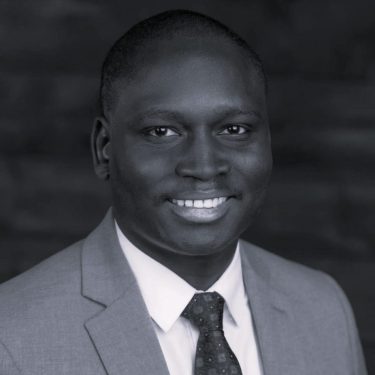
Dr. Akinwumi Ogunranti is an Assistant Professor and Dean’s Eminent Scholar at the Faculty of Law, University of Manitoba. His scholarship focuses on international economic law, with particular emphasis on business and human rights, international investment law, transnational dispute resolution, and conflict of laws. His research has appeared in leading journals, including the Leiden Journal of International Law, the Business and Human Rights Journal, the Canadian Yearbook of International Law, and the Osgoode Hall Law Journal.