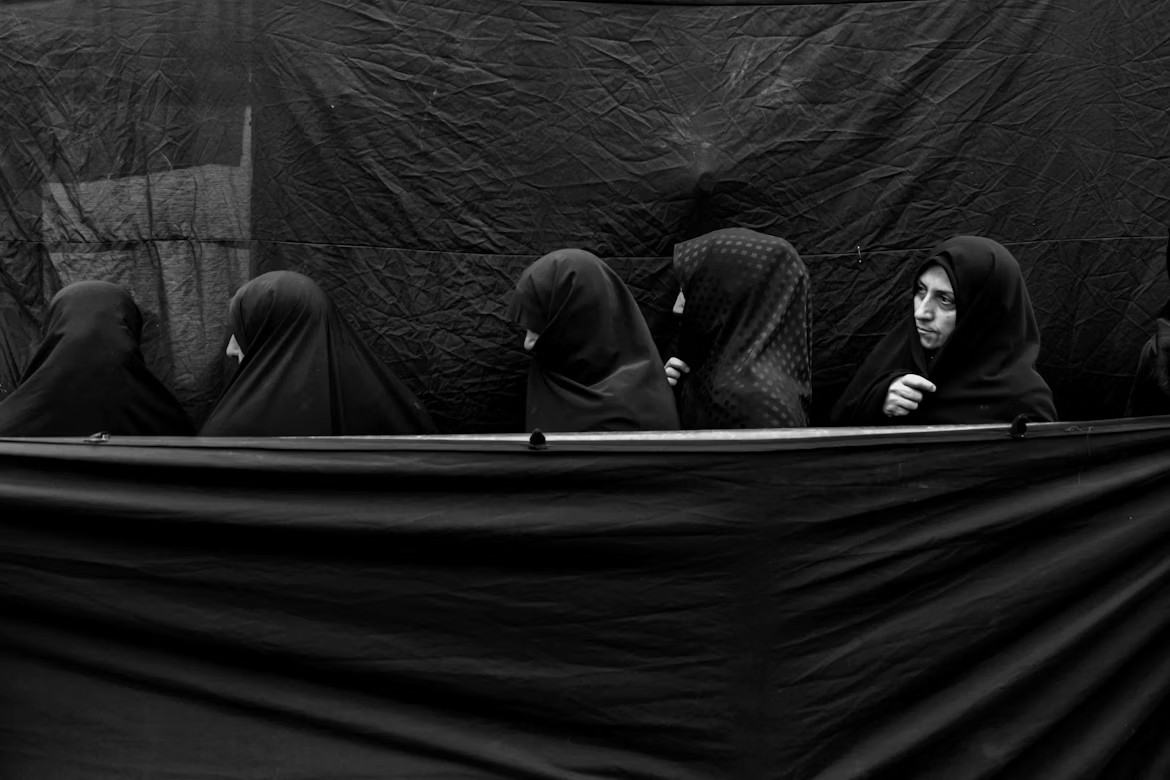
More than three years later, obscured by the Pakistan-Afghanistan tensions, Afghan women face a reproductive crisis that the world cannot ignore. The Taliban’s ban on access to contraceptives has had an irreversible and calamitous impact on women’s health. This worsening reproductive crisis reveals the systematic erosion of the most basic safeguards for maternal health, i.e., access to contraceptives.
Women recount living in fear of pregnancy because they have “no way to protect” themselves, while medical workers report widespread anaemia, malnutrition, and physical exhaustion among pregnant women whose bodies are described as “too weak to carry pregnancies safely.” Maternal vulnerability in Afghanistan is thus caused by the entrenched denial of bodily autonomy to women. International law, however, rests on a markedly different normative conception of maternal protection. Motherhood is not merely a social role but a condition of heightened vulnerability requiring preventive legal safeguards. Article 12 of the International Covenant on Economic, Social and Cultural Rights (ICESCR), as interpreted by the Committee on Economic, Social and Cultural Rights in General Comment No. 14, establishes that the right to health encompasses not only access to medical treatment but also preventive healthcare, health-related education, and the underlying determinants necessary for the realisation of health in practice. Article 12(2)(c), concerning the prevention, treatment, and control of diseases, is interpreted as extending to preventive and educational programmes addressing sexual and reproductive health, thereby locating contraception within the preventive obligations already owed by states whose absence becomes starkly visible in Afghanistan’s current reproductive crisis.
Since international law considers maternal vulnerability a trigger for heightened preventive duties, deliberate abdication of these duties exceeds the limits of a rights-based framework. Therefore, the authors propose placing this violation and similar ones within (I) the International Health Law framework, and establishing criminal liability under (II) the Rome Statute.
I. Situating the Violations Within the International Health Law Framework
Article 12 of CEDAW, as interpreted under General Recommendation No. 24, requires states to eliminate discrimination in women’s health care throughout the life cycle and ensure reproductive freedom, including the free choice of the number and spacing of children. Along with General Comment No. 14, this legal framework mandates states to provide preventive care and to eliminate social attitudes that impede maternal protection, which is grossly violated in Afghanistan.
This interpretive understanding is strengthened within global health governance through the International Health Regulations, 2005 (IHR), and the practices of the World Health Organisation. Article 3(2) of IHR requires that the implementation of public health measures be guided by the principles of the Charter of the United Nations and the Constitution of the World Health Organisation (WHO), embedding public health governance within a broader human rights framework. The World Health Assembly Resolution 65.21 on women’s health emphasizes the incorporation of ‘reproductive health’ into health policy and practice.
The WHO’s rights-based monitoring framework for contraceptive services, implemented through this resolution, translates principles such as accessibility, non-discrimination, informed decision-making, and accountability into concrete standards for evaluating health systems. Instead of focusing only on contraceptive use or distribution rates, this framework examines whether conditions for independent reproductive decision-making exist in practice. It recognises that violations of reproductive rights may arise not only from formal legal prohibitions but also from structural deficiencies, thereby shifting evaluation from outcomes alone to the institutional and social conditions shaping access to contraception. Such structural deficiencies undermine maternal protection standards in Afghanistan, warranting a rights-based framework.
While these instruments do not establish legal obligations on their own, they function as interpretive aids that clarify how Afghanistan’s existing treaty and legal obligations (such as those under IHR, ICESCR, and CEDAW) should be implemented. Resolution 65.21 may also be relied upon as a supplementary means of interpretation to clarify the scope of the right to health under the ICESCR, especially when read together with CEDAW’s reproductive health framework. This demonstrates that equitable access to contraception forms part of rights-based public health governance and aligns with the preventive protections owed to mothers under international law.
II. Criminalisation and Correct Interpretation Under the Rome Statute
We contend that the International Criminal Court (ICC) could potentially classify the lack of access to contraceptives under Article 7(1)(g) of the Rome Statute (‘ICCSt.’) which encompasses other forms of sexual violence of comparable gravity, instead of Article 7(1)(k), which titles as other inhumane acts (‘OIA’). This interpretation must be based on six primary reasons and adhere to correct and appropriate labelling. Non-access to contraceptives must be distinguished from the crime of forced pregnancy as under Article 7(2)(f), which encompasses confinement and an intent to affect the ethnic composition as its elements, neither of which is applicable in the present case.
The ‘confinement test’ was heavily criticised by civil societies, with Afghanistan explicitly mentioned as an example, to argue that it immunises gendered crimes from scrutiny. While scholars emphasise the distinction between sexual and reproductive violence to understand different manifestations of gender based violence, the architecture of 7(1)(g) of ICCSt. does not maintain such a rigid separation. In fact, a plausible placement of forced contraception under 7(1)(g) reflects that the elements contain a reproductive element. Therefore, other unnamed reproductive crimes would also fall within 7(1)(g).
Firstly, while the mandate in Dominic Ongwen (with its recognition of forced marriage under 7(1)(k) of ICCSt.) might suggest a similar interpretation, this would ignore the gendered dimensions of the crime itself, which the Court considers an important criterion. In fact, one could argue that the approach of the Appeals Chamber in Ongwen is egregious and insensitive to a woman’s dignity, given that it presupposes a husband- wife relationship and is an inappropriate labelling for the victims.
The focus on such gendered interpretation, taking account of reproductive violence, has also been a consistent element in the 2024 SGBC Policy by the OTP. This stems from a consistent denial in recognition of the gendered dimension of reproductive crimes by International Criminal Tribunals, such as in Lubanga or before the ECCC, through non-charging of forced abortions and forced breeding, respectively, despite persistent evidence. We recognise that wider scholarship has advocated reproductive crimes to be considered as a distinct and separate crime category in and of itself. In its absence, the interpretative inclusion must be under 7(1)(g) — not merely because it resembles part of its gendered dimensions but also because the act of authorising non-access to contraceptives, in itself, has sexual connotations.
This is recognised on pages 27 and 28 of the Legal Action WorldWide’s submission to the Office of the Prosecutor, conceptualising the overlap in effect and causation of sexualised violence and reproductive implications. This is reflected in the Declaration of Sexual Rights, which ensures a right to autonomy and bodily integrity, and the WHO’s factsheet, which details sexual violence as including any sexual act, attempt to obtain a sexual act, or other act directed against a person’s sexuality. As such, a ‘sexual act’ also includes psychological acts directed at an individual’s sexual characteristics within its ambit. This has been reiterated in other international documents. In fact, domestic courts also adopt the denial of an individual’s control over their own reproductive autonomy, which constitutes sexual violence. Any other interpretation, in effect, has been labelled as being, in fact, circular in nature.
Although the Preparatory Commission for the International Criminal Court did not define what constitutes ‘sexual,’ and both the Statute and the Elements of Crime lack a reference, the inclusion of crimes such as forced pregnancy and enforced sterilisation depicts that the clause does not merely include physical penetration but embraces a broader definition which accords reproductive justice. The PTC’s narrow interpretation of the constituent elements of sexual crime in Kenyatta and Francis Muthaura has been heavily criticised for being erroneous. This approach resembles the ICTY’s own stance in Dusko Tadic, where the act of forcing male detainees to mutilate each other’s genitalia was not considered sexual in nature but as an ‘other inhumane act,’ which significantly diminishes a woman’s agency.
Secondly, 7(1)(g) of ICCSt. remains a residual clause for gendered crimes, and as is argued elsewhere, its residual nature suggests that it is more suitable for addressing such crimes, as distinct from Article 7(1)(k), which must not necessarily reflect and, in fact, obscures the sexual and reproductive character of the conduct. In fact, in Mathaura and Kenyatta, the Pre-Trial Chamber acknowledged the residual nature of 7(1)(k) and accorded that where an alternative and suitable interpretation exists, a categorisation under the head of ‘OIA’ would be impermissible as it mandates a conservative application.
Thirdly, under Article 78 of ICCSt., the Court must factor the gravity of the crime concerned when deciding the sentence. International Criminal jurisprudence shows that sexual crimes usually lead to harsher punishments, as seen in the ICTY’s ruling in Kunarac and in the ICC’s sentencing policies for Bosco Ntaganda and Dominic Ongwen. In these cases, the presence of such sexual crimes resulted in rigorous and significantly longer sentencing, including thirty and twenty-five years respectively. Therefore, a reading which encapsulates a victim-centric interpretation and advances the Statute’s remedial purpose must be undertaken, which treats such conduct as amongst the gravest factors in sentencing.
Fourthly, we think an interpretation of a potential criminalisation of non-access to contraceptives under 7(1)(k) violates the ‘nullum crimen sine lege’ principle (‘the principle’), as also envisaged under Article 22 of the ICCSt. Prima facie the principle attaches itself only to OIA and not to its subsequent and sub-categories thereof. However, a closer analysis shows that the Court in Ongwen relied on the customary prohibition on forced marriage itself and on its recognition of such conduct in International Criminal jurisprudence. In doing so, it depended substantively on ECCC’s decision, which likewise interpreted it to hold it non-violative of the principle.
Therefore, the assessment is to identify the conduct and its prohibition as inhumane conduct within the customary nature of IL. This ‘test’ has been consistently applied by other international criminal tribunals in Stakic and Muvunyi to hold that a conduct must be forbidden under CIL to avoid violating the principle. This, however, is not applicable in the present case. Even International Criminal jurisprudence has, if at all, barely engaged with such conduct, and any international liability that accrues to Afghanistan is only a result of its membership in various international instruments. Consequently, subsuming such conduct under 7(1)(k) risks impermissible expansion in violation of Article 22. In contrast, 7(1)(g), encompassing any other form of sexual violence of comparable gravity, remains designed to encapsulate and accommodate such gendered crimes.
Fifthly, it is believed that because of the higher mens rea requirement under 7(1)(k) of ICCSt., an interpretation of 7(1)(g) remains more appropriate, as 7(1)(k) mandates an awareness requirement as an additional subjective qualifier. This means there must be both an intent to commit the act and an intent to cause great suffering to qualify as an OIA. As has been argued previously, such a subjective threshold under 7(1)(k) goes beyond the mandate proscribed by the 1996 Draft ILC Code. In contrast, 7(1)(g) merely requires that the accused commit an act of ‘sexual nature’ and upholds a relatively lower threshold of mens rea.
And lastly, any bar that dictates that the court cannot adjudicate on national laws relating to abortion (stemming from 7(2)(f) of ICCSt.) is not applicable herein not only because the bar remains crime specific and not extendable, but also rests inconsistent with Article 21(3), which requires an applicability of internationally recognised human rights and underpins every single interpretation of the Statute.
III. Conclusion
The Taliban contraceptive ban represents not just a failure of health governance but a systematic distortion of the preventive maternal safeguards embedded in international law. Where reproductive autonomy is deliberately eroded and is systematic, it must engage international criminal responsibility. Hence, the rights-consistent interpretation of the Rome Statute must recognise the gendered and reproductive gravity of such harm.

Meraj Ahmad is a third year law student at WBNUJS.

Arjun Singh is a third year law student.