
Decolonial Feminist Pedagogy Beyond the Master’s House
Teaching International Law Against the Grain
Every semester, at the conclusion of my lectures on various themes under public international law, I return to Audre Lorde’s well-known observation that “the master’s tools will never dismantle the master’s house.” Her words resonate deeply because international law is not only produced through treaties, courts, and institutions; it is continually reproduced in lecture halls. Legal education is therefore a highly political enterprise. It shapes how future lawyers come to understand law, power and justice and the interconnections between them. Lorde’s reflection has rightly become a rallying cry within critical legal scholarship as it captures an uncomfortable reality about legal education. Although critical legal thinking holds much potential and significance for interrogating the Eurocentric assumptions that underpin international law, many international law lecture halls continue to rely on remarkably conventional pedagogical tools that reproduce these very hierarchies. As Lorde herself continues in her analogy, such methods “… may allow us temporarily to beat him at his own game, but they will never enable us to bring about genuine change.”
In recent years, the “Rhodes Must Fall” movement, has resulted in relatively increased academic and institutional engagement with Decolonial Thought and other related critical approaches such as Third World Approaches to International Law (TWAIL) and Critical Race Theory. Yet not all critical perspectives have been embraced equally. All the more, compared to mainstream approaches, Decolonial feminist scholarship remains strikingly peripheral within international legal education This reflects an epistemic and institutional ordering of legal knowledge that continues to determine international legal orders and trajectories. The absence of decolonial feminist perspectives in essence, shapes not only what students learn about international law but also how the discipline continues to reproduce itself and the oppressive hierarchies upon which it was built.
Why Decolonial Feminism?
Understanding this omission requires moving beyond curriculum design alone. The marginalisation of decolonial feminism within international legal education is produced through interconnected structures operating across knowledge production, academic labour, university governance, and professional incentives. Consequently, teaching decolonial feminism becomes a counter-hegemonic practice because it challenges what international law teaches, how the field continually reproduces its own authority as well as its complicity in maintaining oppressive structures. Decolonial feminism is uniquely positioned to expose these dynamics because it refuses to treat colonialism, race, gender, capitalism, and knowledge production as separate systems of oppression. By insisting that they are mutually constitutive, it shifts the questions we ask of international law. Rather than only asking whether international legal rules protect women or prohibit discrimination, decolonial feminism asks whose experiences underpin international legal norms, whose bodies have historically borne the costs of international legal ordering, and how gendered coloniality continues to structure contemporary legal institutions and doctrines.
Although contested in some circles, Maria Lugones’ seminal work illustrates this point powerfully. Even though European women historically occupied a subordinate position within patriarchal European society, coloniality simultaneously produced racialised hierarchies that positioned colonised peoples beneath Europeans altogether. Even within this imposed hierarchy, gender continued to be a significant factor, privileging colonised men over colonised women and rendering racialised women from formerly and presently colonised societies subject to intersecting forms of domination. Through decolonial feminism we are reminded that categories such as “woman” and “human” were historically constructed through colonial distinctions between the civilised and the uncivilized or the fully human and the sub-human.
Taking this into account when teaching international law fundamentally alters the lecture room because legal doctrines commonly presented as neutral, appear more nuanced once students recognise the historical power relations embedded within them. Decolonial feminist pedagogy therefore seeks far more than the inclusion of additional authors or perspectives within legal education. While diversifying reading lists undoubtedly matters, inclusion alone leaves the architecture of legal education largely intact; akin to the master`s house. Instead, decolonial feminist pedagogy addresses colonial continuities and invites students to interrogate the categories, assumptions, and historical narratives upon which international law has been constructed.
The Marginalisation of Decolonial Feminist Pedagogy
The structural marginalisation of decolonial feminist pedagogy begins well before students enter a lecture hall. It is embedded in decisions about who is recruited into academia, whose expertise is institutionally recognised, which subjects become compulsory, how academic labour is rewarded, and which forms of scholarship are regarded as central to the discipline. Combined, these institutional practices constitute the conditions under which international legal knowledge is produced and reproduced. Understanding this interconnectedness also requires recognising the position occupied by those most likely to teach decolonial feminist approaches. Racialised women, particularly Black women and women from formerly colonised societies, remain among the least represented groups within international legal academia. Yet the significance of this under-representation extends beyond numbers alone as its impact is far greater.
My own experience within German legal education illustrates these structural dynamics. Critical approaches such as decolonial feminism are not integrated into the compulsory legal curriculum but instead appear, if at all, as elective seminars dependent upon individual academic commitment, available expertise, or student initiatives. Since these courses do not contribute directly to the State Examination, students understandably prioritise those subjects that do. I have explored the broader implications of this institutional design elsewhere but its consequences become particularly visible in practice. Students regularly register enthusiastically for elective seminars on decolonial feminism or critical legal thought, yet attendance often declines as examination pressures increase. It is apparent that the issue here is not necessarily a lack of student interest but the structural incentives through which legal education determines what counts as essential legal knowledge.
The resulting gap has increasingly been filled by student-led and feminist initiatives. Lectures I have delivered on decolonial feminist approaches at the FLINTA* Tisch at the University of Hamburg, the Summer Academy for Legal Feminism, the Recht Kritisches Denken at the University of Münster, and the Feministischer Jurist*innentag have consistently attracted engaged audiences. The success of these initiatives demonstrates a clear and sustained demand for critical legal education, particularly decolonial feminist approaches, which formal curricula has largely failed to meet. Yet these initiatives also expose the structural paradoxes of contemporary legal education. While their existence simultaneously reveals the demand for critical engagement, it also reflects the institutional reluctance to embed such perspectives within mainstream legal training; leaving largely volunteer-driven networks to shoulder this responsibility. Many operate under precarious financial conditions and some long-established initiatives have recently lost public funding.
A further paradox concerns who is expected to undertake this work. Due to the fact that those most affected by the inequalities that decolonial feminism seeks to expose are often assumed to possess the greatest authority or responsibility to teach it, the limited number of scholars from these backgrounds face a disproportionate burden. Persistent underrepresentation means they receive repeated requests to fill curricular gaps, often in addition to already demanding teaching, research, and administrative responsibilities. The labour of decolonising legal education thus falls unevenly upon those already navigating the structural inequalities decolonial feminism seeks to dismantle. This presents an opportunity for allies of decolonial feminist scholarship to ease the burden on affected scholars by taking up the call to action more seriously.
These dynamics have significant implications for academic careers. Black women scholars, who remain largely underrepresented within legal academia, frequently carry disproportionate responsibilities for pastoral care, teaching, equality, diversity and inclusion work, institutional representation and the teaching of critical perspectives, all while juggling their personal and professional lives. Although this labour is indispensable to universities, it remains comparatively undervalued in promotion, hiring and research assessment processes, subsequently reducing the time available for publication and career progression. This occurs alongside greater employment precarity in academic institutions and the continued experience of misogynoir —the intersection of anti-Black racism and sexism— within structures historically designed without marginalised groups such as Black women in mind. The cumulative impact of these intersectional burdens is not just an increased workload but also the fragmentation of intellectual time and attention, emotional and intellectual labour, and academic continuity. Ultimately, these dynamics reinforce racialized and gendered hierarchies within academia. The marginalisation of decolonial feminist pedagogy therefore goes hand in hand with the marginalisation of those most frequently expected to teach, sustain, and advocate for it. If legal education is to move beyond symbolic commitments to diversity, responsibility for teaching critical legal pedagogies must become a collective institutional obligation rather than the disproportionate burden of marginalised groups such as racialised women.
These institutional dynamics cannot be understood independently from the broader neoliberal transformation of higher education. Ntina Tzouvala has argued that neoliberalisation has increasingly recast legal education as a competitive market in which universities compete for rankings, students become consumers, and scholarship is evaluated according to market-oriented metrics rather than its transformative potential. Within such a framework, doctrinal expertise is frequently privileged over critical inquiry, while research agendas that challenge existing distributions of power are more easily dismissed as ideological, niche, or not “real law“. Ultimately, critical scholars consequently find themselves navigating a profession in which certain forms of legal expertise are institutionally rewarded while others remain systematically devalued. All in all, these developments reveal that the marginalisation of decolonial feminist pedagogy is actually produced through the interaction of academic labour, neoliberal governance, professional incentives, and enduring colonial epistemologies. It is precisely these interconnected structures that continue to reinforce the master’s house referred to by Lorde, even within institutions that increasingly speak the language of transformation and innovation.
Beyond Inclusion: Reimagining the Curriculum
If the marginalisation of decolonial feminist pedagogy is structurally produced, it is clear that adequately addressing it requires much more than curricular diversification. Tokenistic inclusion leaves the architecture of legal education untouched. The master’s house remains firmly intact even when a few additional voices are invited inside. Therefore, adding a lecture on gender, assigning a few Global South authors, or dedicating one week to colonialism may diversify the syllabus, but it does little to challenge the epistemic assumptions upon which legal education continues to rest. A genuinely decolonial feminist pedagogy therefore requires a more fundamental rethinking of legal education: not only what we teach, but equally how we teach it, whose knowledge we privilege, and which histories become foundational to students’ understanding of international law. Rather than treating critical perspectives such as decolonial feminism as supplementary, it repositions them as indispensable for understanding how international law has been constructed, legitimised, and contested.
In my own teaching, this has meant moving beyond the traditional canon to expose students to plural legal histories, critical theoretical traditions, and historically marginalised epistemologies. In a recently developed module, Marginalised Legal Histories in Global Context, students explored legal histories from West Africa, South Asia, South America, alongside European colonial legal traditions through a collaborative teaching model involving colleagues from those respective regions. This format involving guest lectures, debates, and comparative case studies encouraged students to interrogate not only how law has been written and remembered, but also how particular narratives came to acquire the status of universal legal history while others remained peripheral. The transformation in student engagement was striking as many reported encountering, for the first time, legal traditions, historical actors, and forms of resistance that had been entirely absent from their previous legal education. More importantly, students began to recognise that international law is not politically neutral and that it is historically contingent, continuously contested, and therefore capable of transformation. This shift, from treating international law as a completed project, to understanding it as an evolving site of struggle; is perhaps one of the most important pedagogical contributions that decolonial feminist teaching can make. Such an approach is particularly urgent at a time when international law is confronted by intersecting global crises which include persistent colonial inequalities. Preparing students for these realities requires much more than just doctrinal competence. It requires cultivating the ability to identify structural power, patterns of oppression, question inherited assumptions, and imagine alternative legal futures.
The Contemporary Backlash Against Critical Pedagogies
Ironically, it is precisely at this moment that critical pedagogies are increasingly coming under attack. Across different jurisdictions, efforts to engage critically with race, colonialism, gender, and structural inequality are increasingly portrayed as ideological, divisive, or incompatible with academic neutrality. Although these developments manifest themselves differently across national contexts, they reflect a broader global attempt to police the boundaries of legitimate legal knowledge. In the United States, this trend has become particularly visible through restrictions on Diversity, Equity and Inclusion (DEI) initiatives and the prohibition of teaching Critical Race Theory and related approaches in certain institutions. Elsewhere, similar dynamics emerge through different mechanisms such as restrictions on funding, institutional discouragement of critical scholarship, increasing political scrutiny of university curricula, or the continued epistemic silence surrounding colonialism and race within legal education. Germany, for example, does not necessarily display formal prohibition in the strict sense but the structural marginalisation of critical perspectives through curricular design and institutional priorities as well as the prevailing conceptions of disciplinary neutrality, all result in epistemic silences. While the mechanisms differ, the outcome is remarkably similar as critical approaches become increasingly difficult to teach, sustain, and institutionalise. In doing so they simultaneously constrain academic freedom and cultivate an inability and reluctance to recognise and critically interrogate structural forms of violence and oppression. Ongoing debates surrounding academic freedom and institutional responses to scholarly engagement with Palestine in Germany illustrate how critical perspectives can become subject to heightened institutional scrutiny since scholars who openly speak against oppression or stand in solidarity with the marginalised face punitive measures.
At the same time, it is important not to romanticise all Diversity, Equity and Inclusion initiatives as inherently transformative. Scholars have continually cautioned that diversity initiatives may themselves become institutional technologies of legitimacy, projecting inclusion while leaving underlying distributions of power untouched. Decolonial feminist pedagogy therefore requires moving beyond representational politics towards structural transformation. In this regard, initiatives such as Why Is My Curriculum White? are particularly significant precisely because they move the conversation beyond representation to interrogate the historical production of (legal) knowledge and its role in reproducing hegemonic legal orders.
The defunding of critical initiatives, the deprioritisation of decolonial scholarship, the professional risks faced by scholars teaching these perspectives, and the persistence of epistemic silences all reveal that legal education remains a field of contestation. Decisions about which scholars, cases, histories, and theories appear in our classrooms are deeply political. They shape what future lawyers come to regard as authoritative legal knowledge and, equally importantly, what they never learn to question nor challenge. Colonial administrations understood and instrumentalized these crucial elements as education has always been one of the most effective technologies through which oppressive structures and authority are normalised and reproduced. It is therefore hardly surprising that attempts to expose and unsettle these foundations continue to encounter institutional resistance.
The consequences, however, extend far beyond the classroom. Contemporary lawyers already operate within a world characterised by geopolitical fragmentation, ecological crisis, widening global inequalities, and unresolved struggles over historical justice. Logically, tomorrow’s lawyers will inherit these challenges in even more complex forms. Preparing them for such realities demands pedagogies that cultivate historical consciousness, epistemic disobedience, and intellectual pluralism as opposed to the illusion of doctrinal neutrality. Perhaps most importantly, grasping the significance of the university as one of the principal sites of knowledge production and dissemination is central to strategically dismantling the master’s house. This is because what is omitted from legal education today shapes the epistemic boundaries of international law tomorrow. It determines whose research agendas receive institutional legitimacy, whose critiques are recognised as central and whose remain peripheral, whose lived experiences acquire legal visibility, which futures become imaginable, and ultimately who is authorised to speak, and to be recognized as a “real” international lawyer.
Teaching International Law Against the Grain
The ultimate question confronting international legal education is therefore not simply whether decolonial feminist perspectives deserve a place within existing curricula. It is whether international law can continue to claim universality while remaining unwilling to confront the exclusions upon which that universality has historically depended and whether universities and law schools in particular continue in their complicity. To teach international law against the grain is to recognise that pedagogy is itself a site of contestation over the future of the discipline and ultimately the trajectory of the university as a gatekeeper to knowledge production and dissemination. Doing so requires moving beyond the comfort of inherited narratives towards a pedagogy grounded in epistemic plurality, historical reflexivity, and intellectual curiosity. It asks legal educators to recognise that international law has been shaped not only by empire, hierarchy, and domination, but equally by resistance, adaptation, and alternative legal imaginaries that have too often remained invisible within mainstream legal education.
Here, Al Attar’s counterfactual method offers a particularly powerful pedagogical tool. By inviting students to ask how international law might have evolved had non-Western epistemologies shaped its foundations, counterfactual thinking exposes the contingency of the current Anglo-European legal order and unsettles the assumption that its doctrinal development was inevitable. Rather than presenting international law as a finished project, it encourages students to understand it as one possible legal trajectory among many. Ntina Tzouvala similarly reminds us that reflecting critically on higher education and its received wisdom can “open creative spaces for reconstituting international law so as to better accommodate the lived experiences, interests and aspirations of as many women as possible.” Her insight captures precisely what is at stake. Decolonial feminist pedagogy is not about replacing one orthodoxy with another. It is about expanding the horizons of legal imagination by exposing the contingency of dominant narratives and creating space for alternative ways of knowing, teaching, and practising international law.
While Audre Lorde cautions that the master’s tools cannot dismantle the master’s house, Al Attar´s counterfactual method reminds us that the house itself was never inevitable and that it is actually possible to work towards constructing entirely different houses. Teaching international law against the grain therefore requires more than diversifying reading lists or adding new voices to an otherwise unchanged curriculum. It requires the courage to question the foundations upon which international legal knowledge has been built, to recognise the structural conditions that continue to shape whose knowledge counts and to imagine how the discipline might have developed and might yet develop, had different histories, epistemologies and communities been placed at its center. Only then can legal education move beyond reproducing conventional international law to becoming one of its most transformative sites that actually stands a chance of chipping away at the foundations of the master’s house.
Funding Acknowledgement: Excellence Strategy of the University of Hamburg supported by the Federal and State Governments.
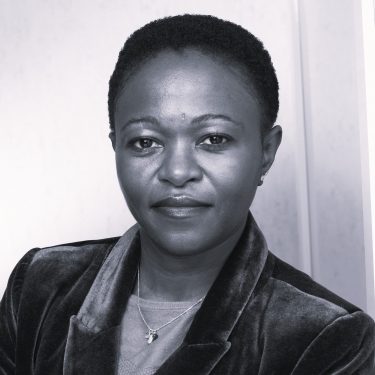
Dorothy Makaza-Goede is a Fellow at the Institute for International and European Law at the Freie Universtität Berlin’s Law Faculty, before which she was a lecturer and research fellow at the University of Hamburg, under the Excellence Postdoctoral Fellowship supported by the state and federal governments of Germany. She is also a research associate at the department of Public Law at the University of Pretoria, as well as the founder of Global South Transformation Foundation, a non-profit promoting racial equity.