
Non-State Actors and Collective Action in Global Health
Exposing the Growing Gap in International Responsibility
‘Responsibility is the corollary of international law’, determining the very existence of international law as a normative framework. Legal responsibility remains highly outdated, however. Its state-centric nature and inability to respond to the growing challenge of complex multilayered actors now dominating the global arena are now weakening the very fabric of the legal system as a whole. While this expansion is true in numerous fields, this post focuses on global health as an area that has led the way here and which has a particularly high level of complex and distinctive actors. This blog argues that there is a growing responsibility gap at the international level, with a growing number of authoritative non-state actors that fall outside of the legal framework.
A State-Centric Law of International Responsibility
International legal responsibility is grounded in the concept of protecting a sovereign state against a wrong committed against it by another sovereign state. In spite of clear changes in global action, the nature and form of legal responsibility have retained this state-centric focus. The grounding of the principles in this bilateral state manner fed through in the development of the Articles on the Responsibility of States for Internationally Wrongful Acts (ARSIWA). Not only did the International Law Commission (ILC) intentionally demarcate the project as one of state responsibility, but they built the principles from the traditional foundations grounded in these ideas of bilateral state relations. Even when the ILC eventually moved on to consider the law of responsibility beyond the state, the emerging principles retained a very limited and narrow focus. The project was one solely of international organisations, which are entities made up of sovereign states and which gain their power from sovereign states.
More concerningly, the ILC retained the same core concepts and principles in the Articles on the Responsibility of International Organisations (ARIO), with a deliberate modelling on ARSIWA. Consequently, the only formal principles on responsibility apply to states or actors constituted by states with principles grounded in the concept of bilateral state relations. While international law is grounded in state consent and, consequently, it is understandable that the legal framework would be focused in this regard, actors disconnected from the state have become increasingly active and authoritative at the international level. The consequence is a growing normative gap between global actors and the international legal framework.
Even if there was an attempt to ‘transplant’ these Articles onto other actors at the global level, the need to determine international legal personality proves a stumbling block. Legal personality is necessary for recognition of an actor possessing rights and duties, however it remains highly limited and, like responsibility, far too state centric. It is automatically granted to states but the state focus remains in the limited expansion of this. The well criticised ICJ Advisory Opinion in Reparations may have determined legal personality of the UN but, in focusing upon the extent to which the UN could be seen to have been ‘clothed with the competence required’ by its Member States, the state dominance continued. In other words, the ICJ preserved legal personality as a domain of States but which could be transferred in a limited capacity to organisations created by states. It remains highly unlikely, under this current approach, that actors outside of this would be identified as legal persons. This poses a significant challenge for even the most basic concept of legal responsibility, which arises for an internationally wrongful act constituted by a breach of international law that is attributable to the responsible actor. With no legal personality, an actor cannot be considered to possess legal obligations and cannot be understood to commit breaches of legal obligations. Without there being a ‘recognised’ breach of a legal obligation, there can be no legal responsibility.
Even if there could be some manner of addressing this, there is also the stumbling block of attribution. There are numerous articles on attribution in both ARSIWA and ARIO. The positioning of attribution as a determining factor of responsibility on the part of the responsible state or international organisation together with the particular approach to attribution has resulted in a highly singular approach that seeks to establish attribution on the part of an individual state or organisation, with the difficulties of attribution and shared responsibility discussed in the literature. An increase in networks of actors and collective action, with non-state actors but also more traditional actors of states and international organisations, only further complicates the application of the principles of attribution. This growing limitation at the core of international responsibility is now posing a challenge to its very foundations. In other words, as the trend for collective action grows, the principles of responsibility are becoming ever weaker.
This problem is not just a theoretical one and it is one that is becoming ever more pressing. While non-state actors are not a new phenomenon at the international level, their growth in number, type, and complexity is significantly expanding and global health has long led the way in this. It is difficult to trace the precise reason for this beyond the wide reach and scale of global health as well as early acceptance of health issues transcending borders. The result was any actors seeking to tackle any form of health issues frequently found their actions projected at the global level, for example issues of virus outbreaks and prevention
Global Health and Non-State Actors
The World Health Organisation (WHO) may have been created with the intention of a centralised institution with global authority to coordinate health but it has long struggled with problems of institutional authority and increasing problems of financial stability. With this issue of clarity of institutional authority, a complex contemporary global health landscape has emerged with actors proliferating in number and variety, with action not just by sovereign states, but also international organisations, non-governmental organisations, corporations and businesses, philanthropic foundations, and distinct partnerships and looser networks of multiple different actors. Such actors are seeing increasing power and influence with action and engagement in policy guidance, formative of standards and normative principles, technical assistance, and financing support. The scale of growth of non-state actors in global health is now such that it raises substantial questions of accountability for action, which raises questions for the overall legitimacy of the legal framework.
Much of the action in global health is dominated by non-state actors and in the collective approach of partnerships and networks of actors. Not only is there a wide range of actors, but frequently action is collective involving multiple actors or new distinct networks of actors are created to tackle particular issues. An example of this can be seen with the Global Alliance on Vaccines and Immunisations (Gavi). Gavi is an international institution based in Switzerland, which has public charity status in the United States. It is run by a central board and secretariat of individuals and the overall organisation works on the basis of partnerships with numerous other actors. In other words, the entire basis of its action is that of collective, coordinated action between different global actors, some of which are states, some of which are state empowered non-state actors such as WHO, and some of which are non-state actors not empowered by states, such as Gates Foundation (GF). Gavi is funded through some donations from states and institutions but, primarily, works on the basis of funding from investment rounds with a number of innovative financing mechanisms.
The growth of non-state actors in global health particularly exposes the growing gap between actors and the legal framework with a significant rise in power and influence of distinct actors that are unconnected to states. One of the most prominent examples of this lies in the influence of philanthropic actors. The engagement of philanthropic actors in international law generally and in global health more specifically is not a new phenomenon. With global health long suffering from funding crises, the ability of these actors to invest and finance projects so significantly has inevitably increased their profile. It has also facilitated the growth of their influence and ‘soft power’, with their investments able to direct attention and resource. The unparalleled levels of funding in global health provided by GF are a particularly prominent example. It has provided unparalleled levels of funding in global health to the extent that it is currently listed as the largest donor to the WHO. It was previously second only to the United States but the US withdrawal not only meant a gap in funding but also the increased prominence of GF. It is unquestionable that the significant funding from GF has facilitated action, particularly in areas such as vaccines. However, questions arise as to the manner of its funding and, also the ability to ensure accountability and legitimacy of action arising from such funding.
With the first of these, the GF’s focus is, and always has been, on vertical initiatives rather than horizontal health funding. In other words, they provide restricted funding for the purpose of distinct areas rather than funding for health systems strengthening more broadly speaking. Furthermore, the funding is generally for scientific, measurable solutions, for example, vaccines. Between 2000 and 2024, 58.9% of all GF (Bill and Melinda Gates Foundation (BMGF) as it was) was given for programmes concerning Polio and 53.3% of all funding was for programmes concerning vaccines in some form. Funding for health systems strengthening was just 0.7% of all funding granted. Funding for non-communicable diseases is also incredibly low. Between 2000 and 2024, no funding from BMGF was provided for the health issues arising from ultra-processed food and drink or alcohol. Some have questioned the issue of conflict of interest and global health investment with BMGF having investments in companies including Coca-Cola, McDonald’s, Kraft Heinz and Anheuser Busch InBev. In addition to explicit funding has come the role of philanthropic actors in the production of data and research infrastructures that shape understanding of global health. This leads to the main question here of accountability of action. The GF provides unparalleled finance with influence in the actions and even the agenda in global health. It remains, however, a private philanthropic foundation. It has no legal status in international law which gives rise to significant concerns about legitimacy of their action as well as accountability for if legal wrongs are committed.
Is There a Solution for Addressing These Non-State Actors in International Law?
The growth of non-state actors in international law is particularly problematic due to there being no clear understanding and theorisation of actors outside of sovereign states. Rather there is only a broad umbrella category to recognise such actors in contradistinction to states: non-state actors. There is little elaboration beyond this. As Alston argued in his critique of this approach as a ‘not a cat syndrome’, this simply reinforces the central assumption of the state not just as the central actor but as the fundamental and indispensable actor. This is just not reflective of the range of actors now engaged at the global level but we continue with the language of ‘non-state actor’. A further sub-categorisation as advocated by Sivakumaran would perhaps be somewhat more useful in making a further distinction within this umbrella of those ‘empowered’ by states and those entirely separate. However, even that would not help much further with the state-focused dominance in the concept of personality.
The academic arguments against relying on ‘subjecthood’ and instead focusing on a concept of legal “participants” are well versed. While Higgins’ discussion of international law as a “decision-making process [with a] variety of participants” this becomes more complex when considering the concept of legal responsibility which requires understanding of actors possessing legal obligations. Engaging with the discussion of participants does not help with how to understand the legal obligations possessed by these actors. Without being able to conceive of these actors within the international legal framework, there can be no recognition of them possessing rights and duties nor yet any ability to understand them incurring any form of responsibility. The international legal framework has maintained both the limited and strained foundations of the law of responsibility alongside its prominent role as the central feature determining the validity and existence of international law as a legal framework. In maintaining both of these, the result is a fundamental mismatch; responsibility is fundamental but responsibility cannot address the actors engaged at the international level. As this problem becomes ever more acute, the consequences will expand beyond the immediate focus of the law of responsibility. The reality is a proliferation in volume, variety, and influence of non-state actors to such an extent as to pose a challenge to the very foundations of the international legal system.
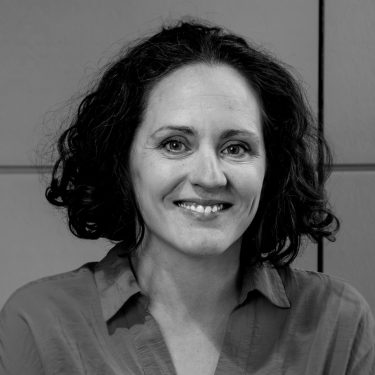
Scarlett ist Assistenzprofessorin für Rechtswissenschaften an der Universität Nottingham. Ihre Forschungsschwerpunkte liegen im Bereich des Rechts der internationalen Verantwortung, der internationalen Organisationen, nichtstaatlicher Akteure im Völkerrecht sowie der Außenbeziehungen der EU.