
Soft Words, Hard Borders
The Chişinău Declaration and the Externalisation of Refugee Protection in Europe
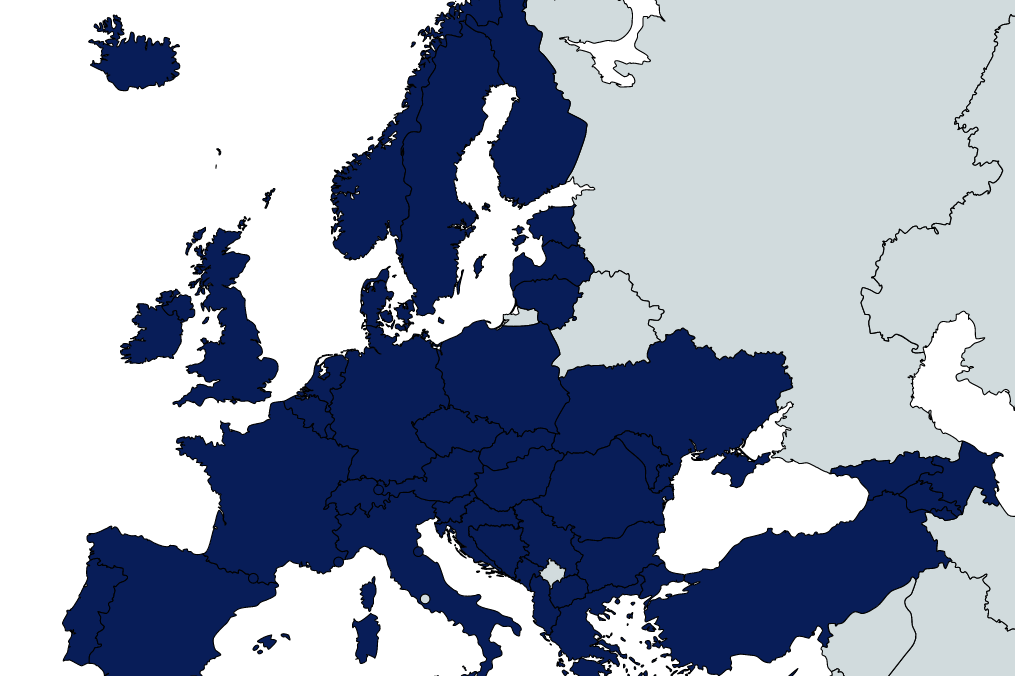
On 15 May 2026, the forty-six member states of the Council of Europe adopted the Chişinău Declaration, a political declaration on the future of the European human rights system that, in strictly legal terms, changes nothing. It creates no new obligations, amends neither the 1951 Refugee Convention nor the European Convention on Human Rights, and expressly disclaims any intention to require states “to impose Convention standards on other States”. Yet forty-six governments spent months negotiating its text and adopted it unanimously. The puzzle is why a document that binds no one was worth the effort. The argument here is that its significance lies not in the law it makes but in the interpretation it seeks to steer. By recognising externalisation as a legitimate mode of migration governance while leaving the legal conditions for it undefined, the Declaration attempts to shape the vocabulary through which refugee protection will be litigated.
The Declaration has already drawn a wave of commentary, almost all of it focused on the Court. Some ask whether it charts competing trajectories that reaffirm existing case law while inviting a restrictive turn. Others ask whether its softened rhetoric still pressures the Court to retreat. One reading sees in it states’ documented appetite for a restrained Court on non-refoulement. Another argues that the deeper problem is that member states now make substantive demands on what Convention rights mean at all.
This post asks a different question, from the position of the person who is transferred. The Declaration’s silence is specific. It permits cooperation with third countries “provided that they continue to fulfil their Convention obligations”, but never says what those obligations require when someone is sent to a state outside the Convention. Courts assess a transfer only afterwards, and only if the individual can reach them. In the meantime, states legislate, negotiate and carry out transfers, and the Declaration supplies the vocabulary in which they do so. The question is what that vocabulary leaves to individuals and courts to settle. No court appears yet to have cited the Declaration, which is why its language deserves scrutiny now. Until a court reads it, its meaning is not fixed, and the first readers will be governments drafting transfer laws and agreements, not judges.
A Declaration Born of Crisis
The Declaration arrives after a decade of strain in European refugee law. Since 2015, the Dublin system has left frontline states carrying most arrivals, and solidarity schemes have stalled. Governments have turned to pushbacks, pullbacks, offshore deals and the language of “instrumentalisation”. The EU’s Pact on Migration and Asylum, applicable from June 2026, was meant to settle this, but governments also looked to Strasbourg. A letter of May 2025, led by Denmark and Italy and signed by seven other states, accused the Court of stretching the Convention in migration cases. Secretary General Alain Berset brought the dispute back inside the Council of Europe. The text adopted in Chişinău is far more conciliatory than the letter. Its unanimity says more about drafting than about agreement. The drafters assembled statements from the Court’s own case law, a technique one commentator calls “a masterpiece of institutional diplomacy“, which lets each government read its own position into the text.
An Endorsement without Standards
The Declaration’s substantive move is to accept that Europe needs new migration tools and to name them: third-country processing, return hubs, and cooperation with transit states, each endorsed “provided” states continue to fulfil their Convention obligations. A “safe third country” has long been governed by safeguards drawn from the Refugee Convention, the EU asylum procedure rules and UNHCR guidance: effective access to asylum, protection against direct and indirect refoulement, adequate reception conditions, and access to a remedy. The Declaration recites the obligation and omits the content.
Worse, it advances two propositions it never reconciles. It insists that cooperating states must keep fulfilling their Convention duties. Yet, it also states that the Convention does not require them to impose Convention standards on non-parties (such as Rwanda or Libya). That second statement (para. 28) echoes Soering v United Kingdom, the judgment establishing that a state answers under Article 3 for exposing a person to a real risk of ill-treatment abroad. In Soering the two ideas fit together: the receiving state is not held to Convention standards, but the sending state is judged by its own act. That sentence has been lifted out of that context. It now sits beside a call for “caution” in applying the Court’s case law to non-parties (para. 29) and a note that diplomatic assurances “may obviate a risk” (para. 30). Read alongside them, it can narrow the inquiry into what awaits a person abroad. If a transferring state cannot demand Convention-level protection of its partner, on what basis can it be confident that sending an asylum seeker there is compatible with Article 3? Does “continued compliance” mean substantive equivalence, or merely a procedural check? The text does not say, and this silence is not accidental. Vague language is how consensus is manufactured among governments with divergent interests.
Steering Without Binding
To dismiss the Declaration as legally inert would be to misunderstand how soft law works. Non-binding instruments routinely shape the development and interpretation of hard law, precisely where states are unwilling to renegotiate treaties but wish to signal how existing ones should be read. The Declaration does not propose narrowing Article 3 or suspending non-refoulement. Instead, it foregrounds a familiar but selectively assembled vocabulary: subsidiarity, the margin of appreciation, “public confidence” in the system and migration “instrumentalisation”. Read together, these terms tilt the interpretive field towards state discretion.
This matters because courts do not read open-textured standards in a vacuum. Where a provision turns on necessity, proportionality or reasonableness, the surrounding political context supplies part of the answer. And a text adopted unanimously by every Council of Europe state is a weighty piece of that context. The Declaration also sits within a lineage of such instruments, from Interlaken and Brighton to Copenhagen, which pressed subsidiarity on the Court without amending the Convention. What distinguishes Chişinău is that it turns this constitutional dialogue towards migration. It invites courts to weigh externalisation against the backdrop of states’ practical burdens.
It also meets Strasbourg’s consensus doctrine, without naming it. The Court looks for common ground in the law and practice of member states to decide how far Convention rights should evolve and how wide a margin states enjoy. The Declaration invokes the Convention as “a living instrument” read in light of “present-day conditions” (paras. 12 and 40). The language of evolutive interpretation is turned towards restriction, and it is itself a text on which all forty-six states agree. That invites the Court to treat unanimity as evidence of a consensus on externalisation. There are reasons to resist. The doctrine has mainly tracked convergence in domestic law and practice, and has mostly worked as a ratchet towards protection. And Article 3 is absolute, as the Declaration itself recalls (para. 22), so neither consensus nor margin can reduce its core. Where they can bite is on procedure: how much a state must verify before transferring someone, and how much weight an assurance carries. That is where the hints in paragraphs 29 and 30 do their work.
The EU Track
EU law covers the same ground and has moved faster. Under the amended safe third country rules, agreed in December 2025 and applicable from June 2026, a connection between the applicant and the third country is no longer mandatory; an arrangement with that country is enough. The Return Regulation, finally approved on 1 October 2026, lets member states send people with no right to stay to “return hubs” in non-EU countries, provided the agreement is with a state that upholds international human rights standards, “including the principle of non-refoulement”. Both repeat the Declaration’s pattern: the tool is legislated and the proviso is stated. But who decides that a partner state meets it, and on what evidence, is left to the courts. Those questions will reach the Court of Justice as well as Strasbourg, and the two need not answer them alike. EU legislation does not displace the Convention, so member states remain bound by Article 3 when they apply it. This is where the Declaration may matter most. When the first challenge to a return hub or a safe third country transfer reaches Strasbourg, the Court will be looking at a practice that EU law has already legislated and all forty-six Council of Europe states have just endorsed. That double endorsement invites the Court to treat such transfers as accepted practice and to review them lightly. It does so at the very moment the Court must decide what Article 3 requires of them.
What the Courts Already Know
The difficulty for that project is that the questions the Declaration leaves open are ones the courts have already confronted and largely answered against deference. In Hirsi Jamaa v Italy, the Court held Italy responsible for pushing intercepted migrants back to Libya, establishing that moving migration control offshore does not move Convention responsibility with it; what matters is who exercises effective control.
In M.S.S. v Belgium and Greece, the Court refused to let Belgium hide behind Greece’s formal membership of the Convention, insisting that a transferring state examine the conditions actually awaiting the applicant. If membership of the ECHR itself creates no presumption of safety, reliance on the diplomatic assurances of non-parties is still fragile. And in Ilias and Ahmed v Hungary, the Grand Chamber imposed a procedural duty on the removing state to assess whether a “safe third country” genuinely offers access to asylum and protection against onward refoulement.
But the most recent of these Strasbourg judgments dates from 2019, and the direction since has been less clear. The Court’s own press unit has noted an “absence of dynamism in recent years“, and in N.D. and N.T. v Spain (2020), the Grand Chamber found no violation when Spain summarily returned migrants to Morocco after they had scaled the Melilla border fence. Because they had crossed in a large group, by force and away from an official entry point, the lack of individual decisions was held to be the result of their “own conduct”. The case concerned collective expulsion rather than Article 3, but it showed the Court willing to let the manner of arrival thin out procedural guarantees. The irony is that governments demand restraint from a Court that may already be exercising it. The Declaration both reinforces this trend and departs from it. It reinforces it by largely restating existing case law, which is why it could be adopted unanimously. It departs from it in one place: where its call for “caution” in applying Article 3 case law to non-parties (para. 29) is aimed at transfers to states outside the Convention. That is where externalisation sits, and where the protective case law, from Soering to Hirsi, is the strongest. If the Court follows the declaration, the narrowing would land where the stakes for individuals are the highest.
What Transfer Means for the Person Transferred
Behind each arrangement is a person whose protection depends on conditions in a state the Convention does not bind. In Libya, the UN fact-finding mission found reasonable grounds to believe that crimes against humanity, including torture, rape and enslavement, have been committed against migrants in detention. Meanwhile, European funding strengthened the Libyan Coast Guard’s capacity to pull them back rather than improving the conditions awaiting them. Rwanda, for its part, was found by the UK Supreme Court to present a real risk of refoulement. Drawing on UNHCR evidence, the UK Supreme Court pointed to serious deficiencies in the asylum system and to an earlier arrangement with Israel, under which transferred asylum seekers had routinely been moved on in breach of assurances. A standard that asks only whether a state has signed up, or has offered assurances, cannot see these facts; one that asks what happens to this person can. That, more than the familiar charge of responsibility-shifting, is the consequence of leaving the standard undefined.
Conclusion
The Chişinău Declaration does not answer the hard questions of externalisation; it brings them into focus while declining to resolve them. That was a choice, and it should not be mistaken for law. Courts should treat the Declaration as what it is. A political statement of where states wish the law to go, not evidence of where it has arrived. And the courts should continue to interpret Article 3 and non-refoulement through evidence and principle rather than political consensus. If future declarations are to strengthen protection rather than dilute it, they must specify the safeguards that accompany externalisation instead of leaving them to be inferred from silence. The question for Refugee Law is no longer whether states owe obligations to refugees, but whether those obligations will survive being relocated beyond Europe’s borders

Himani Jha is currently working as a Research Associate specialising in Public International Law and International Criminal Law at National Law University Delhi, India. She is a law graduate and holds an LLM in International and Comparative Law from the West Bengal National University of Juridical Sciences, India.