_05.jpg)
Trump’s 20-Point Gaza Peace Plan from the Lens of the 20-Year-Old Call by the UN General Assembly to Crystalise “R2P”
Twenty years ago, the United Nations General Assembly (“UNGA”) in the 2005 World Summit Outcome narrowed the scope of the 2001 Report of the International Commission on Intervention and State Sovereignty (“ICISS”) and crystallised four core crimes to trigger the ‘Responsibility to Protect (“R2P”).’ It particularly noted:
“138. Each individual State has the responsibility to protect its populations from genocide, war crimes, ethnic cleansing and crimes against humanity […].”
“139. The international community, through the United Nations, also has the responsibility to use appropriate diplomatic, humanitarian and other peaceful means, in accordance with Chapters VI and VIII of the Charter, to help to protect populations from genocide, war crimes, ethnic cleansing and crimes against humanity.”
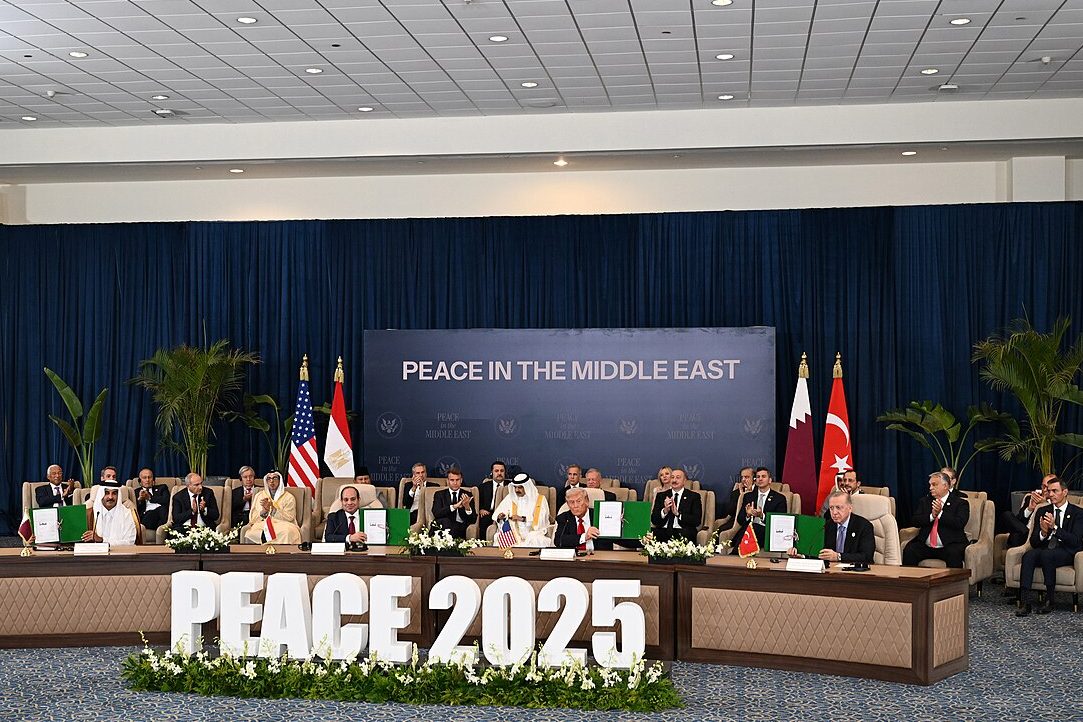
Against this backdrop, US President Donald Trump’s ”20-Point Gaza Peace Plan/ Comprehensive Plan to End the Gaza Conflict” (“Plan”) takes centre stage. After President Trump announced 5 October 2025 as an ultimatum, Hamas swiftly responded by agreeing to release Israeli hostages, but sought changes to the Plan. Many countries celebrated the Plan after Hamas’ (positive) response. Subsequently, President Trump also called on Israel to stop bombing Gaza. Then, Israeli hostages were released by Hamas. Not just that: at a very short-notice, world leaders gathered in support of President Trump’s Plan for the Sharm El-Sheikh ”Summit for Peace”, which has been heralded by many leaders. Thus, while updates continue to rapidly unfold and the iron is hot, the scope of this post is one of a pure question of international humanitarian law, regardless of the Plan’s ultimate feasibility. It is about the Plan’s form and meaning from the perspective of public international law and whether it bears any semblance to the UNGA’s call twenty years ago to recognise R2P.
The Background and the Debate Around the Conception of R2P
What ought to be the measures undertaken when States are unable or unwilling to protect civilians subject to imminent threat? The notion of humanitarian intervention, which encapsulated the use of armed force against a sovereign State for the purposes of human protection, still remains a bone of contention (see Chesterman). Humanitarian intervention did not develop into customary law (excluding the prohibition of the use of force enshrined in Art. 2 (4) UN Charter). The question of the legitimacy of humanitarian intervention also came under examination after the NATO military intervention in Serbia in 1999 with the Independent International Commission on Kosovo issuing a report in 2000, which dealt with the issue of NATO military intervention – an intervention not sanctioned by the UN Security Council (“UNSC”). The Commission concluded that “the intervention was legitimate, but not legal” (p. 103). It recognized the need to close the gap between “legality and legitimacy” and recommended that the UNGA adopt a principled framework for humanitarian intervention, which could be used to guide future responses to imminent humanitarian catastrophes (pp. 4,5,69).
The Commission opined that:
“[…] the moral imperative of protecting susceptible people in an increasingly globalized world should not be lightly cast aside by adopting a legalistic view of international responses to humanitarian calamities. The efficacy of rescue initiatives would seem to take precedence over formal niceties” (p. 63).
It is with this backdrop that the World Outcome Document was conceived.
Trump’s 20-Point Plan Read with UNSC Resolution 2803
Twenty years since the World Outcome Document, the world has been subjected to modern warfare and several bilateral conflicts, such as the Israel and Palestine conflict. Amidst these, President Trump has been ”willing” to play a mediatory role to end these conflicts. In fact, in his address at the 80th session of the UNGA in September 2025, he mentioned that the “United Nations did not even try to help” (see also Papic) in the Gaza situation. Without getting into the merits of his statement, President Trump, in a turn of events, sought and received approval of the Plan from the UNSC (through Resolution 2803 (2025) of 17 November 2025). Both from the Plan and the Resolution, one thing is clear: R2P or any related formulation was neither invoked in the former nor authorised by the latter. This US-UN collaboration is not triggering the UNSC mechanisms envisaged in the 2005 World Outcome Document to effectuate a valid exercise of R2P. As a matter of fact, while the Plan does not even refer to “international law”, the Resolution only makes one vague reference to it.
Thus, in light of the UNSC Resolution, several of the twenty points raised in the Plan, when read in conjunction with the Resolution, reignite foundational elements of the World Outcome Document and ICISS Report (2001):
First, the Plan in Point 9 conceives a “Board of Peace” (“BoP”) ,which is a unique conception unlike any previous exercises labelled as R2P. President Trump also proposed potential members of the board, including former UK Prime Minister Tony Blair. While it is not yet clear who else might be on the BoP, President Trump has proclaimed on social media that it will be “chaired by [him], and include the most powerful and respected Leaders throughout the World.” To begin with, regardless of who might be on the BoP and whether it would be a balanced representation of the current world order, a UNSC authorisation of the BoP seems premature. Then, it is also telling that the Resolution crucially empowers the BoP for“ the implementation of a transitional governance administration, including the supervising and supporting of a Palestinian technocratic, apolitical committee of competent Palestinians from the Strip […] for day-to-day operations of Gaza […]” (para. 4). If the BoP gets to pick “competent Palestinians” for the Strip, also with the confidence of the US (and Israel), then any egalitarianism and credence will be difficult to ascribe to such a BoP. In any event, whether the BoP is effective (hopefully) or not is something only time will tell. The point to evoke is that such a manifestation does not find in place in UNSC’s past practice or previous R2P exercises.
Second, while it is laudatory that Point 8 the Plan endorses “United Nations’ Monitored Assistance” through entry of distribution and aid in the Gaza Strip – which is even in line with paragraph 139 of the World Outcome Document – the UNSC seems to have added a loophole to unimpeded UN access. It calls for disbursement of humanitarian aid “in cooperation with the BoP into the Gaza Strip” (para. 3). This formulation dilutes the autonomy of the UN, the International Committee of the Red Cross and Red Crescent to operate without conditions.
Finally (and crucially), Point 15 of the Plan called for the establishment of a temporary International Stabilization Force (“ISF”) in Gaza. The Plan had vaguely stated that “[t]he ISF will work with Israel and Egypt to help secure border areas, along with newly trained Palestinian police forces. It is critical to prevent munitions from entering Gaza and to facilitate the rapid and secure flow of goods to rebuild and revitalize Gaza.” The Plan had earlier not made clear if the ISF would have powers such as military capabilities. The threshold of exercise of such power(s) was also not clear from the Plan. Scholars have proposed several criteria for resorting to legitimate military force in such situations, as inter alia “just cause, right intention, right authority, last resort and a reasonable prospect of success” (see Seybolt).
The UNSC Resolution (in para. 7), however, now, gives undefined and unfettered military powers to the ISF, “including the destruction and prevention of rebuilding of the military, terror, and offensive infrastructure, as well as the permanent decommissioning of weapons from non-state armed groups […]; train and provide support to the vetted Palestinian police forces; coordinate with relevant States to secure humanitarian corridors; and undertake such additional tasks as may be necessary […].” All of this is to be done “in close consultation and cooperation” with Egypt and Israel. This is concerning, especially when Prime Minister Netanyahu is still principally appears to be against a two-State solution through his remarks at the Israeli cabinet (see, e.g., Guardian, Reuters, Aljazeera, France 24, Le Monde).
Russia, while abstaining from the Resolution, noted that the Council was in essence “giving its blessing to a US initiative on the basis of Washington’s promises” and “giving complete control over the Gaza Strip to the Board of Peace and the ISF, the modalities of which we know nothing about so far” (see UN News). Besides, it was reported that China was also concerned that the Plan did not ensure the participation of the UN or the extent of such participation (see BBC) .
Once again, it does not appear from Point 15 of the Plan and para. 7 of the Resolution that it aligns with the ICISS or the World Outcome Document. President Trump and other players do not appear to be interested in a ’Force’ be established under the mandate of the UNSC. They are rather interested in the ISF, which is operated and controlled outside of UN influence, and just merely authorised by the UNSC. This is a departure from past UNSC practices. Previously, it was only in situations when the UNSC was unable to act due to a lack of enforcement capacity that it subcontracted military operation to UN-authorized coalitions. By way of example, unilateral actions in Liberia and Sierra Leone in the 90s (and many others in the past three decades) by the African Union’s Economic Community of West African States (“ECOWAS”) (in particular, the Economic Community of West African States Monitoring Group (ECOMOG), the military arm of ECOWAS) were compelled by R2P (see Emma McClean), and only received post-factum UNSC imprimatur (see Carsten Stahn). The African Union in fact has since then even included a formulation of a right of humanitarian intervention in Article 4(h) of its Constitutive Act of the African Union. However, these were at least authorised by a Union of States and for the same Union of States.
If the UNSC further proved unwilling to act, sometimes groups of countries forged coalitions of the willing to act anyway, even without UN authorization. Humanitarian crises in Somalia, Rwanda, Srebrenica, Kosovo, and East Timor, which revealed a dangerous gap in civilian protection mandates and capacities as well as a sharp polarisation of international opinion, ignited the debate on (humanitarian) intervention. In the present situation, it was not first proposed to have a UN force, but rather ISF as the first and only option.
The Missing “Unable and/or Unwilling” Text in the Plan or the UNSC Resolution
As per any R2P aficionado, perhaps the most crucial phrase in any text explicitly endorsing a valid R2P exercise is a semblance of the following from the ICISS Report:
“’The Responsibility to Protect’, the idea that sovereign states have a responsibility to protect their own citizens from avoidable catastrophe – from mass murder and rape, from starvation – but that when they are unwilling or unable to do so, that responsibility must be borne by the broader community of states.” (p. VIII).
Neither President Trump’s Plan nor the UNSC Resolution (or statements from any other States) have referred to the ”unwilling or unable” phraseology in order to give any traction towards crystallisation of R2P in the future. Assuming that Palestine is ”unable” to protect, the current BoP and ISF formulations and their “close cooperation” requirement with Israel do not lend them much neutrality – regardless of how effective they might prove to be. Thus, R2P does not seem to be on the table. None of the conceptions seem to be in in accordance with Chapters VI and VIII of the UN Charter. This is despite the fact that multiple attempts have been made towards R2P’s crystallisation by the United Nations Secretary General’s reports in 2010 (Early Warning, Assessment and the Responsibility to Protect), 2011 (Role of Regional and Sub-Regional Arrangements in Implementing the Responsibility to Protect), 2012 (Timely and decisive Response), 2013 (The Responsibility to Protect: State Responsibility and Prevention), and 2014 (Fulfilling Our Collective Responsibility: International assistance and the Responsibility to Protect). These reports (among others) indicate certain tools to effectuate a valid exercise of R2P.
Conclusion
The current world order is one of ‘Trumpian justice’ to the “dystopian world in international law” (see Milanovic). All previous precedents do not seem to fit the mould – the Peace Plan is a hybrid model of its own and the accompanying UNSC Resolution is a mere rubber stamp of it without following past precents. The sincere hope is that the Plan brings peace to the region; however, the question that arises is, if such a Plan (and UNSC Resolution) is not even R2P-compatible, then what kind of action is it when viewed through the prism of international law? Because it is not projected as humanitarian intervention either.
In any event, whether R2P should be crystalised in international humanitarian law has perhaps now become a secondary debate. In volatile times like now, one may be unsure – more than before – if R2P may become a useful tool of justice, through ‘obligations erga omnes’ of States, or one of misuse, compromising the sovereignty and territorial integrity of States. In other words, one maybe unsure if R2P is the Genie trapped in Aladdin’s magical lamp or a dinosaur’s egg in hibernation – perhaps, it needs to sleep a bit more.
Mohit Khubchandani is an international disputes lawyer with over a decade of experiences of working at the government, UN, ICJ, ILC, ITLOS and international arbitration firms in London and Paris. He is an Adjunct Lecturer at Yerevan State University, Armenia. He is writing his Ph.D. on Environmental Compensation at major international courts and tribunals at Leiden University, The Netherlands. He holds an LL.M. from Stanford University, USA.