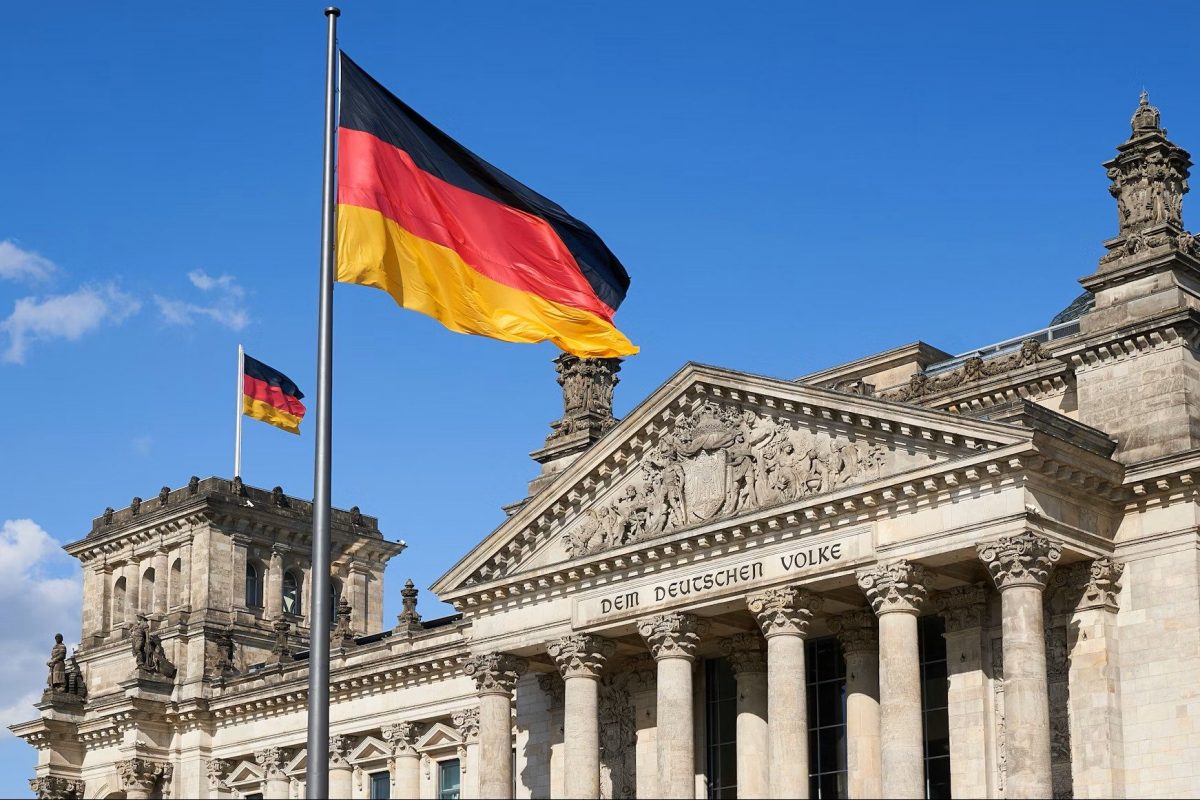
“Leadership in Times of Crises”?
Germany’s Challenges in Light of the Right to Development as Observed by the UN Special Rapporteur
From 10 to 19 November 2025, the UN Special Rapporteur (SR) on the Right to Development (RtD), Surya Deva, undertook his first official visit to Germany. The visit marks a significant moment for both Germany’s human rights commitments and the evolving international understanding of the RtD.
The visit comes at a time when Germany is grappling with fiscal consolidation, increased defense spending, and reduced development funding both domestically and internationally. These pressures intersect with growing contestation around migration, testing the country’s political cohesion and its capacity to uphold long-standing commitments to humanitarian principles. At the same time, rising right-wing extremism and broader authoritarian tendencies are challenging democratic institutions, fueling polarization, and reshaping debates on national identity, social welfare, and security. Against this backdrop, the RtD assumes renewed relevance, as policies need to consider both internal and external development priorities from the perspective of the rightsholders. The SRs preliminary findings thus illuminate not only Germany’s international commitments but also the extent to which development, equity, and human rights considerations are integrated into domestic decision-making. His observations offer a timely reminder that the RtD is not merely about external development aid but concerns the full spectrum of policies that impact human wellbeing, participation, and justice within and beyond Germany’s borders.
This blog post analyses the SR’s preliminary observations through the normative lens of the RtD itself. It begins by briefly explaining the function and impact of country visits of UN Special Rapporteurs and then situates the RtD as a comprehensive legal framework underlying the SR’s visit. Subsequently, the post highlights four key aspects of the observations and recommendations of the SR at the end of his visit. We will assess these recommendations critically and suggest elements the SR may address in his final report to the General Assembly in September 2026.
Country Visits of Special Rapporteurs as Key Elements of the UN Human Rights Architecture
Special rapporteurs are part of the so-called Special Procedures of the UN Human Rights Council (HRC). The mandate holders are independent experts elected by the HRC based on their expertise. As part of their mandate SRs conduct country visits to assess the situation of human rights at the national level. Country visits are based on an invitation of the respective government and aim at fact-finding and information-gathering. They include discussions with public officials, civil society and other stakeholders at different levels of government. After the visit the SR issues a list of findings and recommendations. However, they do not assess specific laws and policies legally and determine whether a state violated its human rights obligations or not.
The mandate of the SR on the RtD was established in 2016. The current SR is Professor Surya Deva, a well-known expert on corporate accountability, environmental law and human rights. Before his current mandate which started on 1 May 2023, he was a member of the UN Working Group on Business and Human Rights. Previous country visits led the SR to Vietnam and Honduras. Germany was thus the first industrialised country of the Global North he visited. During his visit he met with representatives of parliamentary bodies, the Federal Ministry of Economic Cooperation and Development, the German Institute for Human Rights, civil society, youth organisations and the German Chamber of Commerce. He visited Berlin, Cottbus, Düsseldorf and Gelsenkirchen.
Situating the Right to Development
To fully grasp the significance of the SR’s observations, it is essential to understand the RtD not as a vague aspirational goal, but as a comprehensive human right with a defined legal character. While the RtD is not specifically recognized in any binding UN human rights treaty, it is enshrined in the 1986 UN Declaration on the Right to Development and Article 22 of the African Charter on Human and Peoples’ Rights. The most recent codification attempts evolve around a Draft Covenant on the Right to Development negotiated by an Intergovernmental Working Group of the HRC. The RtD fundamentally challenges a narrow, popular perception of development as a process measured by economic growth alone. Within the RtD framework, development is a comprehensive concept encompassing economic, social, cultural, and political progress. This substantive outcome is intrinsically linked to a specific procedural pathway. The RtD is realized through the free, active and meaningful participation in, contribution to, and enjoyment of development by the rightsholders. Rightsholders being understood as both individuals and peoples, including diverse communities and citizens affected by a given policy, project, or outcome.
In the words of the SR: “[T]he right to development has both individual and collective dimensions. It has three elements (the ability of human beings to participate in, contribute to, and enjoy the right) and four facets (economic, social, cultural and political development). There are five overarching principles of the right to development: (a) self-determination, (b) intersectionality, (c) intergenerational equity, (d) international cooperation, and (e) fair distribution.”
It is through this holistic lens that the SR examines Germany’s performance. His mandate involves assessing how both internal and external policies — from domestic social spending and anti-discrimination laws to international aid and business regulation — conform to this rights-based process of development. The preliminary observations from his visit, therefore, serve as a practical application of the RtD framework to the German context, testing its alignment with this multifaceted human right.
Key Assertions from the Special Rapporteur
The SR’s preliminary observations present a series of pointed critiques that directly challenge Germany’s current policy trajectory. His key assertions reveal systemic gaps in both domestic and international policies from an RtD perspective. As not all aspects of the SR’s recommendations can be discussed in this post, the following focusses on a few selected points.
Official Development Assistance (ODA) is a key instrument of international cooperation, which is an obligation of states under international law. ODA plays a critical role in realizing the right to development. Its implementation can also be measured against the standards of the RtD. In this context, the SR notes the gradual reduction of Germany’s ODA budget in 2024 and 2025 with great concern. He juxtaposed this trend with a significant increase of the defence budget and points out that “more weapons do not necessarily result in more peace or greater national security.” He urges Germany to revisit its strategy, “which might trigger an arms race and result in companies profiting from a war economy.”
In addition, the SR is concerned that the government’s move towards an “interest-based” approach instrumentalizes aid. By prioritizing Germany’s own economic interests such as securing access to raw materials and critical minerals – while generally legitimate development cooperation is turned into a transactional policy, thereby negating its purpose to build local capacity and resilience. While the SR generally criticized the reduction of ODA and its strategic refocusing, he remained vague on the question with Germany is currently fulfilling the commitment of 0,7 per cent of gross national income for ODA. He only pointed out that “he was told that the Government is aware” of that target.
This dual trend of reducing ODA while shifting towards an interest-based approach risks undermining Germany’s credibility as a leader in rights-based development. It reframes aid from a legal obligation of international cooperation into a transactional instrument, creating policy incoherence with Germany’s human rights commitments. The SR’s call for greater attention to technology transfer underscores that Germany’s obligations under the RtD extend beyond financial contributions to include empowering partner countries through knowledge and capacity-building, a dimension that an interest-driven approach is likely to neglect.
As the RtD also includes an internal dimension in particular, the SR highlighted high economic inequality, a weak anti-discrimination framework, and a critical housing shortage. He noted that “[a]ccess to affordable housing is becoming a major challenge for many Germans, especially those living in big cities, migrants and international students.” In addition, migrant workers face exploitation in mobility schemes, while refugee children suffer from policies causing lasting harm through family separation and segregated schooling. To bridge economic inequality, the SR urged the Government “to take measures such as progressive taxation, increase in inheritance tax and strengthening the social welfare system”. He also warned against cutting funding for education, health and social welfare programs.
These shortcomings represent a direct impediment to realizing the RtD within Germany. Current housing and migration policies risk entrenching structural exclusion, directly contradicting the RtD’s core tenets of providing opportunities to vulnerable groups to participate in, contribute to, and enjoy development. While politically challenging, the SR’s proposed fiscal reforms seem essential to address this internal incoherence.
Responsible Business Conduct (RBC)
The SR noted that Germany`s approach towards responsible business conduct including the 2016 National Action Plan on Business and human rights and the 2021 Act on Corporate Due Diligence Obligations in Supply Chains. However, the SR raised concerns in light of a recent backsliding on corporate accountability. The pausing of reporting requirements under the Supply Chain Act and the proposed changes to the EU directive on corporate sustainability due diligence (CSDDD) create uncertainty for businesses and weaken human rights and environmental protection. The SR fell short of suggesting to the government to stop the backsliding but called on Germany “largest economy in the EU” to stand for effective regulation of corporate human rights abuses. He reminded the government that “[h]uman rights are not optional – neither for the German Government nor for its businesses.” However, Germany’s role as a member state of the EU and its role in the EU Council could have been identified more clearly and assessed more critically. In fact, the pressure of the German government to weaken the CSDDD and the government’s push towards a less strict oversight of the implementation of the German Supply Chain Act indicate a clear shift away from earlier policies focusing on clear regulatory and legislative guidance for companies. While Germany was never a global leader in the field, it influenced the development of legal obligations in the recent past. By changing its policy in this regard, Germany misses a historic opportunity to advance global supply-chain justice in favor of accommodating corporate interests.
Colonial legacy
Furthermore, the SR highlighted the unresolved colonial legacy in Namibia including the genocide of the Ovaherero and Nama peoples between 1904 and 1908. He called on the government to offer an unconditional apology; repatriate remains and artefacts and offer reparations. Without this fair distribution of restorative justice and the meaningful participation of the Ovaherero and Nama peoples, Germany continues to actively impede their right to development. In this context the SR also criticized the lack of meaningful public participation in projects labelled as “just transitions”. He pointed to the proposed green hydrogen project in Namibia, pursued on the ancestral land of the Indigenous Nama people without their free, prior, and informed consent (FPIC). This project exemplifies a systemic pattern of extractive development, where “just transition” initiatives risk replicating colonial power imbalances under a green label. Such an approach remains transactional, treating affected communities as beneficiaries rather than rights-holding partners, and directly violates the RtD’s core tenets of participation and self-determination. For Germany’s policies to align with the RtD, a fundamental shift is required, i.e. from aid-based gestures towards a justice-based framework of repair, equitable partnership, and the institutionalization of FPIC.
Conclusion
Overall, the SR identified many foreign and domestic policy issues which need to be reassessed from the perspective of the RtD. In addressing a wide range of issues, the SR demonstrates the potential of the RtD framework. However, in some aspects the report remains vague. For example, the SR only briefly mentions Germany’s role in the negotiations on the draft covenant on the Right to Development. He could have also been clearer on the approach towards ODA and the backsliding of RBC legislation. While the SR makes concrete and progressive proposals concerning domestic inequalities and colonial legacy, other recommendations and analyses are less forceful. In this regard, the detailed report of the visit with concrete and action-oriented policy recommendations by the SR due in September 2026 will provide important yardsticks.
Muhammad Asif Khan is a Human Rights Research fellow at FAU-Erlangen, at the Chair of Human Rights Law led by Prof. Dr. Eva Pils, and an Associate Professor at the NUST Law School, Islamabad.

Markus Krajewski holds the Chair in Public Law and Public International Law at FAU Erkangen-Nürberg. He is one of the programme directors of the MA in Human Rights and chairperson of the FAU Research Centre for Human Rights Erlangen-Nürnberg (CHREN).