

Should AI Be Organized?
The Case for a World Artificial Intelligence Cooperation Organization
Artificial intelligence (AI) is no longer a future possibility. It is the present reality reshaping every corner of human society. From automated decision-making in criminal justice to generative models composing legal briefs, AI systems are increasingly making choices that, until recently, required the direct exercise of human discretion and judgment, a qualitative shift from mere technological assistance to the delegation of decisional authority to non-human agents. Yet, as these technologies race ahead, our governance frameworks lag dangerously behind. As AI systems increasingly shape global security, economic competitiveness, and fundamental rights, the fragmented landscape of national regulations and voluntary corporate commitments reveals a governance gap that no single state or industry consortium can bridge.
This post argues that the challenge is fundamentally institutional. Just as international law created the International Atomic Energy Agency (IAEA) when nuclear technology exposed the limits of national regulation, the current moment demands a dedicated institution for artificial intelligence. In July 2025, China became the first major power to formally propose such an institution, and it is from that initiative that the present discussion proceeds, asking what organizational form it should take. Drawing on comparative institutional analysis, it proposes a World Artificial Intelligence Cooperation Organization (WAICO), a treaty-based body with authority to harmonize safety standards, monitor compliance, facilitate technology transfer, and prevent the concentration of AI capabilities from undermining global stability. The article examines four organizational models before concluding that an intergovernmental design, integrating expert and civil society participation, offers the most viable path forward.
The Legal Imperative for an International Organization
The case for an AI organization rests on a fundamental legal insight: AI technologies inherently transcend national borders. A large language model trained in Silicon Valley can be deployed in Nairobi within seconds. Algorithmic decisions made in Beijing affect markets in Brussels. This borderless nature creates what international lawyers recognize as a classic global commons problem, i.e., no single state can effectively regulate a technology that operates seamlessly across jurisdictions.
Current governance efforts are woefully inadequate. The EU’s AI Act, while pioneering, applies only within the Union, and unlike the General Data Protection Regulation, whose market-access conditionality generated a powerful Brussels Effect that reshaped global data protection, the AI Act’s hoped-for influence on international practice has yet to materialize. The United States relies on a patchwork of sectoral regulations, voluntary commitments, and fragmented state-level legislation, most notably Colorado’s comprehensive AI Act and pending California proposals, with no federal framework on the horizon. China has pursued a predominantly sectoral approach, exemplified by its 2023 Interim Measures for Generative AI Services and related algorithmic regulations, with a comprehensive AI law discussed but not yet enacted.
This fragmentation creates three critical problems: regulatory arbitrage, as developers gravitate toward the weakest jurisdiction; compliance confusion, as multinational companies face conflicting requirements; and regulatory blind spots, where overlapping yet uncoordinated frameworks leave normative gaps. Moreover, questions of algorithmic discrimination, model interpretability, and the explainability of automated decisions require technical knowledge that generalist international bodies, not designed for the socio-technical complexity of AI, cannot readily supply. Just as the international community created the World Health Organization for global health and the IAEA for nuclear safety, it needs a dedicated organization for AI, one capable of harmonizing safety standards, operating incident-reporting mechanisms, coordinating enforcement, and enabling technology transfer to developing nations.
Four Models of AI International Organization
International institutional law offers four organizational pathways for AI governance. Each emerges from a domain whose regulatory challenges parallel those of artificial intelligence, and the solutions developed there illuminate what the WAICO must integrate.
The intergovernmental model finds an instructive precedent in nuclear governance, not because AI is similar to nuclear technology, but because the IAEA developed institutional mechanisms for governing dual-use technology that simultaneously demands promotion and restraint. The IAEA addressed this tension through a treaty-based architecture in which its safeguards system, on-site inspections, design verification, and environmental sampling, verify state compliance, with Additional Protocols enabling graduated scrutiny as risk deepens. Yet, this strength is inseparable from a weakness WAICO must navigate. The IAEA Statute took many years to conclude, and heterogeneous member interests at different developmental stages frequently produce deadlock. The lesson for WAICO is not to abandon treaty authority, which remains indispensable to any credible enforcement regime, but to structure it through a framework convention followed by protocols, so that obligation can grow incrementally as consensus permits.
Precisely because intergovernmental negotiation introduces political friction, a second tradition derives authority from expertise. Technical organizations govern domains whose safety and interoperability depend on practitioner consensus rather than diplomatic bargaining, a condition that AI governance shares. Civil aviation, telecommunications, and industrial standardization all operate under this logic. The International Civil Aviation Organization (ICAO) achieved near-universal adoption of its Standards and Recommended Practices not through sanctions but through Article 38 of the Chicago Convention, which simply requires states that deviate to notify ICAO of their differences. This transparency mechanism, modest as it sounds, generated a compliance culture sustained by peer visibility. The International Telecommunication Union’s (ITU) Study Groups, blending state representatives with industry members, produce Recommendations that acquire de facto authority through incorporation into national regulation. Yet, such organizations can recommend but cannot compel. The ITU’s AI for Good initiative demonstrates ambition, but its outputs remain non-binding. For WAICO, the expert model supplies the operational machinery, standing committees of AI safety specialists, whose outputs carry enforcement weight because they are embedded within a binding legal framework.
If the state cannot act and the expert cannot enforce, a third possibility emerges from civil society. Non-governmental organizations (NGOs) have long filled governance gaps in fields where those most affected by harm are least represented in diplomatic negotiation and technical standardization. Human rights, environmental protection, and labor standards all illustrate this pattern. The Future of Life Institute’s (FLI) 2023 call for a pause on systems beyond GPT-4 gathered over thirty thousand signatures and shaped the agenda of the UK AI Safety Summit. The Partnership on AI (PAI), whose hundred-plus members have produced detailed frameworks on synthetic media and algorithmic fairness. But influence without authority remains structurally limited. FLI’s pause generated debate but no regulation. For WAICO, the NGO model teaches that multi-stakeholder participation is not ornamental. A civil society advisory council, modeled on the International Labor Organization’s (ILO) tripartite structure but adapted to the AI context so that affected communities, technology developers, and member state representatives each hold an equal voice where the ILO gives governments, employers, and workers each one vote, would give procedural standing to constituencies that intergovernmental negotiation rarely hears.
Project cooperation addresses a different challenge, namely, how to organize around a specific mission when permanent institutional architecture is too slow, rigid, or costly. Particle physics and space exploration share with frontier AI research a dependence on capital, expertise, and infrastructure at a scale no single state can provide. Conseil Européen pour la Recherche Nucléaire (CERN) operates through a two-tier structure with a Council determining budget and programme and a Scientific Policy Committee evaluating experiments, while financial contributions are tied to national income and reviewed triennially under its Convention. This demonstrates that scientific autonomy and fiscal discipline can coexist. The International Space Station’s (ISS) resolves jurisdictional tension through a simple device. Each partner retains jurisdiction over its own flight elements, and a cross-waiver of liability bars claims between partners. For WAICO, project cooperation offers delivery mechanisms rather than an organizational template. Focused subsidiary bodies, a Compute Resource Consortium and a Frontier Model Evaluation Facility, each under its own protocol with tailored voting rules, would remain accountable to the governing council.
These four models are not alternatives but institutional components. The challenge WAICO faces is not choosing among them, but integrating them in the proportions that the distinctive character of AI governance demands.
The Case for an Intergovernmental Model
While each model offers insights, the distinctive challenges of AI governance point toward an intergovernmental organization as the framework for WAICO. The EU AI Act, whose phased implementation is only beginning, indicates that credible AI regulation may require binding legal obligations backed by enforcement. Alternative models provide valuable complementary functions, yet intergovernmental institutions offer the most established and legally robust pathway to binding international commitments.
An intergovernmental WAICO would possess attributes that alternative models cannot replicate. Treaty-based authority would enable binding standards for high-risk AI applications, including safety testing protocols, algorithmic accountability requirements, and conformity assessment procedures. Sovereign equality in the organization’s plenary organs would give Global South states institutional leverage, preventing AI governance from being dominated by technologically advanced nations. The intergovernmental structure would provide mechanisms for dispute resolution and compliance monitoring. Importantly, WAICO need not exclude elements from alternative frameworks: it could incorporate technical advisory bodies, multi-stakeholder consultation mechanisms, and focused project committees, anchoring diverse functions within a legally empowered framework capable of making and enforcing binding decisions.
Legal Framework and Global Governance Paradigm
WAICO’s legitimacy depends on addressing fundamental questions of international law extending beyond institutional design. The UN Secretary-General’s Advisory Body on AI has called for mechanisms ensuring AI benefits humanity while respecting human rights and international law. WAICO must navigate tensions between state sovereignty and international oversight that mirror debates in environmental law and arms control. States retain sovereign authority over domestic AI development, yet AI’s transboundary nature creates legitimate international interests in national regulatory choices. WAICO’s mandate should focus on civil AI governance: minimum standards for safety, transparency, algorithmic accountability, and equitable access, while respecting domestic policy space. Military applications of AI engage a separate institutional architecture and would require distinct treaty instruments.
WAICO would serve not merely as a regulator but as an engine of international redistribution: a Technology Transfer Fund financed by contributions from advanced member states, a jointly administered Compute Resource Pool, and technology-sharing provisions attached to licensing high-risk AI systems developed with public funding, aligning AI governance with the Sustainable Development Goals and inclusive global development.
Conclusion
Fragmented national approaches to AI governance reflect not contingent failures of political will but a structural collective-action problem. They generate negative externalities, regulatory arbitrage, compliance confusion, and normative gaps, that bilateral coordination alone cannot resolve. International institutions address precisely such dilemmas: reducing transaction costs, providing authoritative information, establishing stable expectations of reciprocal compliance, and locking in cooperative commitments against defection.
The question is not whether AI governance requires international institutionalization, which the structural diagnosis compels, but what institutional form best matches the challenge. The design proposed here draws on each of the four models surveyed: the IAEA’s treaty-safeguards architecture for binding compliance, the ICAO and ITU’s expert-driven standard-setting for technical coordination, the FLI and PAI’s multi-stakeholder advocacy for civil society participation, and CERN’s convention-based governance for international project cooperation. A World Artificial Intelligence Cooperation Organization, structured as an intergovernmental body with integrated technical and civil society participation, offers a framework calibrated to governance challenges that fragmented regulations cannot resolve.
The window for effective AI governance is narrowing. The choices made in coming years will determine whether AI becomes a force for cooperation or destabilizing competition. International law has evolved to address transboundary challenges, from nuclear weapons to climate change, each requiring institutional innovation. AI governance presents a more complex frontier: unlike purely detrimental phenomena, AI is a dual-use technology of transformative potential, breakthroughs in medicine, science, and productivity alongside systemic risks to privacy, equality, and democratic discourse. Governance frameworks must navigate a dual mandate, enabling innovation while constraining harm, with few precedents in institutional history. WAICO offers a path forward, recognizing both the necessity and the difficulty of organizing artificial intelligence within international law.
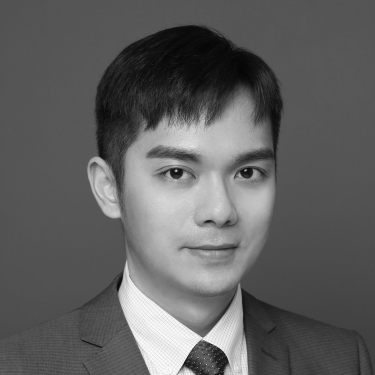
Jianyun Huang is a Postdoctoral Researcher and Assistant Researcher at the School of Law, Sun Yat-sen University(SYSU). He is a part-time researcher at the SYSU Institute of Foreign-related Rule of Law and the Southern Marine Science and Engineering Guangdong Laboratory (Zhuhai), where his research focuses on international law, international institutional law, and the legal challenges of artificial intelligence governance.