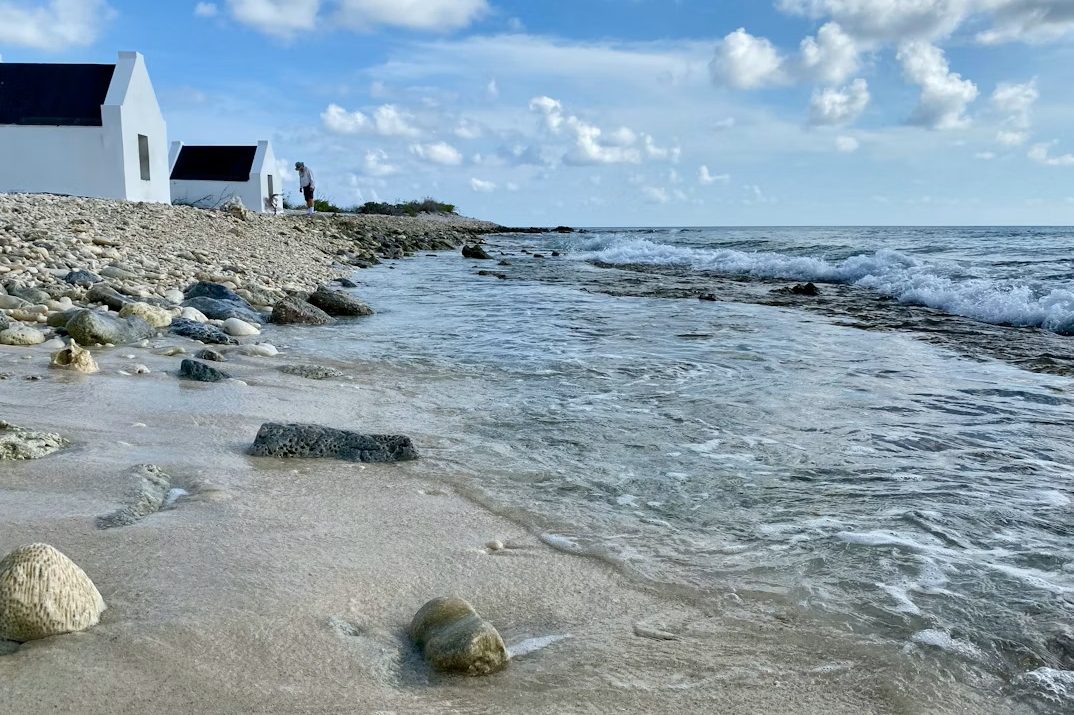
Climate injustices are often interlinked with other historical injustices related to colonization, slavery, and their remnants which manifest in different forms of disadvantage in the lives of present and future people. The case of Greenpeace Netherlands v The State of the Netherlands (Bonaire Case) is a reminder of this. On January 28, 2026, the Hague District Court ruled that the Dutch State violated Article 8 of the ECHR by failing to adequately protect the inhabitants of Bonaire, a former colony and today a special municipality of the Netherlands located in the Caribbean, from climate change effects. The court also ruled, on grounds of discrimination, that the Dutch State violated Article 14 of the ECHR and Article 1 of the Twelfth Protocol to the ECHR. Despite Bonaire facing earlier and more severe climate impacts, the Dutch State took mitigation and adaptation measures for Bonaire much later and less systematically than for the European Netherlands, without a reasonable justification.
In this article, I focus on the persistent causation puzzle in climate litigation. Causation theory is challenging in many legal fields, and particularly so in climate cases. Yet this complexity warrants deeper engagement, not avoidance: courts are necessarily required to engage with questions of causation to adjudge possible violations. In this light, my aim is to unpack some difficulties in the District Court’s reasoning on causation in the Bonaire Case.
Specific Causation as a Legal Presumption in Climate Cases?
The causation analysis in this case concerns whether the Netherlands’ failure to take sufficient timely and appropriate measures of mitigation and adaptation violated the right to respect for private and family life under Article 8 ECHR of Bonaire’s inhabitants. When addressing the issue of the existence of a risk of harm for the citizens of Bonaire, the judgment indicated that “for the application of the ECHR, courts assume in climate cases that there is a causal link between a member state causing or failing to tackle climate change and certain types of consequences that individuals are known to experience as a result of climate change” (para. 10.25, emphasis added). To justify this claim, the court cited Urgenda v. The Netherlands, Supreme Court Judgment, and Verein KlimaSeniorinnen-Schweiz and Others v Switzerland, pointing to their reliance on IPCC findings about anthropogenic emissions and climate change. By analysing the cases cited, I show that these courts have not treated specific causation as a legal presumption, even if they have found mechanisms to bypass proving it in practice. The gap between what courts say and what they actually do has created confusion, which the Bonaire Case reflects.
To better understand what is at stake, I distinguish between general and specific causation. I adopt this distinction for its analytical clarity in this context, while recognizing that causation can be conceptualized in other ways. Nollkaemper (26-27) explains that general causation in the climate context refers to scientific findings that unequivocally establish a link between the increase in well-mixed GHG concentrations since around 1750 and human activities. These emissions are identified as the principal driver of climate change. In contrast, specific causation requires establishing that a particular defendant’s concrete conduct caused the particular harm suffered by a particular plaintiff. In other words, while general causation can be established and even assumed simply by resorting to findings of scientific authorities like the IPCC reports, specific causation requires tracing specific climate harms to individual state actions or omissions.
Having clarified general and specific causation, let’s come back to what the District Court said in the Bonaire Case. Which type of causation was the court claiming could be “assumed”? In this regard, the District Court’s reference to “a causal link between a member state causing or failing to tackle climate change” and “certain types of consequences” (para. 10.25) for individuals suggests it meant specific causation. Yet this interpretation finds no support in the cases the judgment cites.
First, it is true that in Verein KlimaSeniorinnen, the ECtHR “assumed” general causation by acknowledging the scientific evidence and the international consensus on the effects of climate change (see paras. 410-422, 431-434 and 456). However, it is not true that it “assumed” specific causation. Verein KlimaSeniorinnen arose from a complaint filed by four elderly women and a Swiss association, whose members are all elderly women concerned about the impact of global warming on their life and health. Regarding the individual applicants, the Court emphasized that “in order to claim victim status under Article 34 of the Convention, (…) an applicant needs to show that he or she was personally and directly affected by the impugned failures” (para. 487). The Court outlined specific conditions that applicants must satisfy to demonstrate this personal and direct causal link, making clear that specific causation cannot be assumed for the individual applicants but that it must be established. The difficulty lies in how the Court treated the association’s victim status. In relation to the association, it invoked normative considerations, such as, “the necessity of promoting intergenerational burden-sharing” (para. 499), to justify not requiring the individual victim-status criteria regarding the members of the association. Here, the Court established an exception to the victim-status criteria altogether for associations bringing climate cases, instead of treating an unproven causal link as established (legal presumption). The importance to see this nuance is that there was no shift in the burden of proof.
Second, while in Urgenda the Supreme Court “assumed” the general causation by acknowledging the well-established scientific facts on the consequences of climate change (paras. 4.1-4.8), it did not assume specific causation. However, a closer examination of Urgenda reveals that although the Court did not “assume”, it treated the specific causation question in relation with normative standards like the no-significant harm principle and the “partial responsibility” approach, according to which each country is responsible for its part to prevent dangerous climate change and can be called to account in that respect (paras. 5.7.5. and 5.7.6.). Whether this is a reasonable test of specific causation considering the values that causation requirements in law are meant to protect remains an open question.
While it can be asserted that courts rely on established climate science to prove general causation, the assertion that courts can “assume” specific causation when applying the ECHR to climate cases does not have sufficient foundation. This would be the similar to asserting that the specific causation test in climate cases is treated like a legal presumption. No court has claimed to be doing this. What could be more accurate, perhaps, is that courts, as in Urgenda, consider fairness or normative standards when determining whether a specific causal link exists, or that they invoke those standards to justify exceptions to the rule for associations, as in Verein KlimaSeniorinnen.
The Consequence of Causation as a Legal Presumption
A legal presumption and the burden of proof are like two sides of the same coin. In this sense, when a presumption is established, either by judicial reasoning or by legal norms, it does two things simultaneously. First, it declares the presumed fact to be proved. Second, as a direct consequence, it shifts the burden of proof onto whoever might wish to disprove that fact (Aguiló-Regla 2025: 323). In the Bonaire Case, once the District Court asserted that specific causation can be presumed, it shifted the burden of proof of specific causation from the complainant to the defendants.
It held that “complainants in climate cases do not have to argue or prove these elements in order to meet the threshold for the applicability of Articles 2 and 8 of the ECHR. Nor do complainants have to prove that remedying the alleged violation offers a real prospect of limiting the alleged damage” (para. 10.25). Instead, it is “up to the member state to argue (and, if necessary, prove) that there is no causal link between the conduct specifically complained of and the consequences known to affect individuals as a result of climate change” (para. 10.26).
This approach removes evidentiary barriers for applicants seeking to prove specific causation in cases involving violations of ECHR provisions in the context of climate change. While this may be desirable in terms of facilitating access to justice for collective claims concerning breaches of climate law, the Court did not provide sufficient justification for this shift. Stronger argumentation was especially necessary given that previous climate cases applying the ECHR do not support this interpretation. Neither Verein KlimaSeniorinnen nor Urgenda endorsed such a shift of the burden of proof.
What Courts Do and What Courts Say They Do
A central problem in understanding causation in climate cases is the gap between judicial rhetoric and judicial practice. My analysis thus far has focused on what courts say they do. But the District Court in Bonaire seems to have intended to interpret specific causation as reflecting what courts actually do.
To prove this point, let’s go back to Verein KlimaSeniorinnen. Notably, the ECtHR did not explicitly state that it was assuming specific causation, nor did it indicate that the burden of proof had shifted. Instead, it suggested the contrary when it referred to the victim status of the individual applicants. However, by permitting an association to bring the case without requiring that the association itself possess victim status under Article 34 ECHR, the Court effectively adjudicated a climate case without requiring proof of specific causation for the members of the association.
The paradox deepens when we consider that the individual elderly women were found not to have suffered environmental harm above the threshold of severity required for an Article 8 violation (para. 533). The association representing elderly women succeeded where individual elderly women claiming actual harm failed. In other words, the Court recognized a violation without any identifiable victim who met the harm threshold, yet simultaneously denied it was permitting an actio popularis. Letsas argues that this paradox dissolves only if we understand the association as representing the rights of future generations rather than those of elderly women. But this is also not what the Court said it was doing. The Court assessed specific causation only in relation to the individual complainants and did not undertake any comparable analysis with respect to future generations. Had it done so, the reasoning would have a finding stating that that future generations could satisfy the harm threshold and thus claim victim status.
What the ECtHR actually did in Verein KlimaSeniorinnen (as distinct from what it claimed to do) was allow collective actions through associations to sidestep specific causation requirements. The ECtHR did not change causation requirements; but found a way to circumvent them.
Conclusion
Viewed this way, the District Court’s confusion becomes more understandable. If courts in practice allow climate cases to proceed without establishing specific causation, then perhaps it is not unreasonable to describe this as “assuming” specific causation exists. The District Court perhaps was trying to make explicit what other courts prefer to leave implicit. Was this an incorrect interpretation, or rather an act of judicial honesty? What is clear is that when courts are inconsistent between what they do and what they say they do, they exacerbate issues that are already sufficiently complex, to the detriment of legal certainty.

Colombian lawyer and PhD candidate at the Erasmus University School of Philosophy. She holds an advanced master’s degree in Public International Law from Leiden University and a bachelor’s degree in law from Rosario University (Colombia). She has litigation experience before courts in Colombia. Her research project titled “Climate Justice Before Courts” aims to explore the appropriate role of courts in adjudicating climate change, with a central focus on advancing climate justice.