Womanhood, International Law, and the Global South
What does it take to practice international law as a young woman from the Global South?
‘Gravity of Tenderness’ by The Fabler.
Women in their 20s and 30s continue to face the age-old questions of whether and when they should have children. While more and more women are choosing to delay or even opt out of motherhood altogether, the pressure to decide certainly mounts regardless. Those of us in fields characterized by professional precarity and uncertainty, however, face real barriers in making the motherhood choice freely. In international law, not only does the inherently unstable nature of the profession make the choice difficult, the layered and intersecting realities involving financial, educational, and personal hardships render it next to impossible.v
While I can only speak for myself, my story is one that I have seen replicated across different women from similar backgrounds. In my country, the Philippines, international law is practiced in rather limited ways. Most prominent are going into academia or the foreign service, neither of which was appealing to me. As a human rights lawyer, I wanted to engage in international advocacy and litigation, and the opportunities to do so from within the Philippines were practically non-existent. While I cannot deny that I am privileged back home, I was not privileged enough to be able to do unpaid internships or minimum wage legal apprenticeships in a Global North country. That route was thus out of the question. This serves to outline the difficult path that I and many others take instead, to demonstrate why motherhood feels out of reach for so many of us.
The LL.M. Path
To catapult myself into this field, I had to take a Master of Laws (LL.M.) abroad to specialize in international law, even though I had already done a Juris Doctor degree in my jurisdiction. While an LL.M. is generally only a one-year degree, it entails far more time and financial investment than what appears at face value. Every career decision I made in the years leading up to the LL.M. application process was strategic – I knew I had to make the best possible case for myself. At the same time, I had to save a substantial amount to afford that singular year. This meant multiple, simultaneous jobs, not just to build a portfolio, but also to be financially prepared.
During the LL.M. year, I took every class, applied to every opportunity, and spoke with anyone that had anything to do with international law. Even then and there, at one of the most elite educational institutions in the world, the playing field was far from even. Many of my peers from Europe and the Americas had networks within the system that they could rely on, while the rest of us had to scramble to find opportunities we were qualified for. My law school once hosted a job fair with hundreds of employers looking to hire – but with certain conditions imposed on where you obtained your degree and what languages you speak, that left me eligible to apply for about 10 positions. Only one employer explicitly listed “Filipino” as a nationality they would hire.
The Bleak International Law Job Market
At the close of the LL.M., the purpose of my degree seemed fulfilled after I was granted a fellowship to work at a non-profit organization that I had followed closely for years. Beneath the outcome, however, was the harrowing process of job applications. Most international lawyers are familiar with the cycle of hope, rejection, despair, and determination, but the process is exacerbated and the emotions are magnified when your country is not one where international law is traditionally made.
Again, I was confronted by the reality that my American and European counterparts have certain default advantages I was not born or raised with, not least of which are powerful passports and language capabilities. At each turn, I have worried about obtaining a visa in time and remaining in good standing, without any agency over state policies that determine my fate. And while I was “fortunate” enough to have English as my primary language, my peers who grew up speaking French, Spanish, or any of the languages of the United Nations (UN) have an innate advantage I am only catching up on now. Worst of all, many employers do not seem to value or recognize the years of work I had done in the Philippines, simply because it was not experience gained in the West. And yet despite these structural limitations working against me, in this industry, going home feels like failure.
Now that I am in the latter half of my fellowship, I am once again figuring out what comes next. Somehow, the job market is bleaker than it was just a year ago. Human rights organizations are experiencing unprecedented budget cuts that have hampered their operations and hiring capacities. The UN is undergoing major funding and liquidity crises that have led to hiring freezes. The visa situation in the United States is even more complicated, deterring or preventing employers from hiring foreign nationals. All of that to say: I do not yet know what is next for me. I admit that I once had the audacity to believe that another degree would put the uncertainty to an end. But if anything at all, plunging myself into the exciting and terrifying world of international law has expanded both the possibilities available to me and the instability surrounding them, in a manner that makes potential and uncertainty seemingly inseparable at this stage of my career.
The Necessity of Non-Motherhood
Back home, my friends and contemporaries have climbed up the legal ladder, whether in law firms, government, or corporations. With markedly more linear career trajectories, their lives are generally more stable and predictable, allowing them to map out their lives beyond their jobs. Now that we are in our 30s, many of them have found partners and gotten married, and some are now having children (on purpose). While I am undeniably happy for my friends and proud of the lives they have painstakingly built, I wonder all the time when that might happen for me. I have no regrets; I know the lives they chose would not make me happy, in the same way the life I chose would not make them happy. But I now believe this is the price of the dream of international law as a woman from the Global South.
I do not know whether I will have employment in international law in a few months’ time, let alone a few years. My ability to look past the point where I am, to plan for a future more expansive than just myself, is curtailed by circumstances largely out of my control. Potential partners who want a long-term future are understandably deterred by the uncertainty of my life. Will I stay in New York? Move to Europe? Move back home? With a life like this, I myself cannot answer whether I want children. Or perhaps, I do not let myself entertain the desire to have children when I do not know when having them would be feasible and what sacrifices that desire would entail. I have worked so long and hard to practice international law in the “big leagues”, and the reality is that a child does not fit into that picture. In fact, I do not even know what that picture looks like yet. I only know that I cannot subject a child to a life constantly in flux, one whose unpredictability I can hardly bear myself.
Another factor is the difficulty of being away from home indefinitely. If I continue to practice international law abroad, I am deprived of the structures and comforts of family. I was raised in an environment that adhered to a community model, where childcare was not merely the burden of the parents, but one shared between and among a broad conception of family. My own single mother has always been a brilliant career woman, which meant that my grandmother oversaw much of our household and my older sister took over certain parenting duties. This community is one I would not have access to outside of the Philippines. At home, I have an incredibly strong, tight-knit support system I can rely on for anything. Without its guarantees, motherhood is daunting. Who will teach me the ways in which we have taken care of our own? Who will I call when I do not know what to do? How can a baby feel loved when the people who love them the most are thousands of miles away?
In this path I have chosen, non-motherhood feels like a necessity, at least for the foreseeable future. Success is only attainable in this field if I am nimble and dynamic, able to uproot my life at a moment’s notice. I can only make it as far as I want to go if I go alone, without anyone depending on me and depending only on myself. Maybe one day, my life will be stable enough for me to consider a different path. But I cannot yet say that a different path is more desirable than the one I am on.
The Feminist Choice, or the Illusion Thereof
In evaluating my decisions, I often wonder about what constitutes a feminist choice. The ability to delay or reject motherhood in pursuit of a career is a privilege I fully recognize. The deprioritization of motherhood continues, in many ways, to be a radical act of resistance against the path expected of women. The agency to choose differently is a right that was hard-earned, and one not enjoyed by all equally. In light of these realities, I debate with myself whether making the choice to pursue a family at the expense of my career would be antifeminist. To have worked so hard and come so far, only to turn back now, feels like selling out. Only a select few people from my country have access to the opportunities I enjoy, and to not pursue them to the fullest would be a betrayal.
More broadly, however, my circumstances reveal larger systemic problems in the field of international law, ones that disadvantage individuals with childbearing capacity from the Global South and even prevent them from making the motherhood choice freely. Men may face similar obstacles along this path, but they certainly do not endure the same biological constraints or societal expectations. These obstacles can only be addressed by overhauling the system and rethinking its approaches.
The field of international law has made advancements toward its democratization, but certainly not enough. If we are to believe in its premise of nations being sovereign equals, then we should consciously empower the equitable participation of individuals from the Global South in this arena, regardless of their gender. International institutions and organizations should take strides in increasing opportunities and affording flexibility in their arrangements. For instance, at the absolute minimum, employers should maximize the advancement of technology that allows us to effectively work remotely or implement hybrid setups. More significantly, we should take steps toward equalizing professional recognition for those born, educated, and trained in the Global South. This would allow us to be active participants in international law processes that affect us directly and tangibly. It would also mean making progress in eliminating the trade-offs only we are forced to make: we would be able to work in international law from our home countries, without having to choose our careers at the expense of missing our nieces and nephews growing up, being absent for our pets’ finite years, skipping friends’ weddings and milestones, celebrating our birthdays alone, being apart from our aging parents, or delaying when to start our own families. Only when it is recognized that these structural barriers in international law are inherently intertwined with familial and maternal choices can we empower women to opt in or out of motherhood of their own volition.
There is much to be done in addressing these issues of inequality entrenched in the system of international law, yet there is likewise much for international law to gain from the contributions of those of us from the Global South who continue to believe in its power and importance. As we keep fighting for its survival in these unprecedented times, we can only hope that those with power can recognize our potential in and commitment to keeping it alive.
Acknowledgment: The author wishes to thank Syed Qasim Abbas for his support and valuable insights into this article.
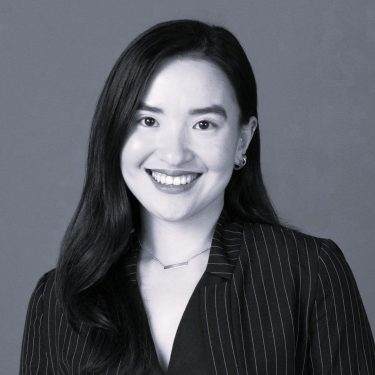
Marianne Crielle G. Vitug holds a J.D. from the University of the Philippines and an LL.M. from Harvard Law School. She is currently a Legal Fellow at the Global Justice Center.