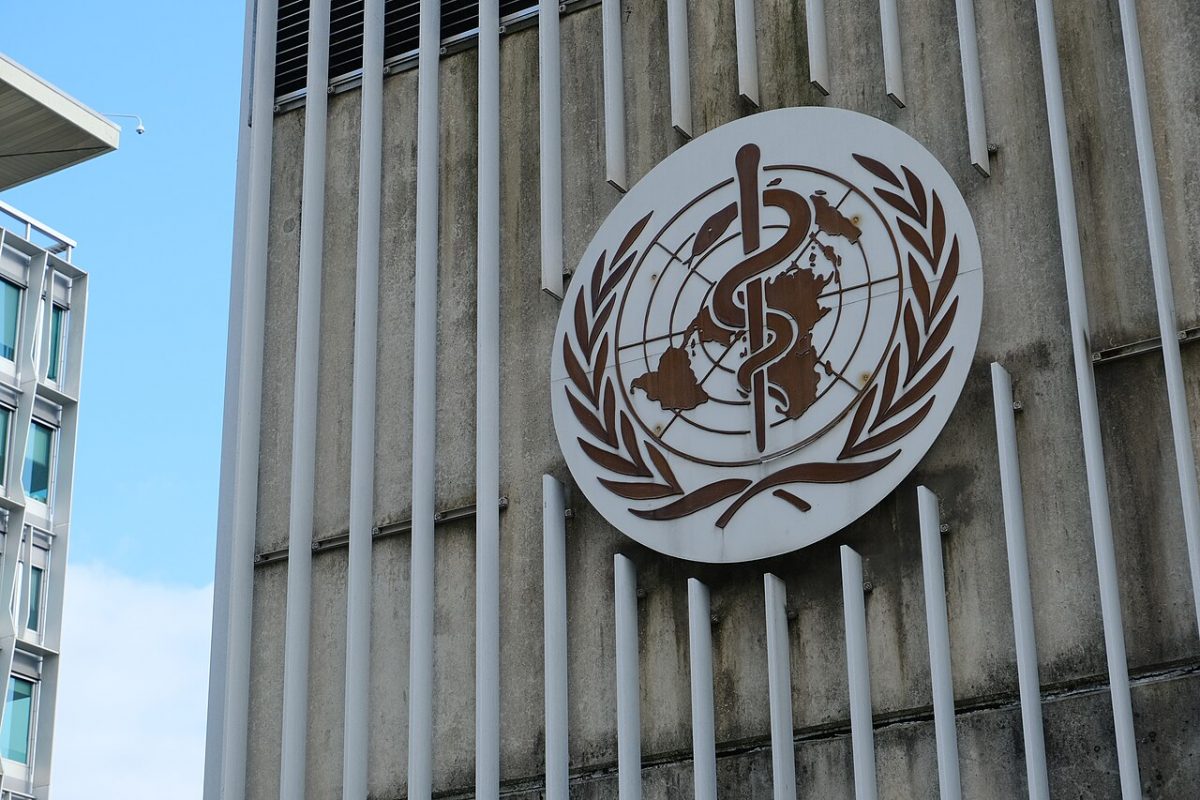

On 20 January 2025, the day of his inauguration as the 47th President of the United States (US), Donald Trump announced his intention to withdraw the US from the World Health Organization (WHO). Two days later, on 22 January 2025, the US notified its withdrawal from the WHO. The withdrawal took effect one year later, on 22 January 2026, as a one-year notice period was required. Although several media outlets reported this development as a straightforward matter of fact (see here and here), the US withdrawal from the WHO is not as “legally simple” as it might appear.
Context
The reasons advanced for the current withdrawal mirror those already put forward in 2020, when Trump initiated a process to withdraw from the WHO, which was then stopped by the newly elected President Joe Biden. To summarize, Trump criticizes the disproportionate financial burden borne by the US compared with other member states in funding the WHO, the Organization’s alleged inability to manage global health crises effectively, and its politicization, including what he considers a cover-up of China’s responsibility for the COVID-19 pandemic.
The decision to leave the WHO has not been taken in isolation. It forms part of a broader project of disengagement of the US from several international organizations, a move that, as noted by Galbraith (2026), clearly “shows scorn for the global commons and disdain for the United Nations”. This development also reflects a more general shift in the US approach to the international legal order. The 2025 US National Security Strategy makes this stance explicit, stressing that the US stands “against the sovereignty-sapping incursions of the most intrusive transnational organizations” (p. 9). In a recent interview, Trump went even further, bluntly asserting that he does not need international law.
Withdrawing from the WHO
The WHO Constitution (1946), the founding instrument of the Organization, does not contain a provision allowing member states to withdraw. This omission was deliberate. In the aftermath of the Second World War, states sought to establish an international system grounded in multilateralism, and subject matters such as the protection of global health, which is the WHO’s core function, were regarded as requiring universal and enduring commitment. The UN Charter and the International Covenant on Civil and Political Rights likewise lack withdrawal clauses.
Article 56 of the Vienna Convention on the Law of the Treaties deals with treaties that do not provide for withdrawal, such as the WHO Constitution. Under this provision, withdrawal is permissible if the parties intended to allow it, or if such a right can be implied by the nature of the treaty. An analysis of the travaux préparatoires demonstrates that the drafters of the WHO Constitution acknowledged the possibility of withdrawal, but strictly in the context of an unacceptable amendment to the constituent instrument. Outside this specific circumstance, the drafters’ intent appears to have been to preclude a general right of withdrawal.
Accordingly, to date, the World Health Assembly (WHA), the WHO’s decision-making body composed of all states parties to the Organization, has not recognized that a party may unilaterally withdraw from the WHO Constitution merely by giving notice. Earlier attempts to leave the WHO have commonly not been treated as legally effective. In practice, when states have considered themselves no longer part of the Organization, the WHO has tended to consider them instead as inactive members.
The US Withdrawal
In the case of the US, however, the issue is more complex. The US accepted the WHO Constitution subject to the provisions of a 1948 joint resolution of Congress. That instrument provides that “the United States reserves its right to withdraw from the Organization on a one-year notice: provided, however, that the financial obligations of the United States to the Organization shall be met in full for the Organization’s current fiscal year” (UNTC, Constitution of the World Health Organization, note 11, emphasis added). In the same year, 1948, the WHA, through resolution WHAT1.76 (p. 341), recognized the validity of the ratification of the Constitution by the US. The US constitutes “the sole WHO member state with an undisputable right of withdrawal subject to the conditions just noted” (Burci, 2020).
Leaving aside the uncertainty as to whether the “current fiscal year” refers to the year in which notice is given or to the year in which withdrawal takes effect, the US has not met its financial commitments for 2025 and remains in arrears for 2024. The US currently owes the WHO at least $133 million. It follows that the present US withdrawal from the WHO does not comply with the conditions set out in the joint resolution of Congress. Since the body in charge of questions related to the application of the WHO Constitution is the WHA, greater clarity on these legal issues is likely to emerge only at its next session, the 79th one, scheduled for May 2026. Discussions during the WHO Executive Board meeting, held between 2 and 7 February, “did not yield a unanimous recommendation on […] how to respond to the US withdrawal”. The Executive Board is the executive organ of the WHA and is composed of 34 technically qualified members.
Potential Future Developments
From a strictly legal perspective, the WHA is likely to take the view that the US must settle the sums owed to the WHO for its withdrawal to be considered effective. Nonetheless, the enforcement of such a financial obligation would be extremely difficult, if not practically impossible. As Gostin, a leading scholar in global health law, has observed, “WHO has no power to force the US to pay what it owes”. This limitation is not unique to the WHO but applies broadly to international organizations. As Schermers and Blokker (2021) note, compelling state members to meet their financial obligations is deeply challenging. This difficulty reflects the wider problem of enforcing international law more generally.
Under Article 7 of the WHO Constitution, the WHA may suspend the voting privileges of a member that fails to meet its contributions. In the case of the US, however, the loss of voting rights is unlikely to serve as a meaningful incentive. Diplomatic pressure may be the only realistic means of securing payment from the US. But even through this route, it appears improbable that the Trump administration will settle the amounts owed.
The recent dispute between the US and the WHO regarding the presence of the US flag in front of the Organization’s headquarters in Geneva once again highlights the tensions between the country and the UN agency. A statement issued a few days ago by Secretary of State Marco Rubio and Secretary of Health and Human Services Robert F. Kennedy Jr. reads:
“The WHO refuses to hand over the American flag that hung in front of it, arguing it has not approved our withdrawal and, in fact, claims that we owe it compensation. From our days as its primary founder, primary financial backer, and primary champion until now, our final day, the insults to America continue.”
The flag has now been removed.
The Consequences of the US Withdrawal
The withdrawal of the US from the WHO carries significant implications. First, the departure of one of the Organization’s founding members represents a notable setback for the international legal order. If states start pulling out of international organizations, these organizations’ credibility, authority and capacity to fulfill their mandates will inevitably diminish, with serious consequences for the global community. For instance, the US exit from the WHO will entail a substantial reduction in funding for numerous health programs, as the US has historically been one of the WHO’s largest financial contributors. It has been suggested that, among others, the US withdrawal could lead to a rise in HIV/AIDS cases and disruptions to malaria vaccination programs in Africa.
Other consequences may include a greater involvement of non-state actors in funding global health initiatives. Actors such as the Gates Foundation are playing an increasingly prominent role in financing these kinds of projects. In addition, the withdrawal could result in an expanded role for regional organizations in advancing regional health security. For instance, the Association of Southeast Asian Nations and the African Union could drive initiatives to strengthen health systems within their respective regions. Finally, the space left by the US may open opportunities for new states or intergovernmental organizations to assume leadership in global health. The European Union appears to be increasingly interested in this position. The recently adopted pandemic agreement was first proposed in 2020 by Charles Michel, then President of the European Council.
The impact of the withdrawal will also be felt at the domestic level in the US. Several concerns have been raised regarding “the sustainability and the effectiveness of unilateral strategies in addressing global health issues” (Aremu et al., 2025). Stepping back from the WHO could limit the US’s access to global health information and weaken its capacity to respond effectively to transnational health emergencies. Unsurprisingly, Tom Frieden, former director of the US Centers for Disease Control and Prevention, described the withdrawal as a “grave error” that “gives the US less say and less warning.” Similarly, Ronald G. Nahass, president of the Infectious Disease Society of America, characterized the decision as “scientifically reckless”.
Conclusions
The US withdrawal from the WHO is not as straightforward as reported in the media, as it raises a number of legal issues. In theory, the US cannot formally leave the Organization until it has fulfilled its financial obligations; in practice, however, the WHO cannot compel the US to do so. It remains to be seen how the next WHA will address these issues. Moreover, several additional legal questions are likely to arise in the near future: for instance, as suggested by Zhou, Burci and Liberman (2025), what will become of the US’s membership in the International Health Regulations if it leaves the WHO? What is certain is that with the US withdrawal, the global health architecture will need to adapt, relying on alternative sources of financing, new forms of collaboration, and revised operational approaches.

Giulia Bosi is a postdoctoral researcher in International Law at Sant’Anna School of Advanced Studies in Pisa, Italy. Her main areas of interest include International Human Rights Law, International Humanitarian Law, and Global Health Law.