
On 2 December 2025, the White House published the National Security Strategy 2025. It contains the explicit invocation of a ‘Trump Corollary’ to the Monroe Doctrine. The US attack on Venezuela on 3 January 2026 indicates that this was neither a declaration of minor importance nor an idle threat.
Since 1823, the USA has declared several doctrines in which principles for the use of force were outlined. However, since Richard Nixon announced the Nixon Doctrine on the ‘Vietnamization’ of the Vietnam War in 1969, no US president has consciously declared a doctrine or a corollary to an existing doctrine. The labelling of policies as doctrines has otherwise occurred due to press reports or subsequent rationalizations (e.g. the Bush Doctrine in the NSS 2002). Some presidents even explicitly shied away from labelling a policy as a doctrine (e.g. Bill Clinton, Barack Obama).
Initially, the declaration of a doctrine is merely a unilateral act of a state, which may be relevant on different levels under public international law. In cases where the use of force is foreseen in a doctrine, the question of its legal and law-creating effects is of particular interest. Doctrines have the appeal of quasi-legal concepts, or at least imply the use of an international legal idiom, in order to justify the exercise of power.
What Monroe Doctrine? – Doctrine and Corollaries
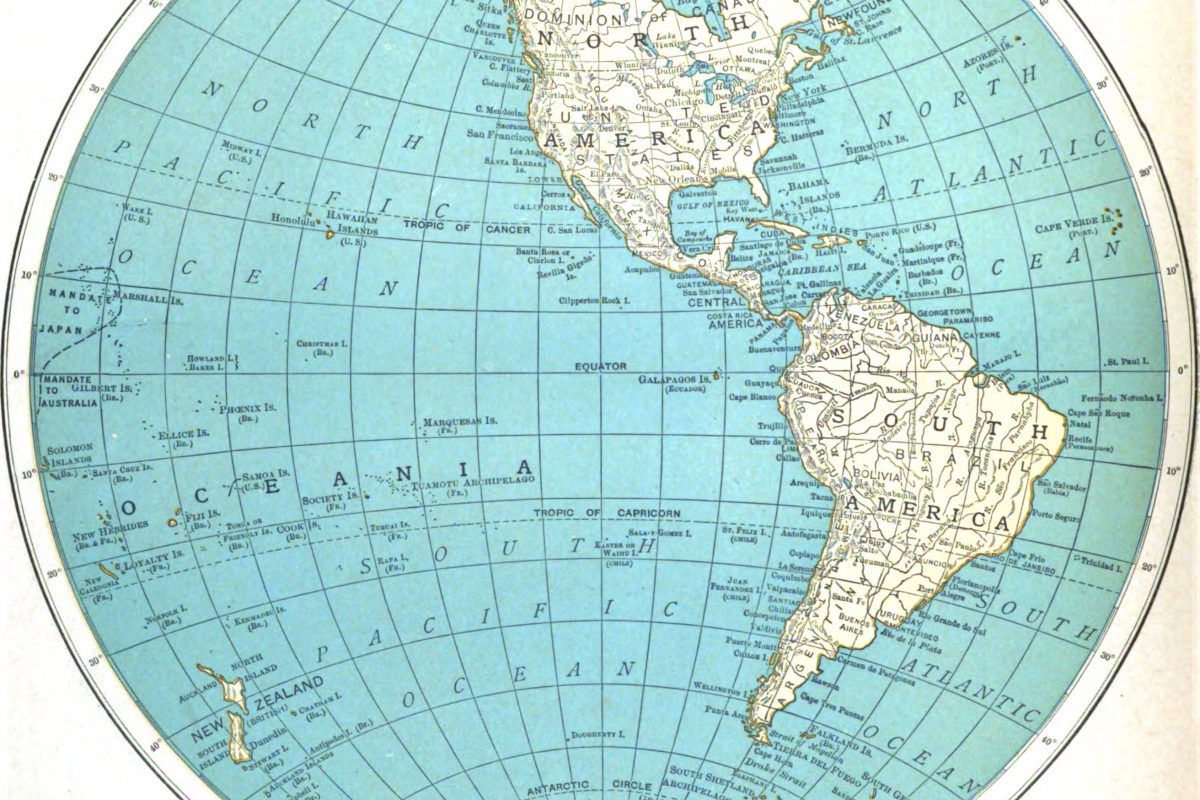
The NSS 2025 explicitly states that the USA will ‘assert and enforce a ‘Trump Corollary’ to the Monroe Doctrine’ in order to ‘ensure that the Western Hemisphere remains reasonably stable and well-governed’ (NSS 2025, p.5). This inevitably raises the question of what the Monroe Doctrine exactly entails.
On 2 December 1823, President James Monroe delineated the principles of US foreign policy in his annual address to Congress: The ‘decolonization principle’ states that European powers are prohibited from establishing new colonies in the Western Hemisphere and must not interfere in its political affairs or internal conflicts. The ‘non-intervention principle’ (also called the principle of disinterest) declares that the United States would not interfere in the wars or internal conflicts of European states. The term ‘Monroe Doctrine’ was then first used in US Congress debates in 1853 (see D. Perkins, A History of the Monroe Doctrine, p. 99). Subsequently, different principles concerning the use of force and assertions of legal rights regarding the use of force have been put forward within the framework of the Monroe Doctrine. Some authors count no fewer than a dozen corollaries and content-altering interpretations of the Monroe Doctrine.
The Roosevelt Corollary of 1904, for example, asserted a US right to intervene in Latin American states in cases of ‘flagrant and chronic wrongdoing’ or ‘impotence’ to ensure order and protect American interests. It was actually prompted by European gunboat blockades of Venezuela in 1902/03 to collect debts, raising fears of European colonization in the Western Hemisphere, which also resulted in the Drago-Porter Convention of 1907. This convention, which is still technically in force, prohibits the collection of financial debts by force. The Roosevelt Corollary was, however, abandoned in an internal memorandum by Undersecretary of State Joshua Reuben Clark in 1928, later published as the so-called Clark Memorandum.
In the lead-up to the Second World War, the question arose whether Canada and Greenland were covered by the Monroe Doctrine. A statement by President Franklin D. Roosevelt from 1938 is considered an extension of the defensive aspect of the Monroe Doctrine to Canada.
The US interpretation of the Monroe Doctrine and its compatibility with the UN Charter was already a matter of concern for the US delegation at the San Francisco Conference in 1945. An interpretation by John Foster Dulles reduced the doctrine to its core principle of defending the US, hence allowing the use of force only in cases of self-defence. This brought the use of force foreseen under the Monroe Doctrine in line with the right of self-defence under Article 51 UN Charter.
The 2025 ‘Trump Corollary’: Substance and Legal Assessment
Over the 200 years of its existence, the understanding of the Monroe Doctrine has gone through various stages. As the vagueness of the Monroe Doctrine leaves room for various interpretations regarding its scope and meaning, it has also resulted in different legal assessments. Particularly between the 1890s and the 1930s, these debates produced contradictory legal interpretations. Some Latin American scholars, namely Alejandro Alvarez – later in his life a judge at the ICJ – argued in 1924 that it had become a rule of regional, ‘American’ international law. This was part of several attempts to reframe or ‘Pan-Americanize’ the doctrine as a multilateral legal principle, particularly by stressing anti-colonial and anti-interventionist dimensions of Monroe’s formulation.
However, another meaning, pointing in a completely different direction, can also be attached to it: it has been employed as a pattern of argumentation to justify imperial claims of supremacy. In 1939, Carl Schmitt developed his idea of a ‘Großraumordnung’ (‘greater area order’) based on the Monroe Doctrine. He assumed that ‘empires’ (‘Reiche’) served as special subjects of international law, which he considered entitled to regional dominance based on a ‘prohibition of intervention by foreign powers’.
The Trump Corollary, as stipulated in the 2025 NSS, asserts a US right to deny non-hemispheric competitors access to strategically relevant assets and to employ coercive measures, potentially including force, to prevent such access. This is a new level of hostility towards existing legal regulations, even for the current US administration. From a legal perspective, the Trump Corollary confronts several obvious obstacles. First, it foresees the use of force not only in response to an armed attack according to Art. 51 UN Charter, but also to prevent the presence or influence of external competitors. Second, the doctrine operates unilaterally and does not rely on any Security Council authorisation under Chapter VII UN Charter. Third, the Trump Corollary follows a pattern of conflating political narrative with legal arguments. In sum, the Corollary articulates a doctrine of hemispheric hegemony and does so in a far more comprehensive way than even the Roosevelt Corollary of 1904 did. The former was declared to prevent forceful territorial interference, whereas the Trump Corollary strives to deny other states control over ‘strategically vital assets’.
The Drafting Process of an Untypical National Security Strategy
Under international law, the NSS 2025 is a document of the US executive branch and a statement of its legal position. A closer look at its drafting process can be useful to highlight how this abandonment of previous political and legal positions came about. The writing of a national security strategy is usually the result of a comprehensive interdepartmental process. According to several media reports, the lead drafter of the 2025 NSS is Michael Anton, who served as Director of Policy Planning in the second Trump Administration from January to September 2025. He is best known as the author of the essay ‘The Flight 93 Election’, published under the pseudonym Publius Decius Mus. In it, he compared the 2016 US presidential election to United Airlines Flight 93 on 11 September 2001, arguing that voters had to ‘charge the cockpit or die.’ Given this background, the dramatic and exaggerated tone of the 2025 NSS should not be surprising.
This must also be seen in the context of an internal conflict within the MAGA (Make America Great Again) think tank network. This network, comprising the America First Policy Institute (AFPI), the Heritage Foundation, the Center for Renewing America (CRA) and the Conservative Partnership Institute (CPI), is central to the agenda of the second Trump administration, it forms an autonomous intellectual infrastructure. It is indispensable to engage with its work to ensure that academic discourse does not degenerate into parallel and self-confirming discussions.
Within and amongst these institutions, there is also a debate about the degree of aggressiveness with which the liberal international order can be unravelled. This oscillation between the declaration of extreme positions (e.g. Vice President Vance’s speech at the 2025 Munich Conference) and reassurances demonstrates that extreme positions do not represent permanent US policy. Within this context, the Trump Corollary constitutes a success of a so-called ‘sovereigntist agenda’: a rejection of international organizations paired with a wish to dominate the Western Hemisphere (including claims to regain control over the Panama Canal). At the same time, it marks a noted geographical change of focus by deprioritizing the containment of China and Russia. Unlike in the case of the rather conventional NSS 2017, there is no contradiction between actions and statements here.
Venezuela 2026 as the First Application of the Trump Corollary
The US statement at the Security Council meeting on 5 January 2026 regarding the abduction of Nicolás Maduro from the presidential residence in Caracas contains no real attempt at justification under international law. It was indeed marked by an ‘absence of an articulated legal justification’, as Marko Milanovic aptly stated. There is only a weak reference to Charter language, in which the statement refers to ‘attacks on the people of the United States’ by a ‘narco-terrorist’. If this remains the only reference, then it is potentially system-shattering. Unlike in the NSS 2002 – including the Bush Doctrine – or the rather artistic combination of Security Council resolutions as justifications for the 2003 invasion of Iraq (see resolutions 678, 688, and 1441, respectively), there is not even an attempt to justify the action in compliance with international law.
However, the justification presented now bears some similarity to one aspect of the justification provided by the US when apprehending Manuel Noriega and launching an invasion into Panama in December 1989 ‘to combat drug trafficking’. Even though Panama had previously announced it considered itself in a state of war with the United States, the legal justification presented by the US for the invasion was significantly more complex as it relied on a combination of action in self-defence and protection of the Panama Canal. This stands in sharp contrast to the isolated US claim that the actions taken in Venezuela were merely ‘law enforcement operations’, thereby also ignoring jus ad bellum and matters of state immunity.
Provided the action in Venezuela in January 2026 remains an isolated incident in the context of the Trump Corollary, this does not necessarily cause a change in the law. What is worrying is that no attempt was even made to qualify the action under the Trump Corollary as an exception to the prohibition of the use of force.
The Only Consolation: A Claim Beyond Fulfilment
A doctrine is the law-like dressing up of a political maxim for action. It illustrates an effort to confer legitimacy upon actions by claiming motives beyond national interest. As a ‘hegemonic doctrine’, the Trump Corollary constitutes a claim for an exception. It subjects the sovereignty of states in the Western Hemisphere to US approval. At the same time, like other doctrines, it marks the limits of the hegemonic exercise of power: it lays down commandments for action and prohibitions, the enforcement of which is beyond the actual options for action of the declaring state. The idea of a doctrine is engaged when political means of power do not suffice to enforce its principles. To place military or economic access to the Western Hemisphere entirely under US reservation would exceed even US capabilities. A discrepancy between aspirations and the actual ability to implement the concept also characterized the context in which Schmitt`s Großraumordnung was articulated.
With only two exceptions, previous US doctrines could be interpreted as merely representing a declaratory repetition of the law in force and were mostly aptly considered by the USA as such. The Trump Corollary is the third openly illegal doctrine under international law: the Roosevelt Corollary (1904) to the Monroe Doctrine and the Bush Doctrine (2002) alone could not be understood as a purely declaratory repetition of existing law and contained strategic and legal concepts that exceeded it. The same applies to the Trump Corollary.

Prof. Dr. Heiko Meiertöns, M.Litt, is Professor of Public Law, specialized in Security Law, at the Federal University of Applied Administrative Sciences, Department of Intelligence Services, Berlin.