Reimagining International Organisations
Maybe It Helps to Turn the System Off and On Again?
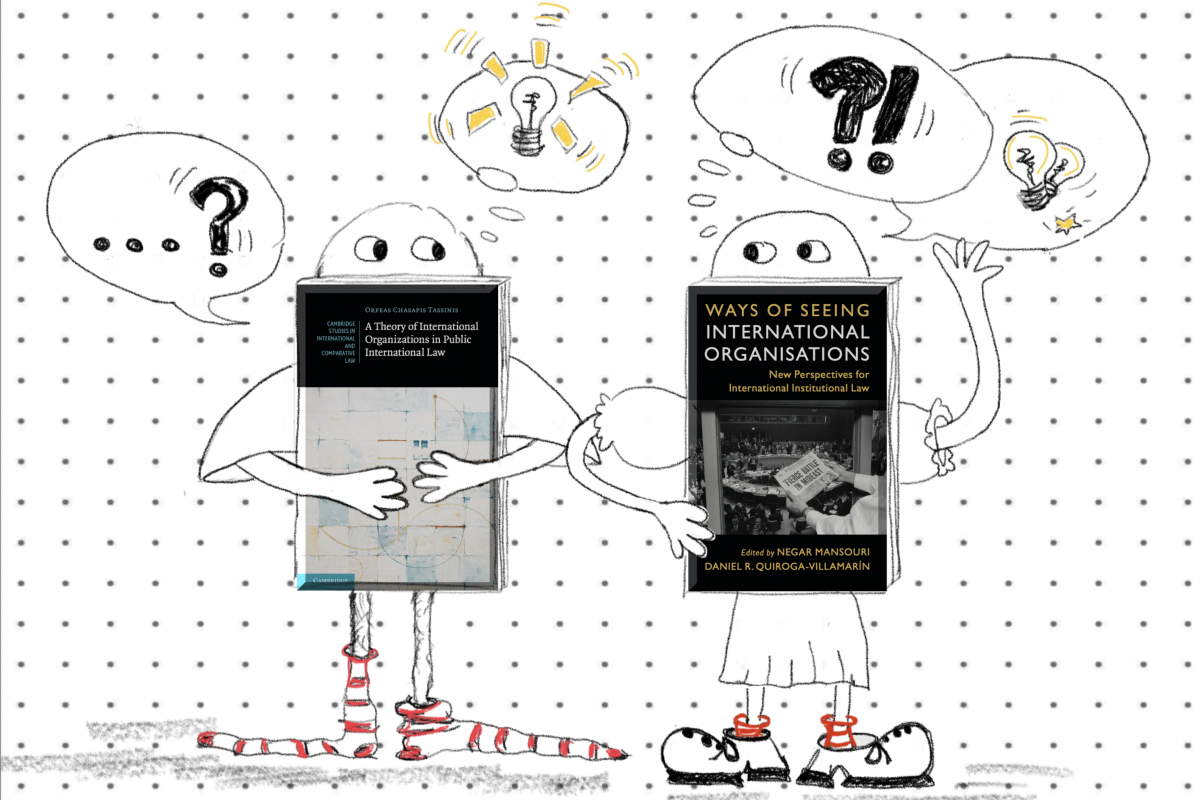
Opening black boxes is a recurrent idea in both Ways of Seeing International Organisations and A Theory of International Organizations in Public International Law. Whether addressing knowledge-production, natural and artificial entities, or judicial institutions, these two books rest on the premise that certain aspects of international organisations require, to some degree, clarifying.
It is striking that, at least in aviation, the black box is opened only after a crash has occurred. By analogy, when we turn to international organisations, we might ask whether the need to ‘open the black box’ suggests that our system has already failed. Have we moved on from troubleshooting to failure analysis? Has the analytical framework through which we approach international organisations really reached the limits of its explanatory power?
Regardless of how these questions are answered, both Negar Mansouri and Daniel Quiroga-Villamarín, the editors of Ways of Seeing International Organisations and Orfeas Chasapis-Tassinis, the author of A Theory of International Organizations in Public International Law, seem to agree that something just isn’t working. All three also share, to some degree, their diagnosis of the problem, as they agree with Klabbers that the law of international organisations suffers from (chronic) under-theorization. Putting it differently, and in the words of Mansouri and Quiroga-Villamarín, ‘ “doing” [international organisations] law has overshadowed “thinking” about international institutions’ (p. 4). A crucial symptom of this phenomenon is that fundamental (and rather old) debates concerning the law of international organisations appear to be unsettled and, as Chasapis-Tassinis puts it, trapped in a state of ‘doctrinal ambiguity’ (p. 12).
If this is the case, we urgently need to figure out how to dig ourselves out of the hole. Whether it is changing the questions we ask, or the way we use the tools at our disposal to answer them. Both books decide to use different strategies to find a way to move beyond the system freeze affecting international organisations theory.
The Many Forms of Reimagining International Organisations
The editors of (as well as the contributors to) the Ways of Seeing International Organisations, challenge the ‘mainstream international law scholars’ to shake off their pragmatic instincts and acknowledge that international institutions are more than the relationship between the organisation and its members. The book takes a radical approach by suggesting that perhaps we need to move on from the ‘fixed research questions’ mainstream international law scholarship poses and rather see international organisations ‘from fresh angles and in new lights’ (pp. 4, 311). In Ways of Seeing International Organisations, interdisciplinarity and critical approaches to international institutional law take the spotlight. The book expands the discipline’s scope by introducing new objects of inquiry and methods through its exploration of expertise, structures, performance, and capital, and its dialogue with anthropology, political science and history.
In A Theory of International Organizations in Public International Law, Chasapis-Tassinis inquires if and how international organisations are ‘legally distinct from their member States’, and assuming that they are, what the content of their international legal personality is (p. 1). While the author describes his theory as doctrinal, he also recognises that ‘doctrinal legal theory […] may […] draw resources from within and outside a specific legal system, or even outside law altogether’ (p. 31). In his book, he does precisely that and draws resources from philosophical enquiry to examine collective entities, such as States and international organisations.
Using this approach, Chasapis-Tassinis reaches the conclusion that international organisations are, much like States, a manifestation of the ‘capacity of a community to self-describe as a unitary entity’ (pp. 182, 195) thus departing from the dichotomy of the contractual or constitutional understanding of international organisations. With this change of paradigm, Chasapis-Tassinis seeks to find the key to some of the most important unresolved issues that torment the discipline of international organisations. For instance, he tackles the question of whether the immunities enjoyed by international organisations have customary character. In doing so, he argues that, because both States and international organisations are equal (in the sense that they are both communities that can self-organise), ‘no separate practice and opinio juris needs to be identified specifically in relation to international organisations before they can enjoy the same immunities as states […]’ (p. 237). He reaches this conclusion by relying on the premise that precisely this capacity to self-organise is what international immunities seek to protect (p. 238).
The contributions of Ways of Seeing International Organisations and A Theory of International Organizations in Public International Law share a dissatisfaction with the current state of legal scholarship addressing international organisations. Both books propose a theoretical shift in their own way. However, they do not, in general lines, coincide in the questions they address, nor where they look for answers. The two volumes are a testament to the fact that reimagining can indeed take many forms.
Functionalism – Human or Technical Error?
Something they also share is the identification of functionalism as the dominant paradigm in the study of international organisations, and perhaps also as the glitch causing our current theoretical backlog. Functionalism is often explained as the understanding that international organisations are agents of their members and that, as agents, they are tasked with the performance of specific functions. Precisely because they are entrusted with the fulfilment of these functions, functions which are oriented to legitimate (or even good) objectives, international organisations are seen to be beneficial and worthwhile; a paradigm which arguably results in a bias in favour of the organisation. In practice, we have accepted that international organisations enjoy protection so that they can operate without interference and pursue these good objectives effectively.
As a target of criticism, a lot of the heat functionalism receives has to do with its perceived incapability to explain in any meaningful way the relationships between international organisations and the ‘outside world’–that is, the world outside the relationship between the organisation and its members. A point that even defenders of functionalism to some extent concede. An aspect of the law of international organisations in which this line of criticism is especially poignant is the (lack of) accountability of international organisations, which results from the broad range of immunities that international organisations enjoy. These usually bar claimants from accessing domestic courts, an avenue usually available for settling all types of disputes, in order to guarantee the independent functioning of the organisation.
Thus, the relationships governed by immunities, i.e. those arising from disputes involving international organisations that would normally warrant the exercise of State authority, are among the areas where functionalism ostensibly falls short. Like many of the areas explored by the authors and editors, it is a field marked by more questions than answers, and one in urgent need of reimagining. It also happens to be the focus of my current research.
In the field of immunities, functionalism may manifest in the understanding that ‘an international organisation [should be] entitled to (no more than) what is strictly necessary for the exercise of its functions in the fulfilment of its purposes’ (Bekker, p. 5). We should, however, not be fooled by the seemingly straightforward phrasing of this rule of thumb. Although the formula may seem to be restrictive in a first reading, it is often applied in a way that covers a large palette of acts, including commercial transactions (which are not included under State immunity), as these too can be conceived to be necessary for the fulfilment of the organisation’s functions. This, paired with lack of alternative dispute settlement mechanisms, results in the risk of a serious accountability gap when it comes to international organisations, serving as an example for why some authors have concluded that functionalism is inherently biased in favour of international organisations (for example Klabbers, p. 10).
Much like the core issues tackled by Chasapis-Tassinis, the questions relating to this accountability gap in the law of international organisations are not new (Kunz, p. 839). In fact, they have been present since the very first immunity regimes were established. From Srebrenica to Haiti, recent tragedies have not curbed this tendency and calls for reforming the law of institutional immunities persist.
In his contribution to Ways of Seeing International Organisations, B.S. Chimni generally asks whether the way forward for ‘weak States and groups’ should be organisational nihilism or organisational reform (p. 20). Institutional immunities may contribute to the reasoning of those who are sceptical, as some cases, such as the ones mentioned above, can indeed leave the impression that we have moved beyond troubleshooting and on to failure analysis. To make matters more delicate, there seems to be no magic bullet when it comes to discussions of reform. Under-the-nose solutions to the access to justice question are not enough to solve the gap.
For instance, one would think that applying the customary regime of State immunity in its entirety (a possibility discussed by Chasapis-Tassinis for non-member States (p. 237-238)), and therefore applying the commercial acts exception, would effectively tackle the issue. However, we would still not have a satisfying answer for private parties affected by official acts of an organisation (an issue also acknowledged by Chasapis-Tassinis (p. 237)). Contrary to States which can usually be sued in their own judiciary, most international organisations do not have their own courts, and when they do, these rarely have jurisdiction to receive complaints that do not result from a previous contractual relationship.
From a human rights perspective, the core issue is then how to address situations in which immunity is necessary to safeguard the organisation’s independence but results in legitimate claims remaining unsettled. This is particularly significant in light of the increasing weight accorded to the rights of private persons, which may destabilise the traditionally accepted outcomes of balancing exercises and thus erode immunity regimes that seek to protect the much-valued independence of organisations. Not so long ago, for instance, the settled view was that complaints involving the right of access to justice could only arise whenever a court had jurisdiction to begin with (Reinisch, p. 574). Thus, when relying on this understanding, national courts could uphold institutional immunities (which barred their jurisdiction) even in the absence of alternative dispute settlement mechanisms. Now, this approach is disputed at best, and landmark decisions have considered that whenever States limit the access of private parties to courts by granting immunities, such restriction should be proportionate and balanced by the availability of alternative dispute settlement mechanisms.
One complaint one reads from time to time is that functionalism is powerless when it comes to delimiting institutional immunities (Gulati, p. 148). Although I do not contest the accuracy of this conclusion, I cannot help but wonder if that needs to be the case. Is it really impossible to find the answers we seek in functionalism? Is it fair to conclude that functionalism is inherently biased in favour of international organisations? Or is there a way this paradigm may be reimagined so that it can be an effective safeguard against the potential abuse of institutional immunities? Would it help, for instance, if the functional needs of international organisations were actually (or at least more prominently) considered during the drafting process of immunity regimes? Or perhaps, as has already been suggested, it would be useful to understand the organisation’s obligation to provide alternative dispute settlement mechanisms as stemming from functionalism? Providing alternative dispute settlement mechanisms protects institutional immunities against erosion, which undoubtedly facilitates the functioning of international organisations.
Regardless of how one sees the problem, it is important to keep in mind what Jan Klabbers wrote in his contribution to Ways of Seeing International Organisations, namely that
‘there might be merit in not (only) viewing international organisations law through functionalist lenses but also studying how this body of rules helps to structure patterns of winners and losers; which institutional biases are inherent in institutions and carved in legal texts, and how those legal texts come about.’ (p. 51).
In few fields is this affirmation as crucial as it is in the law of institutional immunities, where patterns of winners and losers are hiding in plain sight.
Thinking of… What It Takes to Fix the Bug
The questions presented above make me wonder if institutional immunities should also be characterised as a black box that needs to be opened. They also help me understand why I felt I was the target audience of Ways of Seeing International Organisations immediately after I finished the first part of the book. For starters, I share with the authors a certain dissatisfaction with the theoretical framework dominating the study of international organisations. I can see its limits, and in a way, they are what initially drew my fascination towards the field. Moreover, and perhaps more importantly, as someone raised in predominantly positivist traditions, I see much of myself in the mainstream international legal ‘scholar’ the book had as interlocutor. From this angle, I wholeheartedly agree with the editors when they suggest that Ways of Seeing International Organisations offers ‘more questions than answers in a field in the need of a profound reimagination’ or, in other words, excellent food for thought.
Interestingly, by the time I finished the book, there was one specific question that seemed to linger (on a personal and perhaps more existential level): where does my work fit into all of this? I experience the limitations of the current system precisely because I operate within the system. My research is largely focused on ‘finding legal answers to legal questions’, a task the editors of Ways of Seeing suggest should be left to practitioners and judges (p. 7). Was I then, part of the problem? Could it be that reimagining the field was inaccessible to me?
After reading the first few pages of A Theory of International Organizations in Public International Law I had the feeling that somehow and to some extent my questions had been addressed. Chasapis-Tassinis took one of those ‘fixed research questions’ the editors of Ways of Seeing International Organisations are critical of. He also did so by advancing the idea that, even if current conceptions miss the mark, ‘law still has its own role to play’ (p. 4). However, the interesting part is that he was still able to offer a new angle by questioning some of the field’s most entrenched assumptions (for example, that the State is an irreducible entity).
Undoubtedly, the editors and contributors to Ways of Seeing International Organisations will agree with Chasapis-Tassinis that
‘the search for doctrinal answers does not negate the presence of an ‘outside’ world with its own dynamics, and indeed normative as well as distributional contestation […] legal reasoning derives its authority and persuasiveness from being attentive to coherence and scrutinizing one’s operating assumptions’ (p. 4).
Ultimately, both books have similar disruptive goals. Chasapis-Tassinis answers, in his own way, the call of Ways of Seeing International Organisations precisely by examining an old problem from a different angle.
I firmly believe that important and timely questions can also be legal questions, such as those arising from the accountability gap resulting from the immunities of international organisations. I also believe these legal questions will eventually be given legal answers. What I learned from joint reading of A Theory of International Organizations in Public International Law and Ways of Seeing International Organisations is that finding legal solutions to legal problems does not exempt me from situating the object of my study in a wider context. And perhaps that doing so is the only way to crack my own black boxes wide open.

María José Escobar is a pre-doctoral research assistant at the University of Vienna.