
What Made the Extraordinary African Chambers Work?
Lessons for the Special Tribunal for the Crime of Aggression against Ukraine
The establishment of the Special Tribunal for the Crime of Aggression against Ukraine is an innovative attempt to address a genuine accountability gap. However, it raises a foundational question: Under which conditions may an exceptional tribunal acquire sufficient legitimacy to exercise jurisdiction over international crimes? This article addresses this through a comparison with the Extraordinary African Chambers (EAC), a tribunal established under the authority of a regional organisation, which successfully prosecuted a former head of State. This article answers two questions: What made the EAC legitimate? And does the Special Tribunal possess comparable legitimacy foundations?
To this end, this article explores the normative foundations of both tribunals, the question of consent and the jurisdictional basis of both tribunals, alongside the treatment of immunities and impartiality. The main position taken is that the legitimacy of the EAC rested on a pre-existing regional commitment and consent to the prosecution of international crimes; a foundation that the Special Tribunal does not enjoy in the same form. It may therefore be that the Special Tribunal must earn its legitimacy differently.
In 2006, the African Union authorised Senegal to prosecute Hissène Habré on behalf of Africa. It took another seven years for the EAC, the special ad hoc mechanism created for that purpose, to become operational in 2013, and another four years for Hissène Habré’s conviction to become final. The EAC was grounded in a pre-existing regional normative commitment to prevent atrocity crimes and was created with the consent of both the territorial and forum States. Two decades later, the Council of Europe and Ukraine have signed a bilateral agreement to establish a Special Tribunal for the Crime of Aggression against Ukraine.
Contrasting Normative Foundations
Like the Special Tribunal, the EAC was a political solution to a difficult problem. The EAC emerged as the African solution to the impending prosecution of a former African Head of State in Europe. However, its normative foundations predate Habré’s prosecution by several years. Article 4(h) of the African Union (AU) Constitutive Act, adopted in 2000, recognises the right of the Union to intervene in member States, pursuant to a decision of the Assembly in situations of crimes against humanity, war crimes and genocide. Article 4(h) reflected a deliberate collective decision by AU member States that sovereignty could no longer serve as a shield for mass atrocities and marked the Union’s departure from its predecessor’s stringent adherence to the principle of non-interference. Article 4(h) did not itself authorise prosecutions, but the commitment to prevent atrocities it expressed provided a legitimate normative foundation for the creation of the EAC to prosecute crimes.
The Council of Europe (CoE) does not enjoy the same right as the AU to intervene in the affairs of member States and has no equivalent to the AU’s intervention power under Article 4(h). The CoE has no internal mechanism for prosecuting the crime of aggression. This leaves a gap in authority at the outset, which supporters of the Tribunal have sought to fill from other sources. Some authors have defended the tribunal as a means of reinforcing the UN Charter’s explicit prohibition of the use of force by holding Russian leaders individually responsible for the crime of aggression. However, the Security Council has primary responsibility under the Charter for maintaining international peace and security and includes Russia as one of its veto-wielding members. It remains contested whether individual members of the United Nations, acting independently of the Security Council, could rely on the Charter as a basis for creating a tribunal. Other authors like Kevin Jon Heller and Owiso Owiso have argued that Art. 15(a) of the Statute of the CoE, which empowers the Committee of Ministers to recommend that member governments adopt “a common policy with regard to particular matters”, could provide a basis for the CoE’s support of the Special Tribunal. Owiso acknowledges that this interpretation of Article 15(a) is contestable. However, Article 15(a) is a general power to recommend a common policy; it is not a prior commitment to act against atrocity crimes as Article 4(h) is. As such, the CoE’s route under Art. 15(a), while defensible, is much thinner.
The Question of Jurisdiction
The Special Tribunal’s jurisdiction is based on Ukraine’s territorial jurisdiction (see Art. 1 of the Statute of the Special Tribunal). Therefore, although the tribunal would be based in The Hague, and might employ both Ukrainian and European personnel, it has no jurisdictional authority beyond that which Ukraine can lawfully confer on it. While the Special Tribunal is not, in the ordinary sense, a domestic court, it is not an international or a regional court either, as its authority is derived from Ukraine’s territorial jurisdiction. The CoE only adds support, not jurisdiction.
The comparison to the EAC here is not as straightforward. The EAC gained its authority from the African Union; it was embedded within the Senegalese judicial system and exercised universal jurisdiction. The AU’s intervention through the EAC was to authorise and set the parameters for exercising this controversial form of jurisdiction, as well as provide funding and some personnel. The AU’s intervention was particularly important because the Senegalese courts had previously determined that they had no jurisdiction to prosecute Habré, a former head of State, for crimes occurring entirely outside Senegal. However, the AU’s collective endorsement conferred legitimacy on the exercise of jurisdiction that the Senegalese courts had declined to assume.
In one respect, the Special Tribunal stands on much firmer ground than the EAC. Territorial jurisdiction is one of the least controversial bases of criminal jurisdiction, and Ukraine has the authority to prosecute atrocities committed on its territory. The EAC, by contrast, required the AU to endorse and ratify its exercise of universal jurisdiction, with the attendant controversies. The difficulty with the Special Tribunal lies in whether Ukraine and its partners can prosecute leaders of a State that has not consented to the Tribunal’s creation and who ordinarily enjoy immunity.
On that question, there is a meaningful distinction. The EAC’s authority is derived from a collective regional decision grounded in the AU Constitutive Act to which both Senegal and Chad are parties. The Special Tribunal, on the other hand, derives its authority solely from Ukraine’s territorial jurisdiction backed by its partners, without an equivalent participation by Russia, the State whose officials are its intended subjects. This makes it unusual among hybrid tribunals, most of which have tried nationals of a consenting host State.
Immunities and the Limits of State Consent
The application or non-application of immunities to the Special Tribunal has already received substantial attention (here, here and here). The nature of the tribunal is such that the question of immunities cannot be avoided. The crime of aggression is a leadership crime and prosecuting it would require indicting persons who ordinarily have a claim to immunity, personal and functional. The Special Tribunal’s statute stipulates that functional immunities will not apply, and where an indictment involves a member of the Troika (meaning sitting Heads of State, Heads of Government, and Foreign Ministers), it shall be suspended until such a person no longer holds office or a waiver is obtained. The retention of personal immunity limits the tribunal’s immediate prosecutorial reach, since indictments of the Troika depend on conditions that may never occur, although investigations and evidence collection may proceed in the meantime. This means that while the Troika remain in office, the Tribunal’s role is largely confined to preparing cases for a later date. The propriety of the non-recognition of functional immunity is debatable, but beyond the focus of this short article.
The EAC’s position regarding immunity was not completely different. Habré was a former head of State, so what was at stake was functional immunity, not personal immunity. The immunity belonged to the State, and the Chadian government expressly waived any claim to immunity that Habré may have had. Also, as an AU member State, bound by the AU’s Constitutive Act that rejects sovereignty as a shield for atrocity crimes, Chad was not in a position to resist the collective decision, much like how member States of the United Nations could not resist the creation of ad hoc tribunals capable of prosecuting heads of state in Rwanda or the Former Yugoslavia.
Unlike the Special Tribunal, the EAC did not face the problem of personal immunity, and, even more importantly, had the support of the territorial state. Chad wanted Habré’s prosecution and had even sentenced him to death in absentia. Russia, on the other hand, has not consented to the Special Tribunal and remains under Putin’s leadership. The Special Tribunal does not enjoy either advantage. Russia is no longer a member of the Council of Europe and has not consented to the Tribunal’s jurisdiction, and no equivalent normative framework exists within Europe that could override assertions of immunity. The comparison is therefore between the EAC and the Special Tribunal’s treatment of former officials, who may be prosecuted once out of office. The decisive difference is who can waive immunity: Chad did; Russia may not.
Political Interests and Impartiality
International criminal justice of any kind is rarely the work of neutral disinterested parties. The Nuremberg tribunals, for instance, have long been criticised as victor’s justice, as the victorious parties, themselves accused of committing war crimes and crimes against humanity, excluded themselves from criminal accountability while prosecuting their adversaries. The aim of the Nuremberg Trials, as reflected in their Charter, was to prosecute major war criminals of the European Axis, rather than to pursue a broader prosecution of all crimes under international law committed during the conflict. In this sense, the trials have been criticised as a tool for vengeance, cloaked as justice.
Since Nuremberg, international criminal justice mechanisms have attempted to maintain structural neutrality. Unlike the Charter of the International Military Tribunal, post-Nuremberg tribunals, including the ICTY, ICTR, and the EAC, generally framed their jurisdiction through the relevant conduct, location, and temporal scope rather than expressly identifying predetermined defendants. Despite the EAC’s focus on Habré, its mandate was framed in general terms as “the prosecution of international crimes committed in Chad between 7 June 1982 and 1 December 1990.” One notable exception to this sort of structural neutrality were the Extraordinary Chambers in the Courts of Cambodia (ECCC), whose stated purpose was “to bring to trial senior leaders of Democratic Kampuchea and those who were most responsible for the crimes and serious violations of Cambodian penal law”.
The Special Tribunal’s mandate, like the EAC’s, is framed by situation rather than by pre-identified defendants. However, the crime of aggression presupposes an aggressor State and a victim State, so a tribunal charged with prosecuting this crime cannot maintain structural neutrality in the same way a tribunal for other core crimes can. This is a problem which the Special Tribunal does not escape, given that one of its major tasks is to determine whether the crime of aggression occurred. In reaching this determination, Article 2(3) of the statute requires that the judges take into account the various UN General Assembly resolutions with respect to Ukraine. UNGA resolutions are generally not binding, although they may serve as evidence of opinio juris and the formation of customary international law. Article 2(3) therefore requires the tribunal to consider the resolutions adopted by States that have politically supported Ukraine as part of its legal assessment of the alleged aggression. This statutory requirement may compromise the appearance of an independent judicial assessment, particularly because the resolutions condemn Russian aggression against Ukraine. It could therefore be argued that the Tribunal’s finding on aggression is, to this extent, predetermined by the statute. However, the obligation to “take into account” the various UN resolutions is not an obligation to follow them. The judges retain full autonomy to assess the evidence and reach a reasoned conclusion supported by the evidence.
A similar perception problem arises from Article 37, which directs that funds collected through fines or the confiscation of criminal proceeds be transferred to a compensation mechanism for reparation for damage “arising from the internationally wrongful acts of the Russian Federation in or against Ukraine” (see Art 37, Statute of the Special Tribunal). By referring to internationally wrongful acts of the Russian Federation before the Tribunal has reached a finding on this question, the provision may contribute to a perception that the tribunal is expected to find that Russia has committed wrongful acts in breach of the UN Charter. Together with the name of the tribunal, “the Special Tribunal for the Crime of Aggression against Ukraine”, with Russia as the implied aggressor, the statute may create an appearance of an adversarial rather than adjudicative posture. Whether the Tribunal will be adversarial in operation will depend on how its prosecutors, judges and other officials perform.
A subsidiary legitimacy problem is the apparent partiality of the tribunal’s backers. All have supported Ukraine in the conflict, politically, economically and militarily. They are not neutral actors. This puts at the forefront the question of whether a mechanism created by such parties can maintain the required level of independence, impartiality and fairness.
Like the Council of Europe, the AU was not a neutral or uninterested party in the outcome of the EAC. Despite phrasing the EAC’s statute in structurally neutral terms, the purpose of the Court, in practice, was to prosecute Habré. In this way, much as with the Special Tribunal, the principal defendant was evident before proceedings began. This is a feature inherent in any tribunal charged with the prosecution of leadership crimes. While the AU may not necessarily have been invested in Habré’s conviction, it certainly had an interest in ensuring that the former African Head of State was prosecuted by an African-led mechanism rather than in Europe. These were real political interests that similarly affected perceptions of the tribunal’s partiality. Habré himself denounced the political motivations behind his prosecution, with other critics noting that Idriss Deby, who took over as President of Chad and waived his immunity, had previously been commander in chief of Habré’s army, and yet was not prosecuted. Furthermore, the considerable financial and political investments in Habré’s prosecution raise the question of whether an acquittal was even possible, without undermining the unstated expectations surrounding the establishment of the EAC. That question cannot be answered. What can be assessed, however, is the EAC’s record of bringing justice to perpetrators of atrocities using a model that is now being replicated in Europe. To that extent, the EAC might be described as a success.
Conclusion
The Extraordinary African Chambers and the Special Tribunal are two regionally backed tribunals created to prosecute crimes that are outside the reach of the ICC. Both represent innovative attempts to address accountability gaps. This article has demonstrated that the success and legitimacy of the EAC depended in part on a pre-existing regional commitment to address atrocity crimes, and on the consent of the States whose territory and nationals were concerned. The Special Tribunal does not enjoy either of these two features in the way the EAC did; there is no European equivalent of Article 4(h), and Russia has not consented to the creation of the Special Tribunal. Immunities remain a barrier to prosecution and certain provisions of the Statute risk creating an appearance of bias. However, its basis on Ukraine’s territorial jurisdiction is much less controversial and provides a platform from which legitimacy can be earned.
The Special Tribunal fills an important and genuine accountability gap. The structural features examined here matter as they bear on whether the tribunal can produce judgments carrying normative authority beyond the coalition that created it. Just as importantly, the success of the Special Tribunal would determine whether it offers a replicable and legitimate model for prosecuting the crime of aggression beyond this conflict. The Special Tribunal must build its legitimacy through process, including the independence of its judges and officials and fair-trial guarantees.
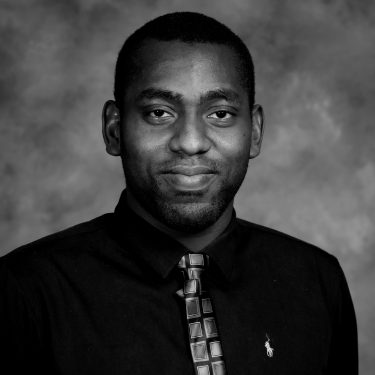
Chuka Arinze-Onyia ist Doktorand an der Rechtsfakultät der Griffith University und forscht zum Thema universelle Gerichtsbarkeit. Diese Forschungsarbeit wurde von der australischen Regierung im Rahmen des „Discovery Early Career Award“ des Australian Research Council (Projektnummer DE250100597) unter der Leitung von Associate Professor Emma Palmer gefördert. Die hier geäußerten Ansichten sind die des Autors.