Responsibility Affirmed, Trial Deferred
Official Position and Troika Immunity before the Special Tribunal for the Crime of Aggression against Ukraine
The Statute of the Special Tribunal for the Crime of Aggression against Ukraine (the Tribunal) contains two provisions that seem to exclude each other. Under Article 4(2), the official position of an accused, including as head of State or government, “shall not relieve such person of criminal responsibility nor mitigate punishment”. Under Article 23(5), however, the Pre-Trial Judge “shall not confirm the indictment and shall order the proceedings be suspended” where the indictment concerns a head of State, head of government or minister of foreign affairs. For a leadership crime such as aggression this looks like a contradiction, since the Statute proclaims the “irrelevance of official capacity” and yet suspends proceedings against the three highest office-holders—the troika.
I argue that there is no contradiction and that the drafters adopted both provisions deliberately. The two provisions deal with different immunities. Article 4(2) concerns the position held when the crime was committed and bars the accused from relying on it. Article 23(5) concerns the office held when the case reaches the Tribunal and protects only those still in office. For the troika, responsibility therefore remains, but trial is deferred until they leave office or their State waives immunity. This design follows from the nature of the Tribunal. It is an international court, but its jurisdiction “is based on the territorial jurisdiction of Ukraine” (Article 1), and neither the UN Security Council nor the States whose officials it may prosecute stand behind it. That aggression is a leadership crime explains why the official acts of State leaders are unprotected, but it cannot remove the immunity of those in office.
Two Provisions, Two Immunities
State officials enjoy two kinds of immunity from foreign criminal jurisdiction. First, functional immunity covers official acts and continues after office. Second, personal immunity protects only the troika, covers all of their acts and ends with their term. Clauses similar to Article 4(2) appear in earlier instruments, from the Nuremberg Charter to the Statute of the International Criminal Tribunal for the former Yugoslavia (ICTY) and the Rome Statute of the International Criminal Court (ICC). They speak only of responsibility and punishment for international crimes, yet tribunals have read them as removing immunity. The ICTY applied such a clause to a former head of State in Milošević (paras 26–34). In Taylor, the Special Court for Sierra Leone held that Charles Taylor’s position as a serving head of State “is not a bar to his prosecution” (para. 53). Read that way, Article 4(2) alone would remove troika immunity.
The Statute, however, prevents that reading. Unlike the earlier clauses, Article 4(2) refers to the official position “at the time of the alleged commission of a crime”, not at the time of the proceedings. Nor does the Statute contain a provision like Article 27(2) of the Rome Statute, under which immunities “shall not bar the Court from exercising its jurisdiction”. Instead, Article 23 of the Tribunal’s Statute splits immunity in two. “Functional immunity shall not apply before the Special Tribunal” (Article 23(4)), so no one can shield official acts. Personal immunity is respected, since proceedings against a troika member are suspended “until that person no longer holds that office or an appropriate waiver has been presented” (Article 23(5)).
The Statute thus follows the distinction drawn by the International Court of Justice (ICJ) in Arrest Warrant between immunity from jurisdiction, on the one hand, which is procedural and may bar prosecution for a certain period of time, and criminal responsibility, on the other, which is a matter of substantive law and remains (para. 60). In paragraph 61, the ICJ listed situations in which immunity does not prevent prosecution, including waiver by the official’s State, trial after leaving office, and proceedings before “certain international criminal courts”. As Quénivet has shown, Article 23(5) uses the first two and makes no claim to the third. For the troika, responsibility is thus affirmed, and only their trial is deferred.
The Argument from the Special Legal Nature of Aggression
Aggression is a leadership crime. Only a person “in a position effectively to exercise control over or to direct the political or military action of a State” can commit it, and it presupposes an act of aggression by a State (Article 2). Such conduct is therefore always performed in an official capacity. If functional immunity covered it, aggression could be prosecuted only in the courts of the aggressor State. This is why the Nuremberg Tribunal held that the authors of acts condemned as criminal by international law “cannot shelter themselves behind their official position”. Official character cannot ground immunity where it is the very essence of the crime.
The UN International Law Commission (ILC) points in the same way. On 15 May 2026 it adopted on second reading its draft articles on immunity of State officials and, as Ukraine had urged, included aggression among the crimes for which functional immunity “shall not apply” (draft article 6(g)). The exception remains contested. The first-reading text had omitted aggression to spare national courts from ruling on a foreign State’s act of aggression. Before the Tribunal, that act is determined not by the courts of the victim State but by international judges bound to take account of the UN General Assembly’s resolutions on Ukraine (Article 2(3)). The Statute thus allows leaders outside the troika to be prosecuted now, and the troika after leaving office.
Why the Same Argument Cannot Displace Personal Immunity
Personal immunity attaches to the office, not to the act. In Arrest Warrant, the ICJ held that for a serving foreign minister “no distinction can be drawn” between official and private acts (para. 55), and found no exception even for war crimes and crimes against humanity (para. 58). In Jurisdictional Immunities of the State, it explained that rules on immunity are procedural and therefore cannot conflict with jus cogens norms (paras 93, 95). Three arguments for overcoming the immunity of a serving head of State therefore fail. The first relies on the gravity of aggression as a leadership crime and the “supreme international crime”. Yet gravity describes the conduct, whereas personal immunity covers all conduct. The second invokes the jus cogens status of the prohibition of aggression. Yet a procedural rule cannot conflict with a substantive one. The third relies on Article 2(4) of the Statute, under which a manifest act of aggression against Ukraine is deemed a “war of aggression”, a category the UN General Assembly calls “a crime against international peace” (Resolution 3314 (XXIX), Article 5(2)). As Kreß shows, not every act of aggression is manifest, so this places the aggression against Ukraine in the gravest category. Yet this qualification, too, concerns the conduct, and a treaty cannot deprive a non-party State of a procedural right.
The only recognised exception turns not on the crime but on the court. In paragraph 61 of Arrest Warrant, the ICJ reserved this exception for “certain” international criminal courts, a qualification on which Kreß rightly insists. It named the ICTY and the International Criminal Tribunal for Rwanda, both set up by binding UN Security Council resolutions, and the ICC, created by treaty. On the most cautious view, what unites them is that immunity is removed either by a UN Security Council decision binding on the official’s State or by that State’s own consent. In Taylor, the Special Court for Sierra Leone held itself “truly international” because the UN Security Council, acting for all UN members, had initiated its creation (paras 37–38; contra McDougall). In Al-Bashir, the ICC went further, reasoning that international courts act “on behalf of the international community as a whole” (para. 115). Either way, what matters is the type of court and the source of its authority, while the nature of the crime is at most “instructive” (Taylor, para. 49).
Measured against this test, the Tribunal falls short. Its jurisdiction rests on Ukraine’s territorial jurisdiction, which Ukraine has delegated by treaty. The UN Security Council did not create it, and the States whose leaders it may try, such as Russia, Belarus and North Korea, have not accepted its Statute and so have not waived the immunity of their officials. The Tribunal formally exercises jurisdiction under international law, as Siegle notes, but a treaty between Ukraine and the Council of Europe cannot take away the rights of a third State such as Russia. Moreover, a State can delegate only the powers it has (nemo dat quod non habet). Ukrainian courts could not try a serving foreign head of State, so Ukraine could not empower the Tribunal to do so, as a Dutch advisory committee has stressed. Functional immunity is different. Under the ILC draft articles, national courts may disregard it for aggression, as Siegle also notes, so Ukraine could pass this power on. Delegation thus explains both rules of Article 23.
ICC case law points in the same way. After Mongolia failed to arrest President Putin in 2024, the ICC held in its finding on Mongolia that personal immunity operates in horizontal relations between States but not in the vertical relation between the ICC and its States Parties (para. 33). The Tribunal, too, has vertical relations, with Ukraine (Article 48(1)) and with States that conclude co-operation agreements (Article 48(4)–(5)). Only consent creates them. Russia, Belarus and North Korea have given none, so relations with them remain horizontal until the State concerned waives immunity or the UN Security Council intervenes.
Participants in the negotiations confirm that Article 23(5) was a compromise and that the Tribunal “does not meet all the standards required for an international tribunal”. Nor can the judges set Article 23(5) aside. The Statute is the first source of law they apply (Article 3), and, as Taylor held, a court “cannot ignore whatever the Statute directs” unless the provision conflicts with a peremptory norm (para. 43). A procedural bar conflicts with none. The judges must therefore suspend proceedings against a serving troika member, however strong the evidence.
What Is Left to the Judges
The judges’ discretion lies in the stage before the indictment is confirmed. Under Article 25(2), the Pre-Trial Judge, “[i]f satisfied that there is sufficient evidence”, confirms the indictment or, where it concerns a member of the troika, suspends the proceedings. If not satisfied, the judge dismisses the indictment. Suspension is thus preceded by an assessment of the evidence, and the order to suspend contains a prima facie judicial finding that a serving head of State has committed aggression. Does that finding itself violate personal immunity? Heller places the limit at confirmation, while Nuridzhanian leaves open whether even an indictment against a troika member is a prohibited measure of constraint.
The ICJ’s case law on when personal immunity is violated supplies the answer. What matters is whether the head of State is subjected “to a constraining act of authority” (Djibouti v. France, para. 170). The warrant in Arrest Warrant violated immunity because its “nature and purpose” was to enable an arrest (para. 70). For the ILC, even the institution of proceedings against a named person does not violate immunity “if it does not impose any obligation upon that person”. An order to suspend imposes none, since arrest warrants and trials in absentia are possible only after confirmation of the indictment (Articles 25(3) and 28(1)). The prima facie finding that precedes suspension is therefore compatible with immunity.
Conclusion
Articles 4(2) and 23(5) do not conflict but tie two different immunities to two different moments: the commission of the crime and the proceedings. The drafters did so deliberately. They departed from the wording that Taylor read as removing immunity, and accepted that the Tribunal’s mandate may be declared fulfilled before suspended proceedings resume (Article 54(1)(a)). Both rules of Article 23 follow from one premise. The Tribunal exercises jurisdiction delegated by Ukraine, backed neither by the UN Security Council nor by the States whose officials it may prosecute. Its judges cannot overcome personal immunity, but their prima facie assessment of the evidence decides whether proceedings are suspended or the indictment is dismissed.
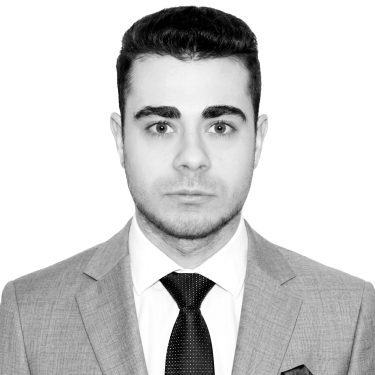
Yasin Dere is a PhD candidate at the V. M. Koretsky Institute of State and Law of the National Academy of Sciences of Ukraine, a legal professional and an assistant to an attorney-at-law. His research lies in the field of public international law and international criminal law, and his doctoral thesis concerns the Special Tribunal for the Crime of Aggression against Ukraine.