Oil Infrastructure as Military Objectives
Environmental Harm and Reverberating Effects in the Proportionality Assessment
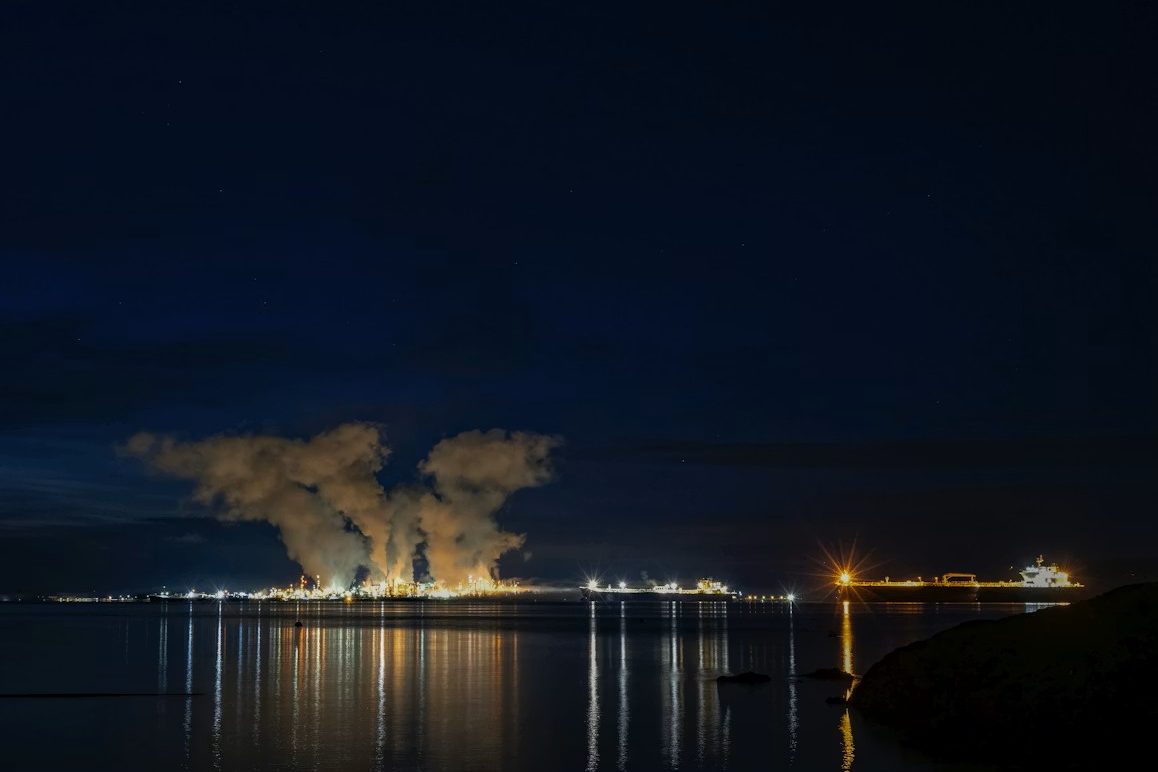
On 8 March 2026, the sky over Tehran showed almost apocalyptic scenes. Towering flames rising from fuel depots and refineries after the US-Israel-led strikes on Iranian oil infrastructure were seen across the media. Experts quickly warned that the bombing of petroleum installations could release large quantities of toxic pollutants into the atmosphere, including harmful particulates generated by burning crude oil and fuel storage tanks. Similarly, environmental scientists pointed to the possibility of acid rain forming in the aftermath of such strikes, as pollutants released into the air combine with atmospheric moisture and return to the ground in contaminated rainfall. This phenomenon, which scientists have begun analyzing in relation to the Tehran strikes, illustrates how environmental damage caused by attacks on industrial infrastructure can extend far beyond the immediate site of the explosion.
Among international law scholars, the debate over the legality of attacking oil infrastructure has long persisted (see here, here, and here). In the Iranian case, the debate centers on whether such installations qualify as military objectives under international humanitarian law (IHL), given that oil facilities often serve both civilian and military purposes. The legal status of oil infrastructure under IHL is inherently context-dependent. Under Article 52(2) of Additional Protocol I to the Geneva Conventions (AP I), which also reflects the customary international law definition of military objectives, an object qualifies as a military objective only where, ‘by its nature, location, purpose, or use, it makes an effective contribution to military action and its destruction offers a definite military advantage.’ In the case of oil infrastructure, this assessment is particularly complex, as such infrastructure often serves both civilian and military functions. It is widely accepted that certain dual-use objects may, in specific circumstances, qualify as military objectives, but this does not imply that all oil infrastructure is automatically targetable. Rather, the determination must be made on a case-by-case basis, taking into account its nature, location, purpose, and use. If the oil infrastructure does not make an effective contribution to the military operations, it remains a civilian object, and the principle of distinction applies. However, when it is also used for military purposes, the legality of attacking it does not end with classification. The principle of proportionality requires that the expected incidental civilian harm not be excessive in relation to the concrete and direct military advantage anticipated.
Focusing solely on the classification of oil infrastructure as a military objective risks overlooking another critical dimension of the debate: the environmental consequences of attacking such installations. Oil refineries and fuel depots are not ordinary buildings; they store massive quantities of combustible and toxic substances. When these sites are bombed, they can ignite large fires and release pollutants that contaminate the surrounding environment. The resulting pollution can affect air quality, soil, and water systems, exposing nearby civilian populations to serious and long-term health risks. Toxic smoke can spread across cities, polluted rain can contaminate land and water, and ecological damage can disrupt agriculture and public health systems. In this sense, the destruction of oil infrastructure can produce reverberating effects, harm that spreads through environmental and civilian systems far beyond the initial explosion.
These consequences are directly relevant to the principle of proportionality in international humanitarian law. Even when an object qualifies as a military objective, an attack is unlawful if the expected civilian harm is excessive compared to the anticipated military advantage, particularly where such harm is reasonably foreseeable at the time of attack. When strikes on oil installations foreseeably cause large-scale environmental damage and cascading civilian harm, proportionality assessments cannot be limited to immediate casualties alone. They must also consider the broader environmental and systemic impacts of the attack.
In the background of this discussion, the events in Tehran highlight that modern conflicts increasingly target infrastructure whose destruction can trigger environmental disasters and long-term civilian suffering. This raises an urgent legal question: how should international humanitarian law evaluate attacks whose environmental consequences reverberate through civilian life long after the strike itself?
This blog, therefore, argues that where attacks on oil infrastructure foreseeably cause significant environmental and reverberating harm affecting civilian populations, they raise serious proportionality concerns and may, in particular cases, violate the proportionality rule of international humanitarian law, particularly given the scale and persistence of such harm.
Environmental Protection in IHL
Environmental harm, given its significance to human life and sustainability, is not ignored by IHL. Although the law of armed conflict was not originally designed as an environmental regime, it nevertheless contains several rules that regulate the environmental consequences of military operations. Environmental damage may therefore fall within existing legal constraints governing the conduct of hostilities, particularly the rules on military objectives, proportionality, and precautions in attack.
Articles 35(3) and 55 of AP I, the customary status of which remains debated, prohibit methods or means of warfare expected to cause widespread, long-term, and severe damage to the natural environment. The threshold established by these provisions is extremely high and rarely invoked in practice, but they confirm an important normative principle that environmental destruction is not beyond the scope of IHL. The International Court of Justice (ICJ), in its Nuclear Weapons Advisory Opinion (1996), noted that the environment “is not an abstraction but represents the living space, the quality of life and the very health of human beings.” The Court also recognized that environmental considerations are relevant when assessing the legality of military operations under the law of armed conflict.
In a practical sense, environmental harm is more commonly addressed through the principle of proportionality. Under this rule, an attack is unlawful if the expected incidental civilian harm would be excessive in relation to the concrete and direct military advantage anticipated. Civilian harm is not limited to immediate deaths or physical destruction. Environmental damage affecting civilian populations, for example, through polluted air, contaminated water, or destroyed agricultural land, must also be taken into account in proportionality assessments. This interpretation is increasingly reflected in contemporary legal guidance. The International Committee of the Red Cross (ICRC) has emphasized that environmental damage should be considered when evaluating the foreseeable incidental effects of attacks under the conduct-of-hostilities framework. Environmental destruction may disrupt essential civilian resources such as water supplies, food production, and public health systems, all of which directly affect civilian survival.
State practice and international discussion also demonstrate growing concern about wartime environmental harm. The devastation caused by the 1991 Gulf War oil fires, when hundreds of Kuwaiti oil wells were set ablaze, highlighted the enormous ecological damage that attacks on energy infrastructure can produce.
Viewed within this legal framework, the environmental implications of attacking oil infrastructure become particularly significant. Refineries and fuel depots contain large quantities of combustible and toxic materials. When these installations are struck, fires and chemical releases may generate pollution that spreads through air, soil, and water systems. Such damage is rarely confined to the immediate target; it may affect civilian populations across entire urban regions and persist long after the attack itself.
Reverberating Environmental Harm and the Proportionality Assessment
Reverberating effects are understood as consequences that are not directly and immediately caused by an attack, but still flow from it. For example, damage to essential systems such as water, electricity, or healthcare can lead to further civilian suffering over time. And now some scholars also consider attacks on data centers in the same category.
Schmitt argues that in IHL, the extent to which reverberating effects must be taken into consideration when making a proportionality assessment remains an unsettled issue. There is a growing recognition that these effects can cause serious harm to civilians, but there is no complete agreement on how far such effects should be included. The ICRC has argued that reasonably foreseeable reverberating effects must be considered as part of incidental civilian harm; however, the precise limits of this obligation lack a clear definition.
Given this, the law does not require predicting all outcomes but to consider whether a particular type of harm could reasonably have been anticipated at the time of the attack, based on the information available and past experience. Where harm is too remote or speculative, it may fall outside the proportionality assessment. But where it is a predictable result of striking a particular type of target, it becomes legally relevant.
This understanding is particularly important in the context of environmental harm. When industrial or energy infrastructure is targeted, the resulting damage does not remain confined to the site of the strike. It may spread through air, soil, and water systems, and may disrupt the conditions necessary for civilian life. As Costi explains, attacks on infrastructure may generate cascading impacts that spread through interconnected environmental and civilian systems, including impacts on public health, food systems, and ecosystems.
Historical experience illustrates this point. The 1991 Gulf War oil fires produced massive air pollution and long-term environmental contamination, demonstrating how attacks on petroleum infrastructure can create regional ecological disasters. Similarly, during the 1999 Kosovo conflict, NATO strikes on industrial and petrochemical facilities generated pollution that the United Nations Environment Programme identified as serious environmental “hotspots.” Following the Gulf War, UN General Assembly Resolution 47/37 declared that environmental destruction not justified by military necessity is contrary to international law, and the UN followed a compensatory mechanism requiring Iraq to compensate Kuwait for the damage caused. However, a part of these damages was paid to the factory owners and not used for environmental rehabilitation, but the gesture exists. More recently, Resolution 77/104 encouraged stronger protection of the environment in relation to armed conflicts and welcomed the work of the International Law Commission on this issue. These developments demonstrate sustained international concern that warfare can generate significant environmental harm.
In the case of oil infrastructure, the drastic consequences of the attack are particularly difficult to dismiss as speculative. Refineries and fuel depots are widely known to contain combustible and toxic substances. When they are struck, large fires, toxic emissions, and environmental contamination are not unusual outcomes. These are well-known risks. As a result, at least some of the resulting environmental and systemic harm can be considered reasonably foreseeable. Therefore, the qualification of an oil installation as a military target does not absolve the analyst from the responsibility of considering the foreseeable reverberating effects of such an attack and comparing it with the anticipated military advantage. Ignoring such consequences would risk underestimating the true scale of civilian harm caused by the attack.
Conclusion
Attacks on oil infrastructure cannot be assessed in the same way as ordinary military targets. Even where such facilities may qualify as military objectives, their nature makes it likely that their destruction will produce widespread and long-lasting environmental harm. These consequences are not remote or unexpected. They are well known and, in many cases, reasonably foreseeable at the time of attack. For this reason, proportionality analysis cannot be limited to immediate casualties or visible destruction. It must also take into account the broader and indirect harm that follows, including environmental damage and its impact on civilian life. The exact scope of reverberating effects in IHL is contested, but there is sufficient basis to include those effects that can reasonably be anticipated. This also reflects the broader principle (as recognized by the ICJ in Pulp Mills) that states must exercise due diligence in assessing environmental harm, which indicates that proportionality must be grounded in a realistic assessment of foreseeable consequences. It is yet to be seen whether the military advantage gained by the offensive forces in Tehran outweighs the damage caused to the environment and civilians in the long run.

Ayesha Youssuf Abbasi is a lawyer and academic from Pakistan, currently undertaking a PhD in International Law in China. Her research centres on military AI, algorithmic warfare, and the protection of civilians under IHL.