
Designed for Justice, Dependent on Politics
The Promise and Pitfalls of the International Claims Commission for Ukraine
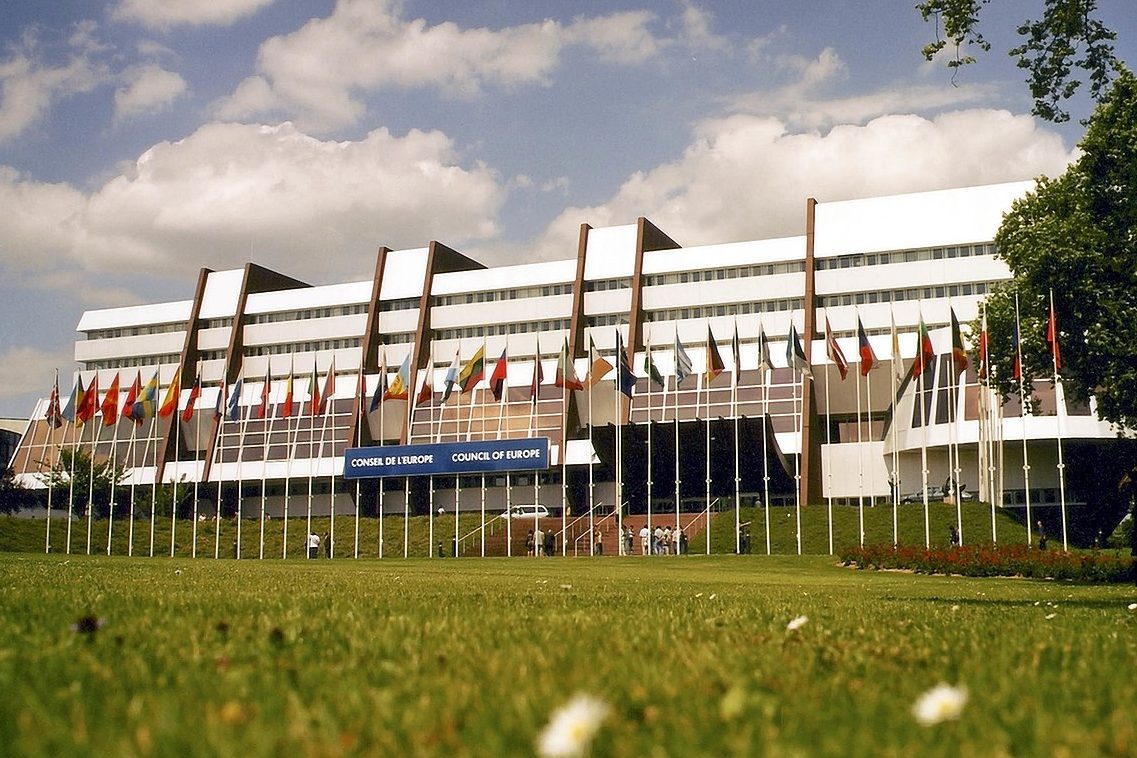
In late 2025, the Council of Europe adopted the Convention establishing an International Claims Commission for Ukraine (Draft Convention), constituting a most ambitious effort to develop a reparations mechanism for the Ukrainian victims of Russia’s full-scale invasion. While this development represents the most significant institutional innovation in the field of international claims since the United Nations Compensation Commission (“UNCC”), its ability to deliver meaningful reparation remains uncertain. This blog post argues that although the Draft Convention marks a significant institutional innovation, drawing effectively on historical models, its capacity to provide redress will ultimately turn on factors beyond its design, particularly political will, enforcement and funding, leaving its success promising but far from guaranteed.
Inspired by History While Facing New Realities: The Legal Design of Ukrain’s Claims Commission
The International Claims Commission for Ukraine (ICCU) is conceived within the framework of the Council of Europe and is mandated to adjudicate claims arising from internationally wrongful acts committed by the Russian Federation since 24 February 2022. Its jurisdictional scope, which covers natural and legal persons, the Ukrainian State and its entities, and Ukraine’s internationally recognised territory and maritime zones, reflects an ambitious attempt to create an institution capable of handling a wide range of claims.
As Giorgetti notes, claims commissions have historically provided adaptable mechanisms for resolving some of the most challenging international legal disputes. The Draft Convention draws deliberately on this lineage. It reflects the United Nations Claims Commission’s (“UNCC”) model of categorising claims and affirming state responsibility, and it mirrors the Ethiopia-Eritrea Claims Commission’s (“EECC”) willingness to include violations of international humanitarian law by states within its mandate. The deliberate echo of the founding instrument of the UNCC, i.e., UNSC Res. 687, demonstrates that the drafters rely on a well-established legal foundation for attributing comprehensive liability to an aggressor State, in accordance with Article 3(1) of the Draft Convention.
Giorgetti and Pearsall (part of the Working Group on the Development and Implementation of International Legal Mechanisms for Compensation for Damage Caused to Ukraine as a Result of the Armed Aggression of the Russian Federation established by President Zelenskyi on 18 May 2022 ) also traced the institutional origins of the present framework to UNGA Res. ES-11/5, which recommended the creation of a register to document damage caused by Russia’s aggression. They argue that claims by individual Ukrainians must be prioritised, as they have borne the greatest burden of the invasion. Their reference to the UNCC’s “natural victim first” methodology presciently anticipated the emerging structure of the new Commission, which appears likely to organise claims into distinct groups reflecting the varying types and severity of harm.
At the same time, the Draft Convention introduces some key innovations. It opts for individualised review rather than mass adjudication and authorises the ICCU to resolve all factual, legal, administrative and policy questions within its jurisdiction, which can be seen as an attempt to balance procedural fairness with efficiency.
Yet the design of the Draft Convention reveals an immediate vulnerability: implementation. The ICCU’s determinations are meant to be binding, but the Convention contains not alternative enforcement mechanism should Russia refuse to cooperate. Yet the Draft Convention’s design reveals an immediate vulnerability: implementation. The ICCU’s determinations are intended to be binding, but the Draft Convention provides not alternative enforcement mechanism if the Russian Federation refuses to cooperate. Although Russia is no longer bound by Council of Europe obligations after its withdrawal, its cooperation would still be needed to give effect to compensation awards. Nor are the Member States who are party to the Draft Convention required to finance awards. The creation of a compensation fund is still under discussion. These features highlight a structural tension: the mechanism’s normative ambition is not matched by an assured pathway to enforcement.
From Kuwait to Kyiv: How the Draft Convention Could Transform the Reputation of International Claims Mechanisms
The Draft Convention blends long-standing features of earlier claims mechanisms with innovations tailored to the Ukrainian context. If implemented, it would be the first mechanism to combine the efficiency of mass claims processes with direct accountability for violations of both international human rights and humanitarian law. Its architecture draws on established models: the Iran-United States Claims Tribunal’s (“IUSCT”) direct access provisions, the EECC’s broad jurisdictional scope, and the UNCC’s institutional embedding within an international organisation. Combined with the already existing Register for Damage for Ukraine, also functioning under the Council of Europe’s umbrella, the new framework promises a system capable of both adjudicating and compensating claims.
Among these precedents, the closest analogue to the ICCU is the UNCC. Both mechanisms respond to large-scale, conflict-related violations and operate within an international organisational structure. Yet the Convention departs from the UNCC in two important ways. First, whereas the UNCC required claims to be submitted through national authorities, the Draft Convention allows individual natural and legal persons to file directly, reflecting a more victim-centred model. Second, it represents a doctrinal innovation in IHL accountability: for the first time, victims of grave breaches under the Fourth Geneva Convention would be able to bring claims directly before an international body without relying on state espousal.
This development also marks a significant departure from the EECC, where, as laid out in Article 5(8) of the 2000 Algiers Agreement, all IHL claims had to be presented by the two States party to the Agreement. The EECC’s damage awards remained inter-State in character (see here and here) with individuals receiving compensation only indirectly. By contrast, the Draft Convention’s model of direct access represents a structural reimagining of how IHL violations can give rise to individual entitlement to reparation.
This expanded mandate, however, raises expectations that may be challenging to meet. Without a secure enforcement or funding mechanism, these normative advance risks becoming largely symbolic, recognising individual rights in principle while lacking the capacity to deliver material redress in practice.
Progress on Paper, Uncertainty in Practice
Despite the Draft Convention’s innovative design, the practical viability of the ICCU remains deeply uncertain. Since Russia’s withdrawal from membership of the Council of Europe in March 2022, the mechanism has been designed, as laid out in Article 3(4) of the Convention, to proceed on the basis that Russia is responsible under international law for the damage it has caused. Yet, the effective operation of the proposed Commission ultimately depends, at least in part, on Russia’s future participation, even if only to fund or facilitate payments of compensatory sums.
The ICCU is designed to bypass the need for Russian participation in the adjudicatory stage. This design removes some of the pitfalls associated with establishing liability in the absence of the responsible State. But it also highlights the limits of legal innovation when the enforcement landscape remains unchanged.
As Chernohorenko notes, the Draft Convention frames Russia’s potential participation “with diplomatic care”. The Russian Federation may accede at any time, provided it accepts responsibility, undertake to honour decisions, and reimburse Members’ costs. This is a legally sound compromise; full exclusion of the responsible State would be neither practical nor normatively desirable. At the same time, as Chernohorenko underlines, victim relief cannot depend on the unlikely prospect of Russia’s early cooperation. These provisions should therefore not be understood as conditions for the Commission’s success but as openings for future engagement, should geopolitical circumstances shift.
According to his proposed solution for the Claims Commission for Ukraine, Breydo highlights that an effective claims-resolution mechanism requires three essential components: (1) a “front-end” methodology for assessing claims; (2) a “back-end asset side, meaning identifiable and accessible sources of funding; and (3) a “middle” mechanism that connects the two by resolving claims and facilitating payment. He contrasts this with asset seizure, which, while capable of creating a pool of funds, offers only a partial solution, given it provides no system for evaluating claims or transferring assets to individual victims.
While Breydo ultimately concludes that his proposal for a Claims Commission for Ukraine is superior to existing alternatives, this author would respectfully disagree. His model lacks an institutional anchor and operates primarily as a financial construct. Moreover, although innovative, the funding proposal is grounded almost entirely in what would be permissible under U.S. law first, and international law only second. Although Breydo is correct that “dollars don’t save lives’, his analysis remains primarily financial, devoting significant attention to the idea that discounting Russian oil reserves could incentivise Russian participation. This may offer one potential solution to the financial gaps left by the Council of Europe, but it overlooks the Council’s considerable work in broadening the mandate and approaching the issue from the victim’s perspective rather than a predominantly market-driven one.
This author suggests that, while a global mechanism may be geo-politically unrealistic, a regional approach, as pursued by the Council of Europe, offers a more feasible path than one centred on what is workable within a single jurisdiction. Furthermore, although Breydo argues that his proposal would minimise policy implications, geopolitical developments since his 2023 publication make it far from desirable for the United States to lead such an initiative today.
A key reason this proposal is more viable than alternatives such as Breydo’s model is that it rests on a credible institutional foundation. The Council of Europe provides an existing legal and political framework capable of hosting such a mechanism, even if its membership is regional rather than universal. In the current geopolitical landscape, this may well be the only realistic institutional home available. Aside from the Organization for Security and Co-Operation in Europe, in which Russia and Ukraine nominally remain members, there is no other body where the two States are currently participating or have participated on equal footing.
Replicating the UNCC is simply not feasible: the UNCC was anchored in the authority of the UN Security Council. Any comparable mechanism today would be structurally impossible, given Russia’s veto power and its clear opposition to accountability processes arising from its invasion of Ukraine. In this context, the Council of Europe offers not merely an alternative but the only institutional setting with the legal legitimacy, political cohesion and operational capacity to advance a reparations mechanism in the absence of Security Council action.
This institutional logic, however, immediately collides with a structural paradox at the centre of the mechanism’s operation. Article 3 of the Draft Convention creates said structural paradox: the success of the mechanism rests on the cooperation of the very State responsible for the underlying internationally wrongful acts. Given Russia’s stated opposition to the Council of Europe’s initiatives since its expulsion, voluntary participation appears unlikely. In that scenario, any effective redress mechanism would need to be anchored in a future armistice or peace settlement, which was the case with the UNCC, the IUSCT and the EECC. These mechanisms respectively were set up after the conflict had ended. The ICCU, however, will not have this small luxury. This means that the workload of the ICCU will grow exponentially from its first day starting out. This could be a major potential pitfall.
Taken together, these factors illustrate that while the Draft Convention marks a noteworthy normative advance, its capacity to provide meaningful redress will depend less on its legal design than on geopolitical developments beyond its control. What emerges, then, is a mechanism that promises much but can deliver only within the limits imposed by geopolitics. For victims of Russia’s aggression, the ICCU offers a clearer path to recognition and adjudication than any previous model. But recognition without enforceable remedies risks creating expectations that the current institutional and financial framework cannot yet satisfy. The transformative potential exists, but it remains conditional.

Roos Fransen is a university assistant and doctoral candidate at the Institute for European Law, International Law and Comparative Law at the University of Vienna. She specializes in the intersection between international humanitarian law and international human rights law.