The Hidden Life of International Organizations
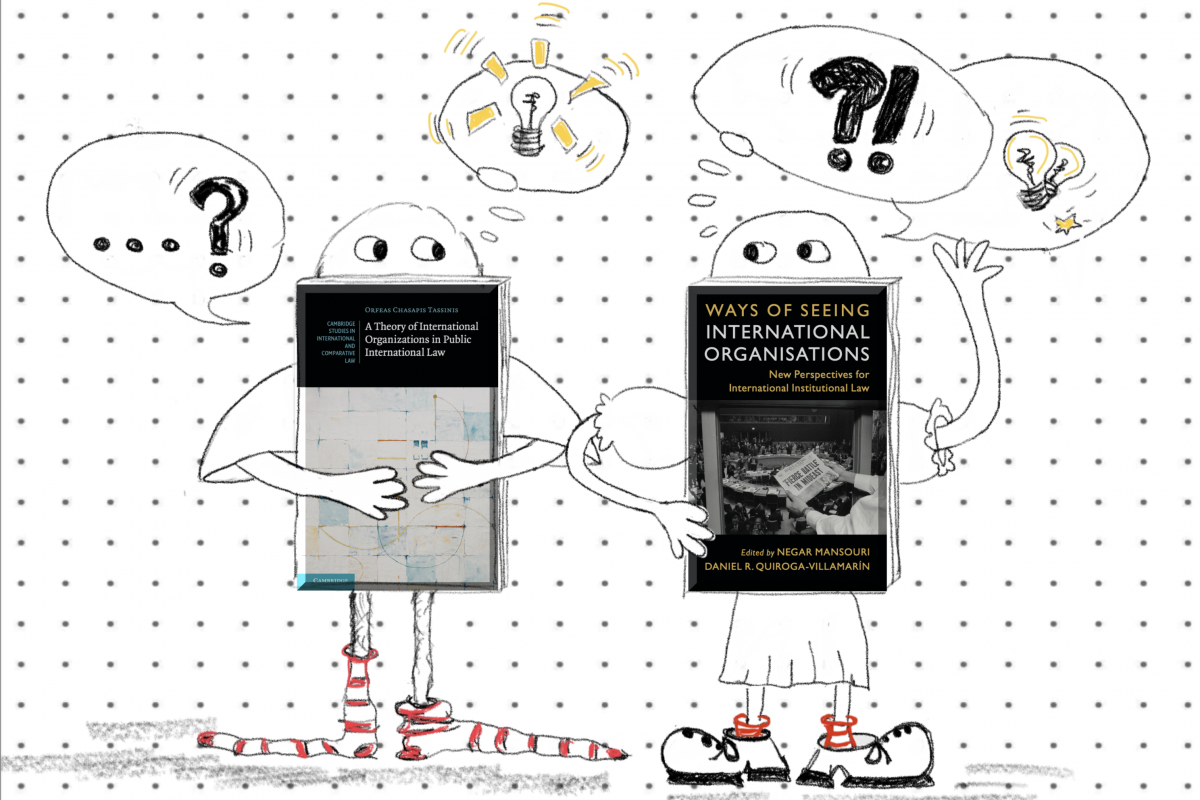
The task of bringing into conversation the edited volume by Negar Mansouri and Daniel R. Quiroga-Villamarín on ‘Ways of Seeing International Organisations’ and the monograph ‘A Theory of International Organizations in Public International Law’ by Orfeas Chasapis-Tassinis, as the editors of this symposium proposed, was not immediately a straightforward one. Undoubtfully, these are two insightful and innovative contributions to the field of international organisations (IOs) law, that are sure to become influential on their own right. Simultaneously, they also take two very different methodological approaches. The edited volume Ways of Seeing puts forward an interdisciplinary approach to the study of IOs, offering new ways to look at these institutions that blur disciplinary lines with the intention of inspiring a reimagined field of IO law beyond its current ‘problem-solving’ focus. Authors in the volume see IOs as ‘sites of socio-technical struggles’ that engaged in ‘world ordering’ (Mansouri and Quiroga-Villamarín 2025, p. 5) through knowledge production, internal reform, their materials and social structures, and discursive practices. Chasapis-Tassinis, on the other hand, ‘embarks on a philosophical investigation’ (p. 1) into the nature of corporate entities in international law, a concept that includes both states and IOs which are seen as expressions of the capacity of a community to self-organise and exercise public powers.
While not sharing the same methodology nor doctrinal aspirations, the two books converge in so far as they both set out on the mission to avoid the commonplaces of IO law research and breath fresh air into the discipline: either by asking different questions and engaging different disciplines and themes (as the Ways of Seeing volume does) or by questioning ingrained assumptions about IOs and their member states and, thus, their nature as international legal actors (as Chasapis-Tassinis sets out to do).
And there is another aspect which unites these two books: they both refuse to see IOs as ‘spiritless mechanisms’ (the expression is from Chasapis-Tassinis, p. 247). On the contrary, they reveal IOs to be spirited institutions, with a vibrant internal life where different actors and interests meet and, sometimes, clash, and where knowledge, discourses, and structures are constantly forged and reforged by those interactions. Ultimately, both books reveal a set of institutions that are nothing less and nothing more than the doings of the various people that compose them or otherwise intervene in their functioning.
It is the contribution of both books to bring to light this ‘hidden life’ of IOs that I highlight in this post. Notably, I explore how they contribute to this goal from two distinct but complementing perspectives. On his end, Chasapis-Tassinis challenges the concept of IOs as unitary autonomous entities with a separate will from a conceptual point of view, taking trouble with how IOs have been theorised primarily through their relation to states. In parallel, the authors in Ways of Seeing provide a granular analysis of a variety of practices, dynamics, and struggles taking place inside IOs and involving a variety of actors, which are also difficult to reconcile with an unitary view for these organisations. I discuss how these books replace unity with plurality in the concept of IO and the above mentioned ‘division of labour’ between them first. Subsequently, I turn to two implications of conceiving IOs as more than monolithic, static entities: first, IOs can be recognised as sites of interactions and struggle among different actors; second, it becomes possible to discuss how they continuously evolve over time, and are not always dependent on their member states. Finally, I conclude with some thoughts on the broader questions for the doctrine and law of IOs that these books raise and how to move forward.
IOs Are Not Unitary Actors with a Unified Will
Discussions on the autonomy of IOs are not new in the discipline – in fact, the circumstance of these organisations enjoying some level of autonomy from their member states is generally considered to be one of their defining elements and one of the requirements for enjoying legal personality (ICJ, Legality of the Use of Nuclear Weapons AO, para. 19; Schermers and Blokker, 2025, para. 44). This requirement is often formulated as the possession of a volonté distincte by the organisation, that is separate from the combined wills of its member states, or the existence of at least an organ with a will of its own.
The requirement of autonomy has several conceptual problems: for instance, it generally leads to a circular definition in which IOs are found to be a separate legal author with international legal personality because they have the ability to hold rights and obligations separately from member states – an ability which, in turn, is also one of the consequences of having legal personality. This is perfectly illustrated in the classic definition by Amerasinghe, according to which ‘[h]aving international legal personality for an international organization means possessing rights, duties, powers and liabilities etc. as distinct from its members’ (Amerasinghe 2005, p. 78). Moreover, the exact concept of volonté distincte remains a legal fiction which, in contrast with its wide use, has not been fully elucidated. Sometimes, it is associated with the existence of at least one organ that can take decisions that are attributed to the IO rather to the member states, again generating a circular definition as decisions can only be attributed to the organisation if it enjoys legal personality. More often, it is associated with the existence of procedures of decision-making by majority, but these are not necessarily available in all IOs and, ultimately, the source of any voting procedures can always be traced back to the unanimous will of states in establishing the organisation (see Chasapis-Tassinis, p. 89).
Both books distance themselves from this definition, in a more or less explicit fashion. For Chasapis-Tassinis, the test of volonté distincte misses the point entirely, as it presupposes that states are the constitutive entities of IO and that there must be a discontinuity between their will and that of a newly created, separate legal person (the IO). Instead, he considers IOs to be a mode of community organisation that exists in parallel to states, rather than an aggregated form of organisation composed of states. In such an understanding ‘there is no mystery of ‘distinct’ will of international organisations’: both states and IOs are constructed entities, none of which constitute a ‘monolithic ‘individual’’, and both are anchored in the capacity of national communities to self-organise and choose the mode of their organisation (Chasapis-Tassinis, p. 204). According to this logic, the constitution of an IO does not create a blank state over the wills and behaviour of its member states or other entities that might constitute it. Instead, it simply creates an ‘internal space’ where those wills and behaviour are ‘re-described’ as the will of the organisation (pp. 205-206). Ultimately, then, the imagery of a will and the corresponding decisions of an IO result from a priority given by international law to internal descriptions of institutional reality, rather than the constitution of a new unitary legal person with a single common will that is separate from its members (p. 205, chapter 7).
IOs equally do not appear as unitary actors with separate wills in the different chapters in Ways of Seeing. Instead, its authors deconstruct the image of IOs as ‘cohesive and monolithic entities and shed light on their micro-level practices’(inter alia Soave 2025, p. 127). In particular, they reveal how the day-to-day functioning of IOs results from interactions among different actors and interests, whose identities and agendas shape the policies, programmes, infrastructures, knowledge production, and reform of those IOs (this point is well summarised in the concluding chapter by Guy Fiti Sinclar, p. 316). These ideas are further illustrated in the next sections.
Nonetheless, some important differences remain between the two books. Chief among them is the fact that, while the question of whether it is justified (or useful) to discuss IOs as a separate category of international actor is not directly discussed in the Ways of Seeing volume (see Fiti Sinclair, pp. 218-219), this is one of the central questions in the work of Chasapis-Tassinis, which seeks to understand how to conceptualise the separate legal existence of IOs and what species of legal actors they are in relation to states. This results in not only in different focuses in the analyses but, I think, also in two contributions that have distinct but complementing aims. While the authors in Ways of Seeing do not directly engage in conceptual thinking about the legal (and philosophical) nature of IOs (although they certainly presume them to be a relevant enough separate object of legal analysis for an edited volume), they nonetheless provide rich material on their practices that show that IOs are more than an actor with an unitary will. Instead, the snapshots of IOs emerging from of the different chapters of Ways of Seeing illustrate well the conceptualisation of IOs by Chasapis-Tassinis as constructed entities composed ‘of several parts that come together into one’ (Chasapis-Tassinis, p. 18, chapter 6).
IOs as Sites of Interactions and Struggle among Different Actors
In his chapter in Ways of Seeing, Jan Klabbers proposes to let go of the state as the unity of analysis and, instead, to recognise that IOs represent manifestations of interests of different groups of individuals (Klabbers 2025, pp. 44-45). This is very much in line with Chasapis-Tassinis’ approach described above which conceives IOs as corporate entities. According to Chasapis-Tassinis, it is the same plural and diverse communities that are organised as states that also choose to re-organise themselves as IOs, and it would be futile to assume that their diversity of interests and points of view disappears once an organisation is created. For this reason, IOs can accurately be described as sites of interaction and struggle among a variety of actors (individuals, groups, and the legal entities that they have organise themselves into).
It is also worth remembering here that, according to Chasapis-Tassinis, the actions of different actors within IOs are not erased behind a separate will of the organisation that supersedes its different parts, but are simply re-described according to internally produced descriptions of the institutional reality (p. 176). An element of this theory is that the community of individuals continues to exist regardless of their self-organisations into a state or an IO (p. 188) and, as a logical consequence, the actions of those individuals and groups that constitute the original community must remain somewhat visible, even for international lawyers, and they might be worthy of analysis for better understanding the functioning of IOs and their various roles in global governance.
In many ways, this is the point where the work of Chasapis-Tassinis concludes and the Ways of Seeing volume picks up the thread, revealing different aspects of the day-to-day functioning IOs and the role of different actors that inhabit those spaces, an exercise that is more comprehensively executed by also inviting knowledge and expertise from neighbouring sciences to law. Accordingly, the different contributions in the volume illustrate how it is possible to trace back the creation, functioning, and setting of priorities by IOs to different interests held by different actors in a community.
The role of specific private or commercial interests and the efforts of certain ‘inspired individuals’ in setting up IOs has been discussed by, among others, Klabbers in a recent contribution (Klabbers 2022, pp. 20-21). In this volume, Jan Eijking similarly shows how the creation and scope of IOs owe much to the ‘situated political motives of their makers’ (Eijking 2025, p. 187). In his chapter, the specific ‘makers’ considered are the delegates present at the 1865 International Telegraph Conference in Parism who drafted the convention that constituted the International Telegraph Union (ITU). Eijking discusses how the background, experiences, and presumed motives of the individual practitioners representing states in this occasion influenced the outcomes of the negotiation, and explain how the ITU was established as a political intervention rather than simply mechanism for international cooperation in technical standards (p. 206).
Similarly, different interests held by different actors often battle each other in the functioning of an IO. Annabelle Littoz-Monnet calls attention to ‘where and by whom knowledge is produced’ within IOs (Littoz-Monnet 2025, pp. 64-65). She notes specifically that IOs often produce ‘in-house knowledge’ but they also set-up expert groups for advice on specific issues and organise numerous conferences, consultative forums, and roundtables where expertise is assembled (pp. 65-68). A variety of policymakers, experts, and private actors (including philanthropies, large consultancy firms, private companies’ research labs, and large NGOs) meet often in these spaces, where they have a role in ultimately stabilising and validating certain knowledge claims, while simultaneously marginalising others (p. 68).
In addition to those groups and interests already present in the underlying community of human beings, the creation of an IO itself constitutes a new self-identified group: the international civil servants. Like as all human beings, international civil servants have their own agendas and perspectives that they bring to IO practices. The chapter by Tommaso Soave illustrates this reality by discussing the influence that the judicial professionals in international courts and tribunals (those in the bench, the secretariats, and representing parties in disputes) have over how these judicial institutions reach their decisions. He argues that the way that professionals in the international judicial community ‘interact, cooperate, and clash on a daily basis’ shapes the institutional architecture of these institutions and has repercussions on how cases are ‘prepared, filed, pleaded and deliberated’ (Soave 2025, p. 123, 129).
IOs in a Constant State of Evolution and Reform
It is clear from these two books that IOs are far from static structures set up by member states in a one-off act of delegation of powers and competencies, as they are sometimes portrayed in traditional works on the field. On the contrary, they appear as dynamic legal creatures whose powers, mandates, and activities are constantly being reshaped and evolving, without those changes necessarily being initiated or led by their constitutive members. Several examples of these evolutions are discussed in the Ways of Seeing volume. Three of them are briefly sketched in the following.
S. Chimni, in his chapter on critical approaches to IOs, describes how mandates of IOs often evolve to meet the concerns of most powerful states or the new challenges of a developing order. This evolution can happen, Chimni argues, through the practices of states which seek to manipulate the design features of an IO (for example, by applying strategies of withdrawing membership or seeking to gain control over decision-making through weighted voting procedures – Chimni 2025, pp. 25-26), but they can also be initiated by IOs in response to changes in their environment. In the latter case, he observes that the role of organisations leadership has so far been insufficiently examined, whereas ‘a dynamic leadership can redefine the goals of an IO’ (p. 29).
Richard Clements describes IOs as being on a perpetual state of reforming and institutional becoming (Clements 2025, p. 84). Focusing on the 2019-2020 Independent Expert Review of the International Criminal Court, Clements discusses how IO reform in this instance was designed as an expert process and kept independent from member states, aiming to be more objective and legitimate. Expert processes, however, can never be truly free from their context, and also this exercise was embedded in ‘‘network of relations’ between ideas and practices that rearrange the IO’s context, problems, priorities, and possibilities’, including managerial concerns of efficiency and effectiveness (pp. 86-87).
Claire Cutler looks at how the discourse of ‘resilience’ has been operationalised by various IOs, from the World Bank and the Organization for Economic Cooperation and Development to the International Committee of the Red Cross and the UN, reforming not only those IOs’ sustainable development policies and projects, but also power relations in the world around them. Cutler notes that ‘resilience talk’ has been promoted by multiple actors, institutions, and legal instruments and rationalised as ‘the best practice in global governance’, being further consolidated by processes of universalisation that represent the private interests of dominant groups as common and public (Cutler 2025, pp. 278-279).
In all three examples, IOs appear engaged in exercises of institutional reform and, through that, world reordering. These further solidify their status as independent legal actors with a separate existence from member states, which respond to needs of reordering of their underlying communities while simultaneously being shaped by the ideas and interests of members of those same communities (or, at least, their most powerful groups).
Conclusion and the Future of the Field
Reading these two books, one is left with the impression that the concept of IOs as creatures of member states, albeit with a volonté distincte, that primarily only interact and are guided by those, must now be behind us. IOs are constructed legal actors, separate from states, that are shaped by, and themselves shape, the world around them(i.e., the life of individuals and their communities) –and this is confirmed both by a theoretical analysis of the concept of IO and by an analysis of their diverse practices. It follows that the various actors, groups and interests that coexist in the communities underlying IOs continue to also exist when they organise themselves into an organisation, and are key determinants for their functioning and activities.
This has important consequences for the doctrine and law of IOs. Chasapis-Tassinis deals with two of those in his book, discussing how IOs enjoy a legal personality that is opposable to members and non-members alike and how they are bound by customary international law and can contribute to its formation. Many other classic questions of IO scholarship deserve further exploration, including those related to attribution and responsibility (where the duality between responsibility of member states and the IO requires rethinking), privileges and immunities (where the presumption that IOs are always exercising public power that calls for these protections should be reconsidered), and the scope of IO powers (which might not always need to find a basis on the will of member states).
Moreover, and importantly, a new understanding of IOs and their legal nature must also call for asking novel questions. These include questions about representation and participation, about relationships (particularly with others IOs and non-state actors), about structures and discourses, about balances of power and interests. In exploring how to move the field forward and catch up with practice, there is a particularly central role to be played by studies that look at what happens in the day-to-day hidden life of IOs. As Clements put it in his chapter on Ways of Seeing: ‘[a]ttending to the granular and the banal is perhaps where alternative IO scholarship will find new modes of engagement and new questions to ask of IOs’ (Clements 2025, p. 100).

Rita Guerreiro Teixeira is Assistant Professor of Public International Law at Utrecht University, the Netherlands, and senior member of the Utrecht Centre for Water, Oceans and Sustainability Law.